
Last updated November 25, 2026
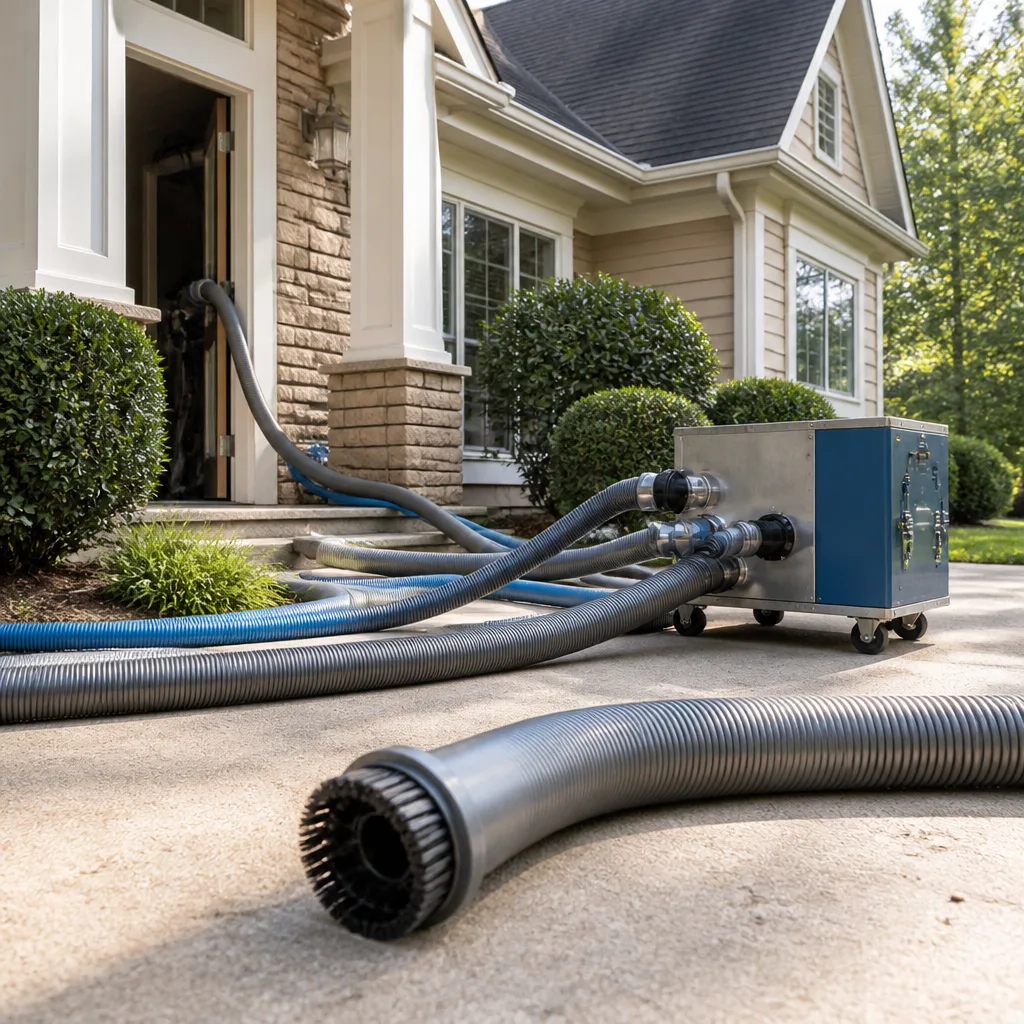 Whole-home duct cleaning
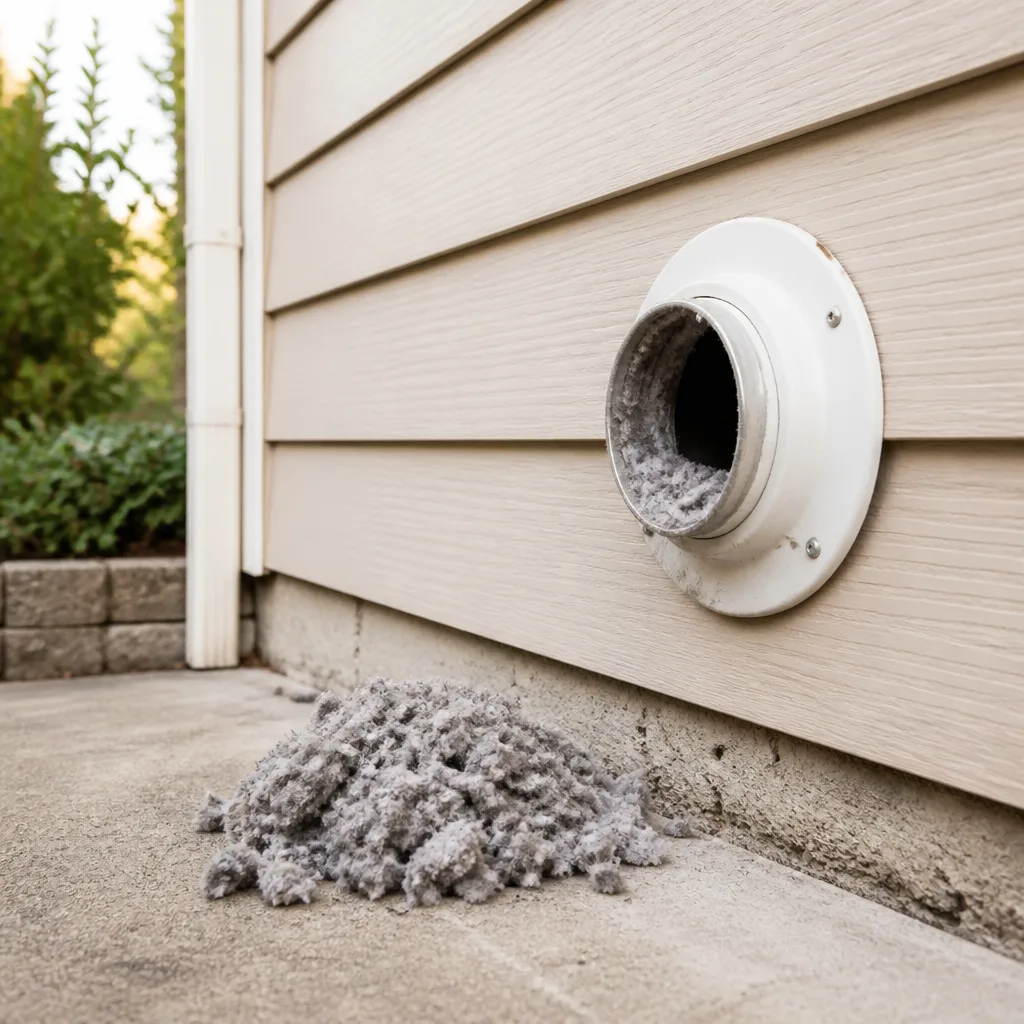 Dryer vent cleaning
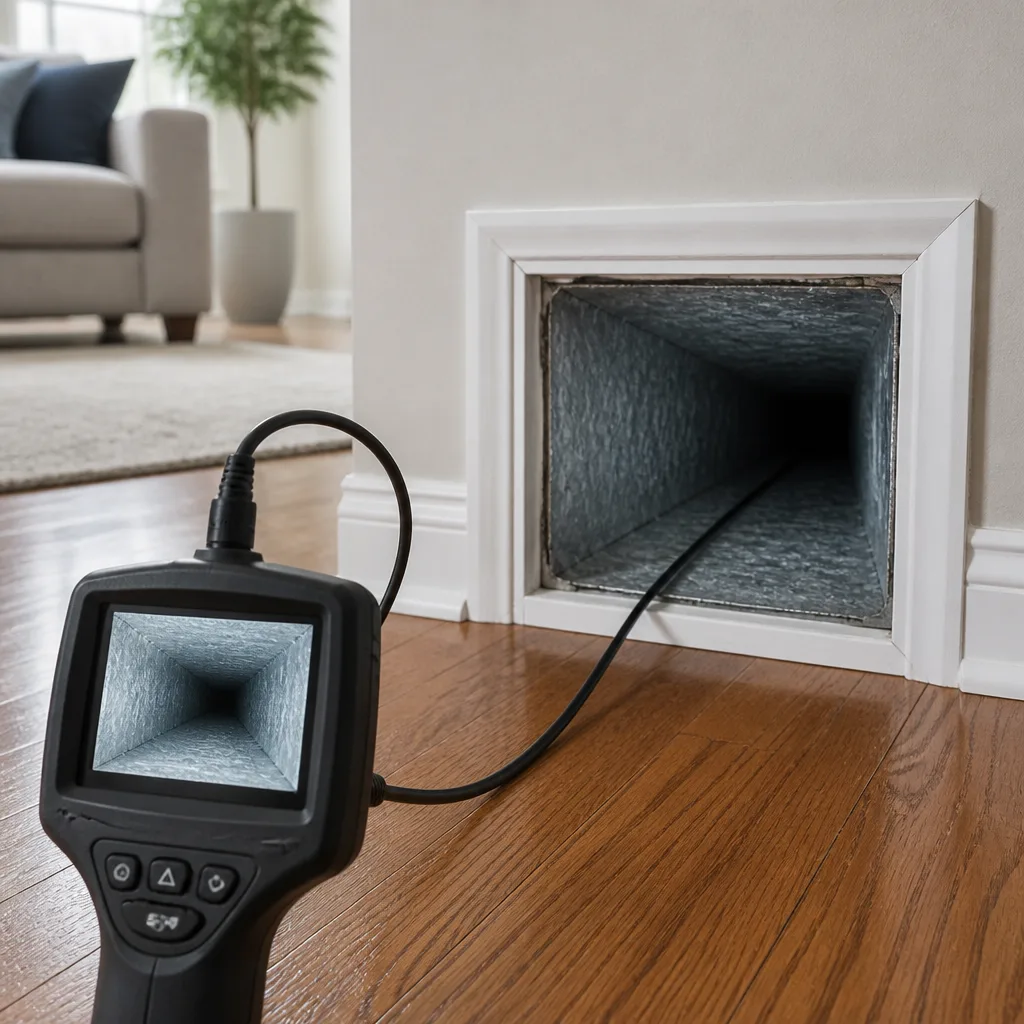 Camera inspection
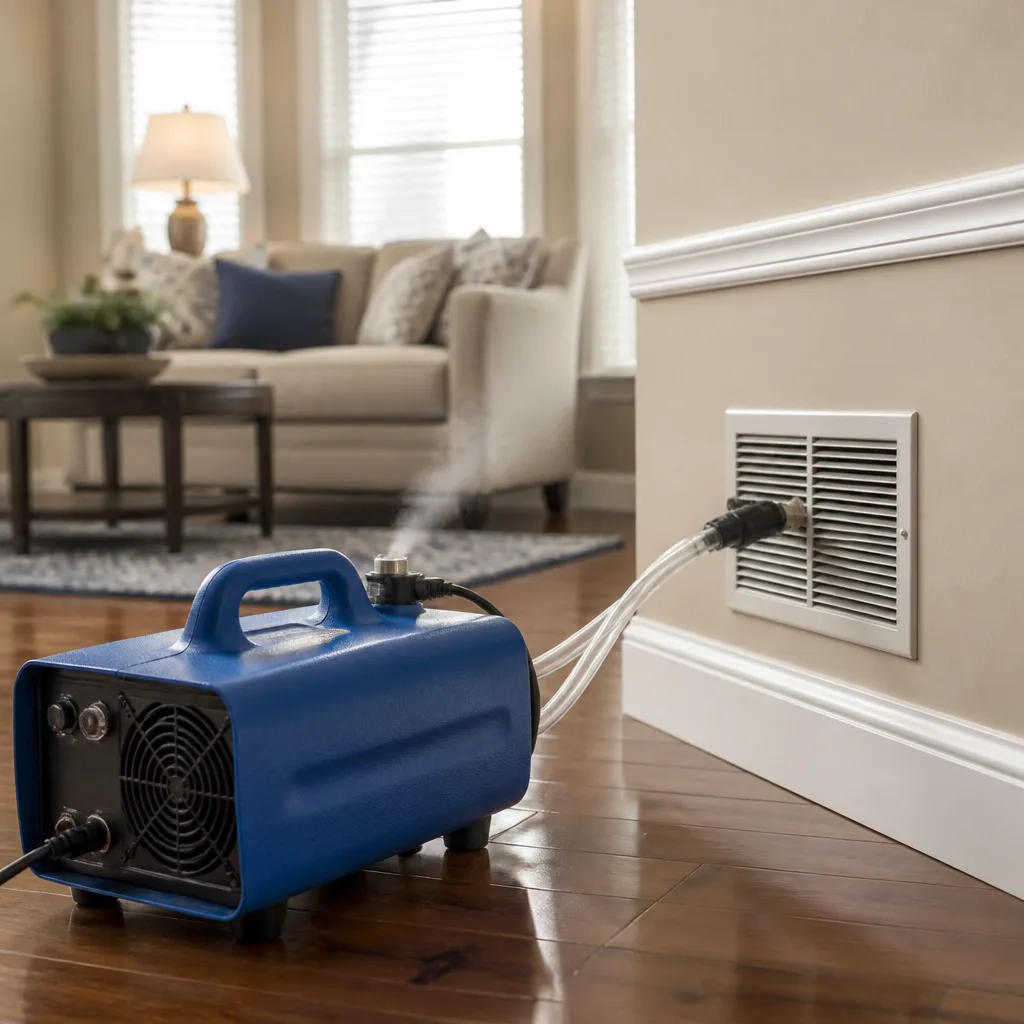 Sanitizing & deodorizing
Whole-system duct and dryer vent check with before-and-after photos - you see exactly what came out of your vents
That "$99 whole-house special" is a bait ad - the real number appears once they are in your hallway, or the "clean" is a shop-vac at the register. We photograph the inside of your ducts before and after instead.
DIY vs Professional Air Duct Cleaning: The Saddle Rock Homeowner’s Decision Guide
A shop vac with a hose pushed down into a supply duct doesn’t clean that duct. It stirs up the lightest dust and blows it further along, while the compacted layer stuck to the bottom of the run stays exactly where it was. Debris stratifies: heavy grit and lint settle and press down, fine dust floats, and anything damp turns into a crust that only agitation breaks loose. This guide draws the line between what you can legitimately maintain yourself in Saddle Rock and what genuinely needs equipment you can’t rent at a hardware store, so you spend your time and money where they actually change your indoor air.
Quick Answer
You can and should handle grille cleaning, accessible return-air boxes, filter changes, and dryer vent lint yourself. You can’t replicate negative-pressure source removal, blower wheel cleaning, evaporator coil cleaning, or camera inspection of flex duct with consumer tools. A hybrid approach, homeowner maintenance on accessible parts plus professional full-system service on a sensible interval, beats either extreme. For most Saddle Rock homes, that means a professional air duct cleaning every few years and simple upkeep in between.
Styles & brands we work with
- Whole-home duct cleaning
- Dryer vent cleaning
- Camera inspection
- Sanitizing & deodorizing
Table of Contents
- Why a Shop Vac Makes Duct Debris Worse, Not Better
- What a Saddle Rock Homeowner Can Legitimately Do
- What Requires Professional Equipment
- When DIY Attempts Make the Professional Job Harder
- The Real Cost-Benefit Math
- How to Structure a Hybrid Approach
- How to Inspect Your Own Ducts Without Damaging Them
- The Equipment Difference, Explained Plainly
Why a Shop Vac Makes Duct Debris Worse, Not Better
Air moving through a horizontal duct run doesn’t carry everything at the same speed. The fastest air travels down the middle of the duct, while a thin boundary layer near the metal surface moves slowly or not at all. That boundary layer is where debris collects first. Over time, fine dust sticks to the bottom and sides, lint binds with it, and the deposit slowly compacts into a felt-like layer that resists ordinary airflow. The duct gets narrower in effect even though nothing has physically changed shape.
Now imagine pushing a shop vac hose into that run from the register. Consumer vacuums pull air, but they can’t generate the sustained negative pressure needed to lift a compacted layer. What happens instead is that the loose dust gets agitated and carried further into the system, sometimes past the register and into the plenum feeding your air handler. You’ve moved the problem rather than solved it. Saddle Rock homes with long horizontal basement runs and ceiling supply trunks tend to see this most: the dust you disturb upstairs settles in the first stretch of trunk line it reaches.
Professional cleaning reverses the direction. A negative-pressure machine pulls the entire duct volume toward a capture point while an air-driven whip or brush agitates the wall surface. Debris is loosened and carried toward the vacuum in one coordinated motion, not blown deeper. That’s the core mechanical difference, and no consumer tool can reproduce it. It’s why our technicians run Rotobrush and Nikro systems rather than shop-vac style rigs, and why the equipment choice isn’t a marketing detail. It’s the entire job.
What a Saddle Rock Homeowner Can Legitimately Do
Plenty of duct-adjacent maintenance is well within reach for a careful homeowner, and doing it makes professional service more effective when you do schedule it. The key is knowing which parts of the system you’re allowed to touch safely and which belong to a technician.
Here’s what you can handle yourself:
- Supply and return grille cleaning. Remove the grilles, wash them in warm soapy water, dry them fully, and wipe the frame. Do this a few times a year, more often if you have pets.
- Accessible return-air box vacuuming. The return box behind a grille is often reachable with a brush attachment on a household vacuum. Stay at the opening and don’t push the hose beyond it.
- Filter housing wiping. Remove the filter, wipe the interior of the slot, and check for gaps where air bypasses the filter. A clean filter slot matters as much as a clean filter.
- Dryer vent lint trap and exterior cap. Clear the lint screen before every load and check that the outside flap opens freely and isn’t blocked by lint or a bird nest. This is fire prevention, not just efficiency.
- Register clearance. Move furniture and rugs off supply registers so airflow isn’t choked.
These tasks cost almost nothing and genuinely help. What they don’t do is clean the inside of the duct run, the blower, or the coil. That distinction is the whole point of this guide. Saddle Rock’s dry air and dusty spring winds mean filter housings and grilles collect grit faster than homeowners expect, so this accessible upkeep pays off in visible ways between professional visits.
What Requires Professional Equipment
Four specific tasks can’t be done safely with consumer tools, and each one has a real failure mode if attempted anyway.
- Negative-pressure source removal of duct interiors. This is the actual cleaning. It requires a HEPA-rated negative-air machine connected to the system, plus rotary agitation inside the duct. This is where Abatement Technologies HEPA containment equipment earns its place: it captures dislodged particles rather than pushing them into living space. Consumer vacuums don’t provide the pressure or the containment, and pushing a hose in only redistributes dust.
- Blower wheel cleaning. The blower wheel is a squirrel-cage fan that accumulates a heavy, uneven dust load. Cleaning it properly means removing or carefully accessing the assembly without bending the fins or stressing the motor bearings. A bent fin throws the wheel off balance and shortens motor life. This isn’t a homeowner job on any system.
- Evaporator coil cleaning. The coil is a dense fin pack that traps dust and can grow biological film in the damp environment around it. Correct cleaning uses coil-appropriate chemicals and rinses without bending fins or flooding the drain pan. Wrong chemicals etch the aluminum, and bent fins reduce heat transfer permanently.
- Flex duct inspection via camera. Flex duct can sag, tear, or separate at joints in ways you can’t see from a register. A camera lets a technician see the interior of the run and check the condition of the liner and connections. Without it, you’re guessing.
There’s also a safety dimension worth stating directly. Duct systems share space with electrical components, gas appliances, and in some homes asbestos-containing materials from older construction. Anyone poking a vacuum hose into a system they don’t fully understand can disturb something that should have been left alone. If you’re unsure what’s behind a duct run or near your air handler, stop and have it checked by a trained professional.
When DIY Attempts Make the Professional Job Harder
Not every DIY attempt is neutral. Some actively raise the cost of the professional service that follows, and it’s worth knowing which ones before you reach for the shop vac.
- Compressed debris compaction. Pushing a hose into a duct run can press loosened debris against a fitting or a turn, packing it tighter than it was. What would have been a routine extraction becomes a stubborn removal that takes longer.
- Dislodged insulation. Duct board and internal insulation liners are fragile. A brush or strong vacuum can pull fibers loose, sending them downstream into the air handler, the coil, and eventually the living space. Once loose, insulation is difficult to contain without HEPA equipment.
- Damaged flex duct. Flex duct is a plastic liner on a wire helix, and it tears easily. A hose dragged through a bend can rip the liner or pull it off the collars, creating a leak that wastes energy and draws attic or crawlspace air into the system. Repairs add cost and time.
- Disturbed mold without containment. If there’s microbial growth inside the ducts and you disturb it without negative-pressure containment, spores go straight into your indoor air. This is a health concern, not a cosmetic one, and it’s the single strongest reason to leave duct interiors to professionals when growth is suspected.
- Filter bypass created by a hasty reinstall. A filter that doesn’t seat correctly lets unfiltered air straight past it. This is common after DIY filter work and it accelerates dirt load on the coil.
In our experience, the homeowner who tried a shop vac first often ends up paying for the same cleaning plus a repair. That’s not a scare tactic; it’s the usual arithmetic of a job done twice. A professional crew using Rotobrush equipment reaches the compacted layer in one pass because the tools are built for it.
The Real Cost-Benefit Math
The DIY-versus-professional question gets framed as a cost comparison, but the honest comparison is what you save on accessible maintenance versus what a mistake costs on the parts you can’t safely touch. That framing changes the decision.
Genuine DIY savings come from tasks that take minutes and cost almost nothing: washing grilles, changing filters, clearing the dryer vent cap, wiping the filter housing. Do all of these consistently and you’ll pull some load off the system for the price of a filter and a sponge. This is real savings with no downside.
Now the other side. A torn flex duct run needs replacement, and that means accessing the run, removing the damaged section, and reconnecting it correctly. Bent coil fins reduce heat transfer permanently and can’t be straightened back to original performance. A blower motor damaged by a bent wheel means a replacement part. Each of these outcomes costs more than the professional cleaning would have. Add the possibility of spreading mold without containment and the risk side of the ledger gets heavier still.
The useful rule: DIY the maintenance, professionally handle the system. For a typical Saddle Rock home, the professional full-system service is an occasional expense, not a monthly one, and one avoided repair pays for it many times over. Our team keeps pricing transparent with a written estimate up front, so there’s no surprise about what the job actually involves. Our technicians have up to 9 years of experience reading systems and spotting problems before they become repairs, and that’s part of what you’re paying for.
How to Structure a Hybrid Approach
The strongest approach isn’t DIY or professional, it’s both in the right proportion. Homeowners who understand which parts of their system they own and which belong to a technician get cleaner air for less money over the long run. Here’s how to build that routine.
- Set a filter schedule. Note the filter size and change it on a consistent calendar. Check it more often during dusty Saddle Rock spring months and after any renovation work.
- Clean grilles quarterly. Pull supply and return grilles, wash them, dry them, and put them back. This catches visible dust before it migrates into the run.
- Clear the dryer vent cap regularly. Check that the exterior flap swings freely and clear out lint. Lint accumulation is a fire risk that no amount of interior duct cleaning addresses.
- Schedule professional service on a sensible interval. Every few years for most homes, sooner after a renovation, a move-in to a home of unknown history, or a heating or cooling system replacement. Animals, water intrusion, or visible growth in a register are reasons to call now rather than wait.
- Ask for documentation. Before-and-after photos of your own ducts tell you the work happened. Any provider worth hiring photographs the job.
- Pair cleaning with the fixes that prevent recontamination. If duct repair or sealing is needed, get it done at the same visit so the clean system stays clean. Leaky joints pull dust and attic air right back in.
This structure respects the reality that duct maintenance is a system-health issue, not a chore you either hire out or do yourself. We handle the HVAC cleaning side and the duct interior work; you keep up the accessible pieces. Together that’s more than either extreme achieves alone.
How to Inspect Your Own Ducts Without Damaging Them
You can learn a lot about your duct system’s condition without ever putting a tool inside a run. Visual checks at the registers and the air handler tell you most of what you need to decide whether to schedule professional service.
- Look inside a register with a flashlight. Shine light into the duct opening and look at the first few inches of the wall surface. A light, even dust film is normal. A thick, dark, felt-like layer, visible debris, or anything that looks like fuzzy growth means it’s time for professional service.
- Check for airflow balance. If some rooms are noticeably weaker than others, the cause may be a disconnected or blocked run. Don’t try to fix it from the register; note it for the technician.
- Smell test. A persistent musty or damp smell when the system runs is a signal worth acting on. Don’t mask it with air fresheners; find the source.
- Inspect the air handler area. Look at the filter slot, the blower access panel, and the coil access area for dust accumulation, moisture, or rust. Rust or standing water in the drain pan is a problem to report.
- Look for telltale debris around grilles. Dark staining around a register or debris on the ceiling nearby can indicate a leaking joint or loose duct connection.
What you should not do is remove access panels on the air handler or push anything into the duct runs to investigate. Those steps risk electrical contact, disturbing insulation, or spreading growth without containment. A visual inspection from outside the system is safe and informative; internal inspection needs a camera and a trained eye. If something you see concerns you, have it checked before you run the system again.
The Equipment Difference, Explained Plainly
When homeowners ask what separates professional duct cleaning from a shop vac, the answer is the tools. Purpose-built equipment does a different kind of work than consumer machines, and understanding it helps you evaluate any provider, not just us.
Rotary agitation systems use an air-driven whip or brush to scrub the duct wall while negative pressure pulls the loosened debris toward a collection point. Rotobrush and Nikro rigs are built for this two-part motion: agitate and extract at the same time. That’s what reaches the compacted layer where it sits. Abatement Technologies HEPA negative-air machines provide the containment piece. They capture the particles that get airborne during cleaning rather than letting them drift through the house. Guardsman antimicrobial treatment is an optional finishing step that addresses microbial growth after the mechanical cleaning is done. These are the tools we bring because they’re the ones that make the job verifiable and safe.
There’s also a system-upgrade side that consumers usually don’t consider. Filtration and humidity control affect how fast ducts get dirty in the first place. We can supply and install Honeywell and Aprilaire products, so cleaning and an air-quality upgrade can happen in one visit. That’s not a hard sell; it’s a practical point about protecting the work you just paid for.
The same logic applies across our services. dryer vent cleaning uses the same containment approach because lint is a fire hazard and a consumer wand can’t reach deep enough to clear a blocked run. If you want the broadest picture of what we handle and how, the Air Duct Cleaning Saddle Rock overview covers the full scope.
Common Mistakes to Avoid
- Pushing a shop vac hose into a supply duct. This redistributes loose dust into the system and packs debris tighter against fittings. It’s the most common DIY error we see in Saddle Rock, and it makes the professional job longer.
- Spraying household disinfectant into ducts. Consumer sprays don’t address the source of growth, and many can damage the liner or leave residue that blocks airflow. Sanitizing should follow mechanical cleaning, not replace it.
- Removing the blower access panel to wipe the wheel. This risks electric shock and can bend the wheel fins, which throws the motor off balance. Leave the blower to a trained professional.
- Cleaning only the visible register and calling it done. The grille is the least important part of the system; the run behind it is where the compaction is. Cleaning just the ends gives a false sense of progress.
- Ignoring dryer vent lint beyond the screen. The lint that matters is the lint you can’t see, deep in the run. A blocked exterior cap or long run of accumulated lint is a fire risk that interior duct cleaning doesn’t address.
- Hiring a provider before checking the equipment and documentation. If a crew arrives with nothing more than a shop vac and no before-and-after photos, you’re not getting duct cleaning. Ask what equipment they use and whether you’ll see documentation of the work.
- Skipping filter changes after professional cleaning. A clean system with a clogged filter reclogs quickly. Change the filter at the same visit and keep to a schedule afterward.
See the difference
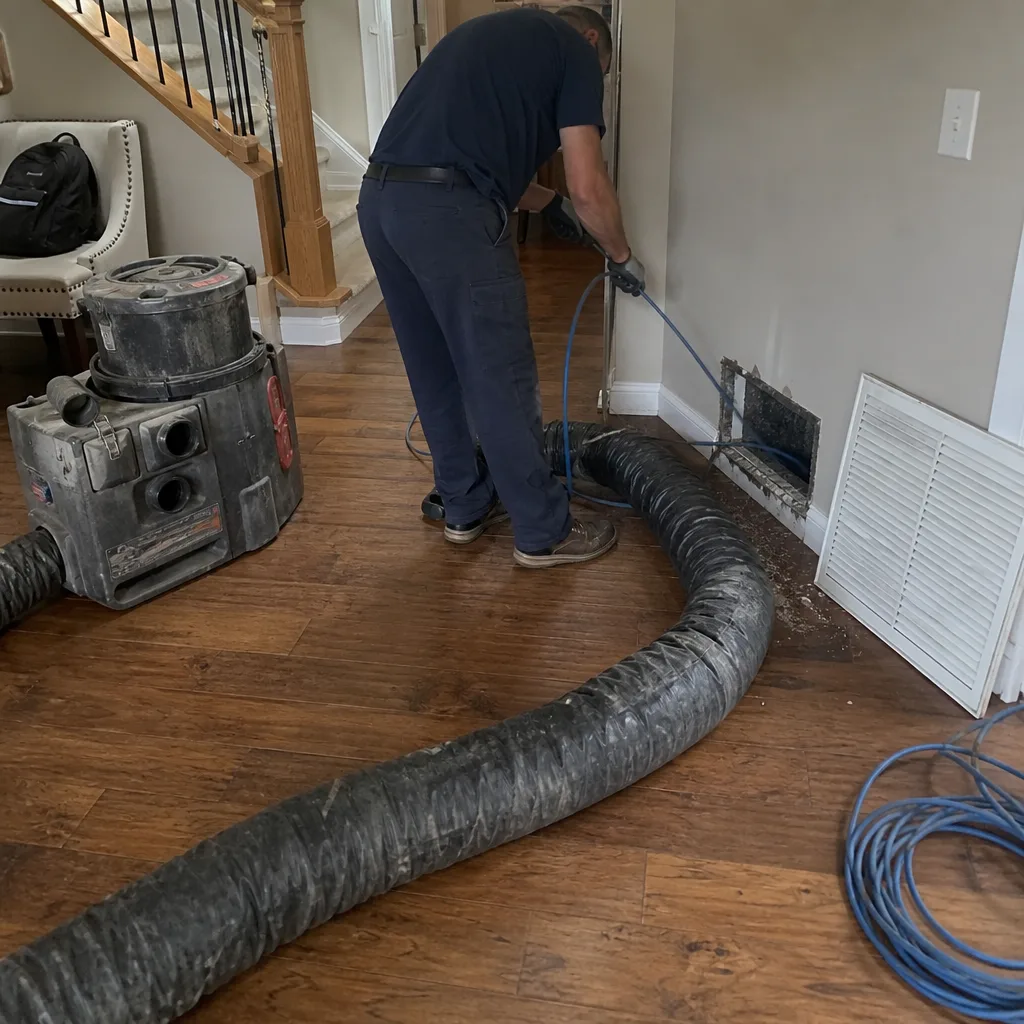 Before
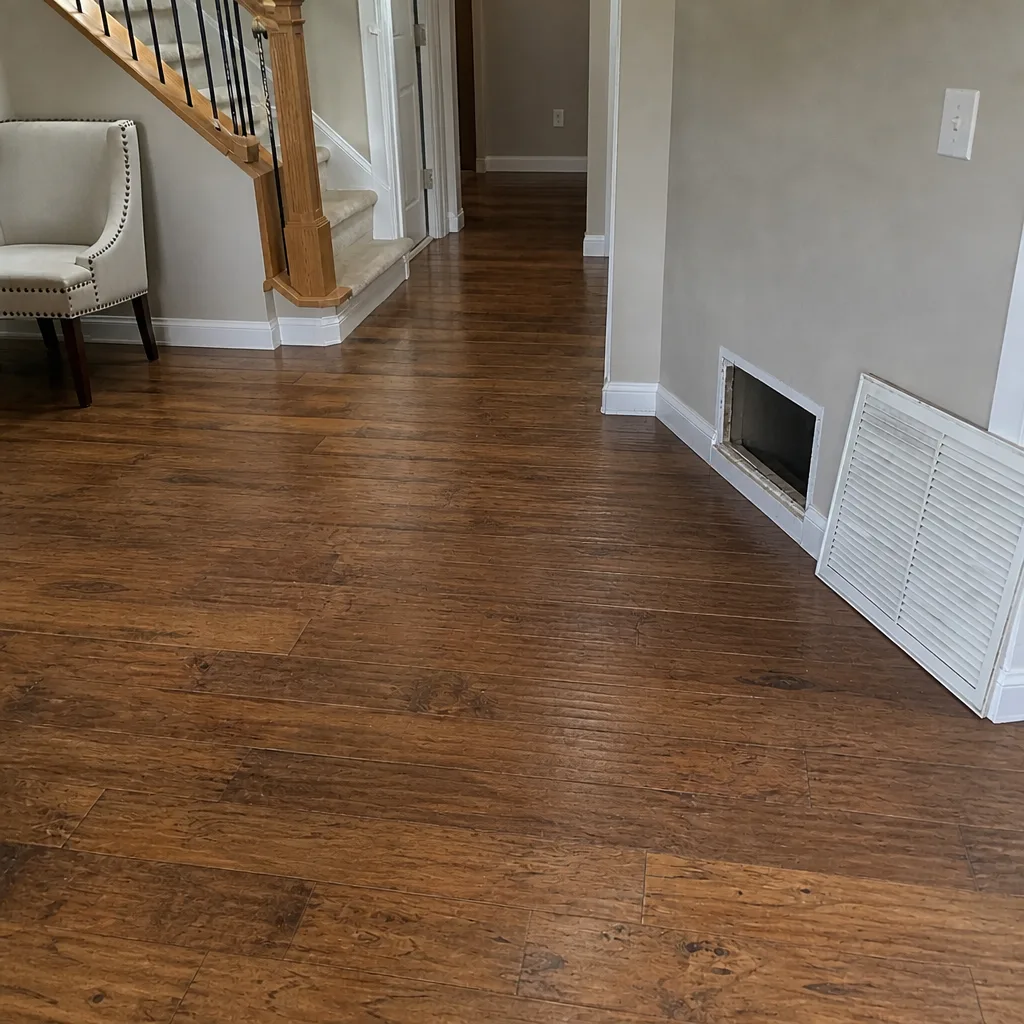 After
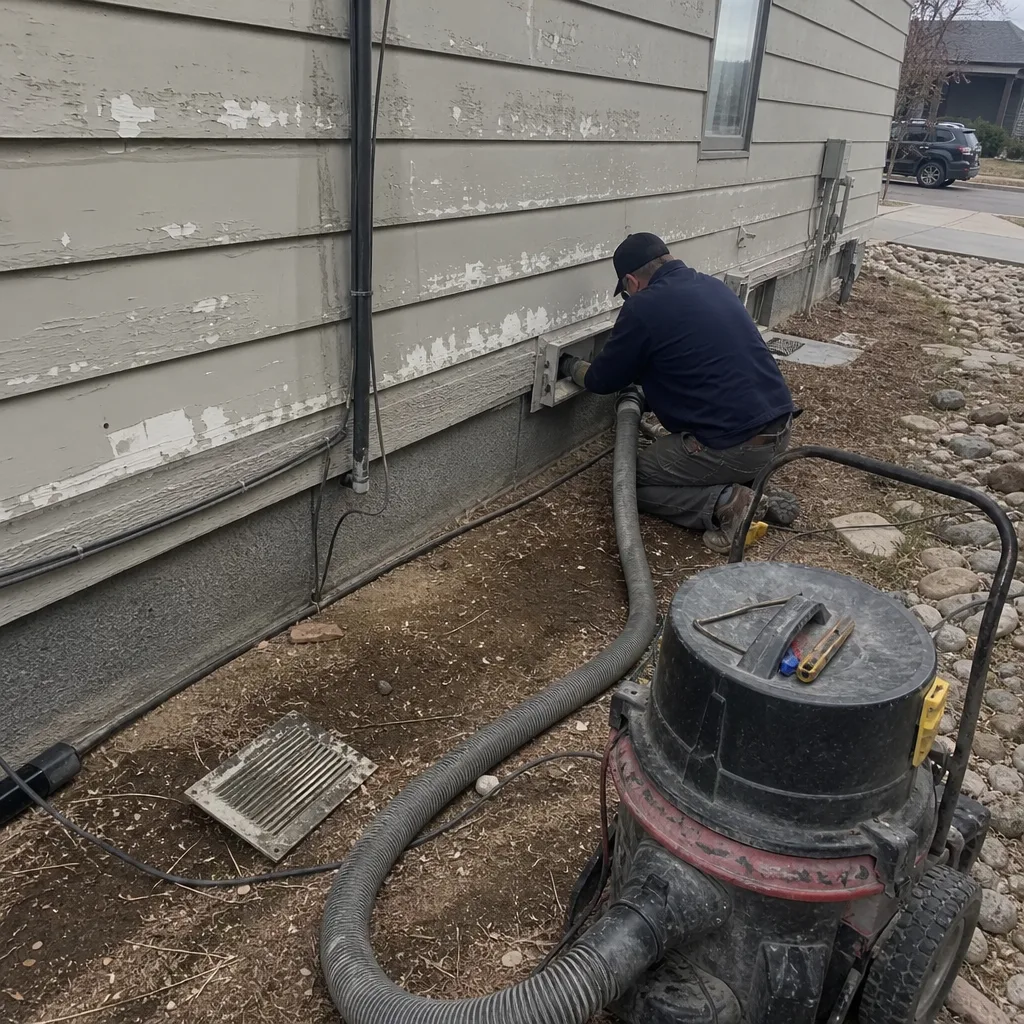 Before
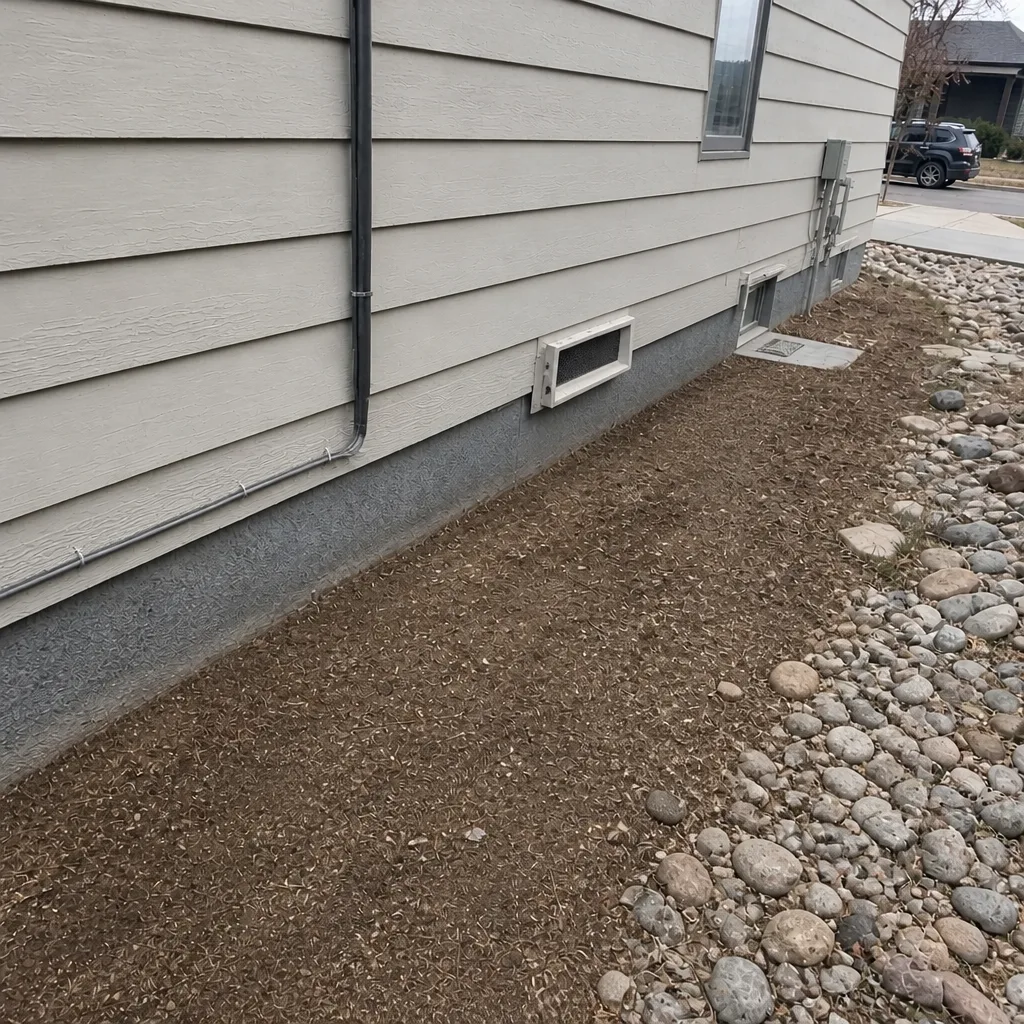 After
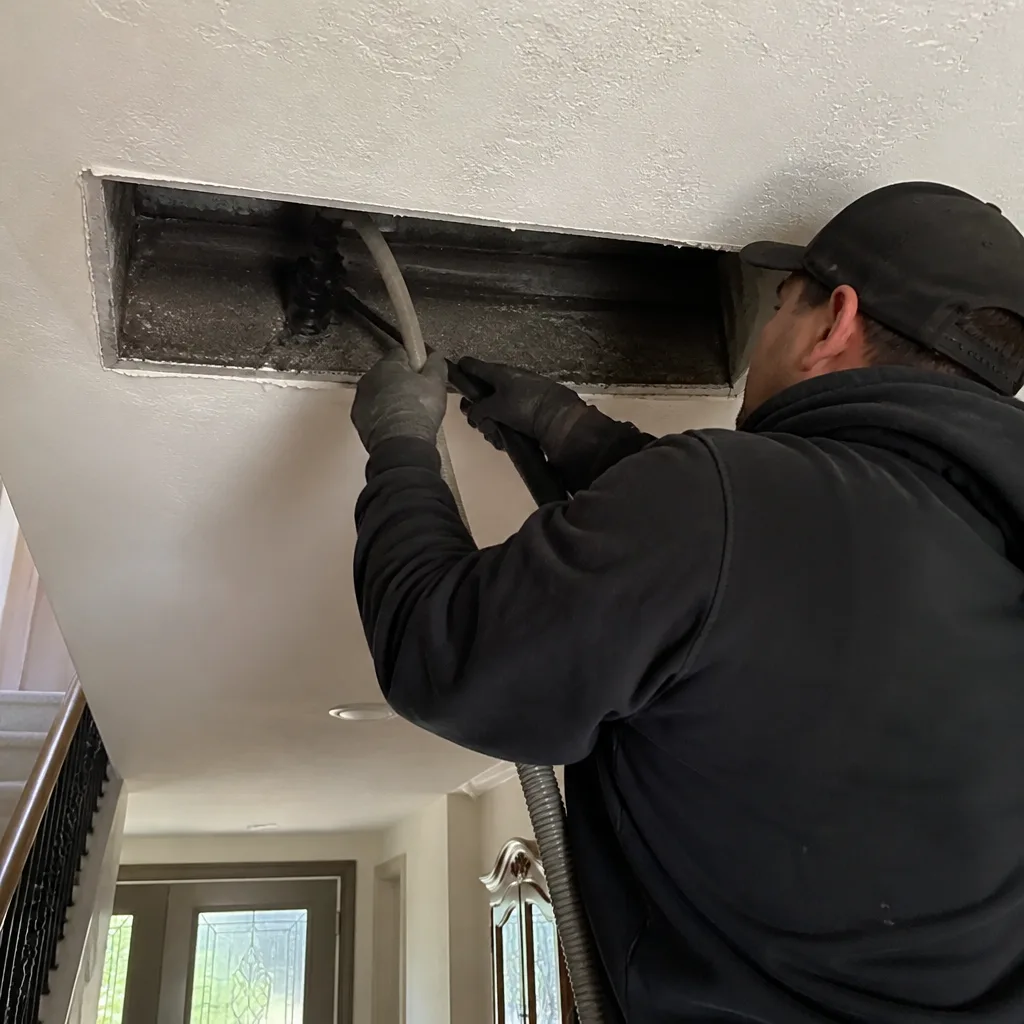 Before
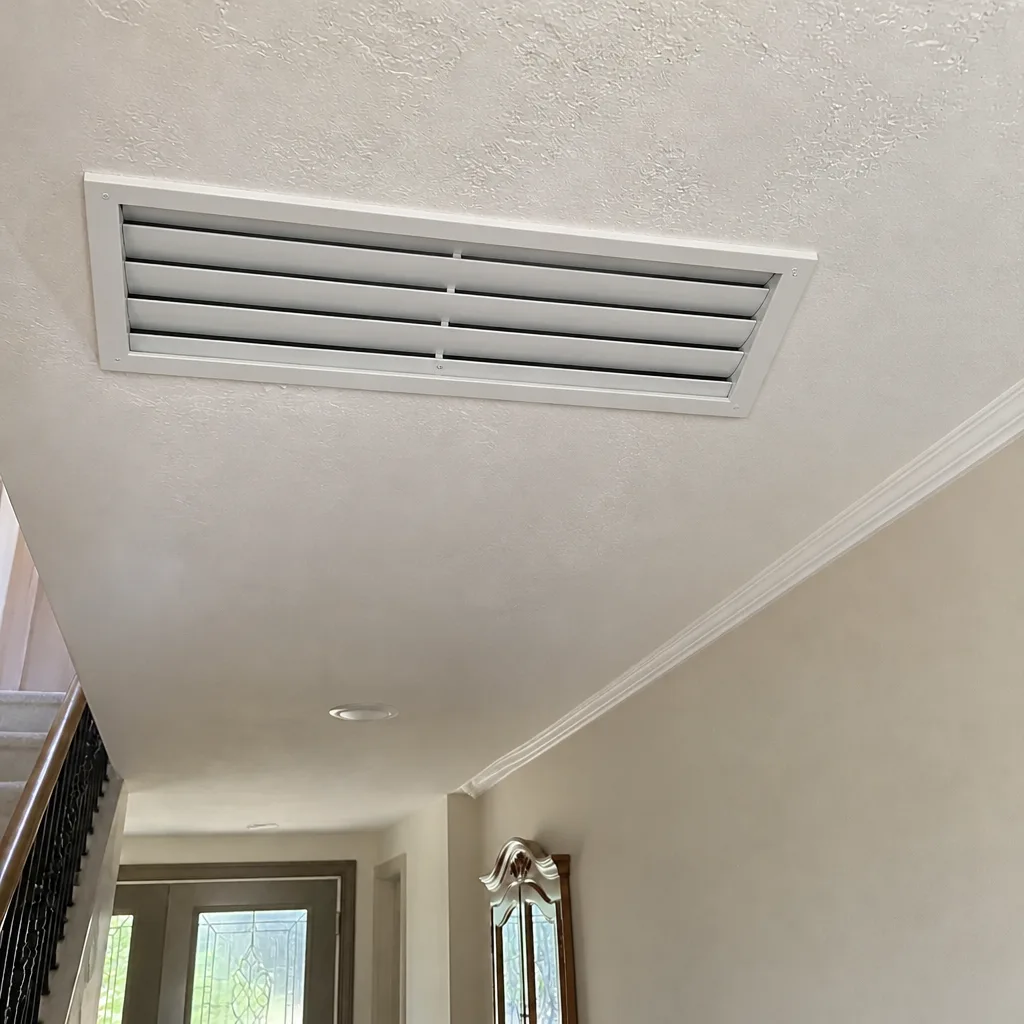 After
When to Call a Professional
You know it’s time to call when the signs point to something a shop vac can’t solve. Visible growth, a persistent musty odor when the system kicks on, debris accumulating around registers, or reduced airflow to specific rooms all warrant professional attention. So does any recent renovation that left drywall dust in the system, a heating or cooling system replacement, or a new home purchase with unknown duct history. Homes with pets, allergy sufferers, or anyone sensitive to airborne particles benefit from professional service more often than average.
The safe move is simple: a visual inspection from the register and the air handler tells you whether to call. If anything concerns you, don’t run the system more than necessary and don’t try to clean it yourself. Air Duct Cleaning Saddle Rock offers free estimates in Saddle Rock, so call (877) 770-0819 to see what’s actually inside your ductwork and get a written plan before any work begins. We answer 24/7. Fast dispatch from 7am to 7pm, Sunday through Friday.
Frequently Asked Questions
No, not effectively. A shop vac can clean grilles and a reachable return box, but it can’t produce the negative pressure or agitation needed to lift compacted debris from inside a duct run, and pushing the hose in tends to redistribute dust and pack debris tighter. Call (877) 770-0819 for a free estimate if you want to see what’s really inside your ducts.
Pricing depends on the number of runs, the system size, and any repair or sealing needed. We give a written estimate for the whole job before any work starts, so you know the price for cleaning, inspection, and any fixes at the outset instead of discovering extra charges later. Call (877) 770-0819 for a free estimate.
Cheap quotes often reflect a shop-vac-style setup that surfaces the ducts without doing source removal, or a price that grows once the technician is on site. Ask what equipment a provider uses and whether they photograph the work before and after. Pricing should be clear before work begins, not added line by line on the truck. Call (877) 770-0819 for an honest estimate.
Ask for before-and-after photos of your own ducts, not stock images. A provider using Rotobrush or Nikro equipment and HEPA containment can show the change in the duct interior and walk you through what was found and cleaned. Call (877) 770-0819 and we’ll explain exactly what you’ll receive.
Most Saddle Rock homes do fine with professional service every few years, more often after a renovation, with pets, or if anyone in the household has allergies. The right interval depends on your system and how much dust your home generates. A visual inspection at the registers helps you decide. Call (877) 770-0819 for a free assessment.
Professional cleaning with proper equipment and containment is designed to protect the system, but improper techniques can cause real harm. Pushing a hose through flex duct can tear the liner, and a brush on internal insulation can send fibers toward the coil. Our technicians use methods that protect the duct and the air handler. Call (877) 770-0819 with any concerns.
The Bottom Line
The DIY-versus-professional question becomes answerable once you split the system into two parts. Grilles, accessible return boxes, filter housings, and dryer vent caps are yours to maintain, and doing so keeps your system healthier between professional visits. The duct interiors, blower wheel, evaporator coil, and flex duct runs require negative pressure, rotary agitation, and containment that consumer tools can’t match. A hybrid routine, homeowner upkeep plus periodic professional service, protects your air quality and your equipment better than either choice alone. If you’re in Saddle Rock and want to know what’s actually in your system, call (877) 770-0819 for a free estimate. We answer 24/7, with fast dispatch from 7am to 7pm, Sunday through Friday.
Written by the team at Air Duct Cleaning Saddle Rock.