
Last updated November 25, 2026
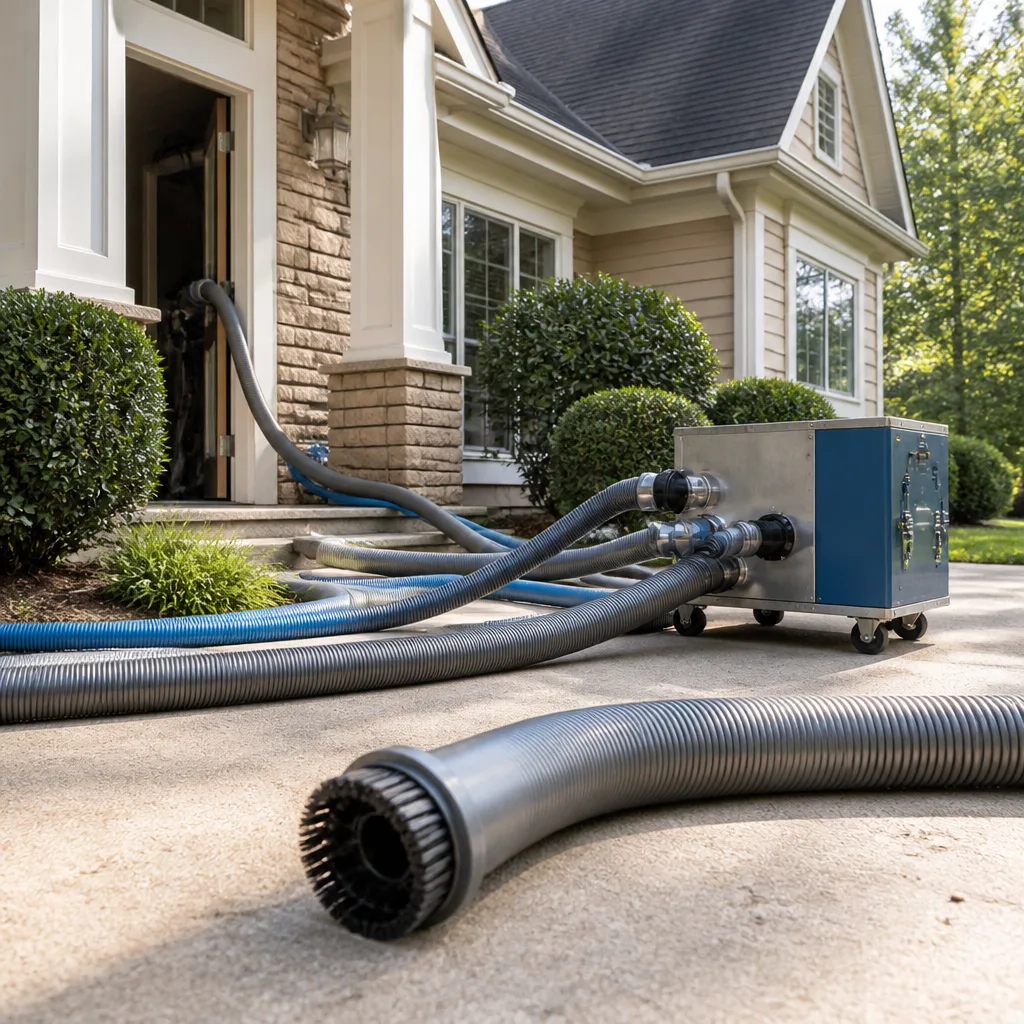 Whole-home duct cleaning
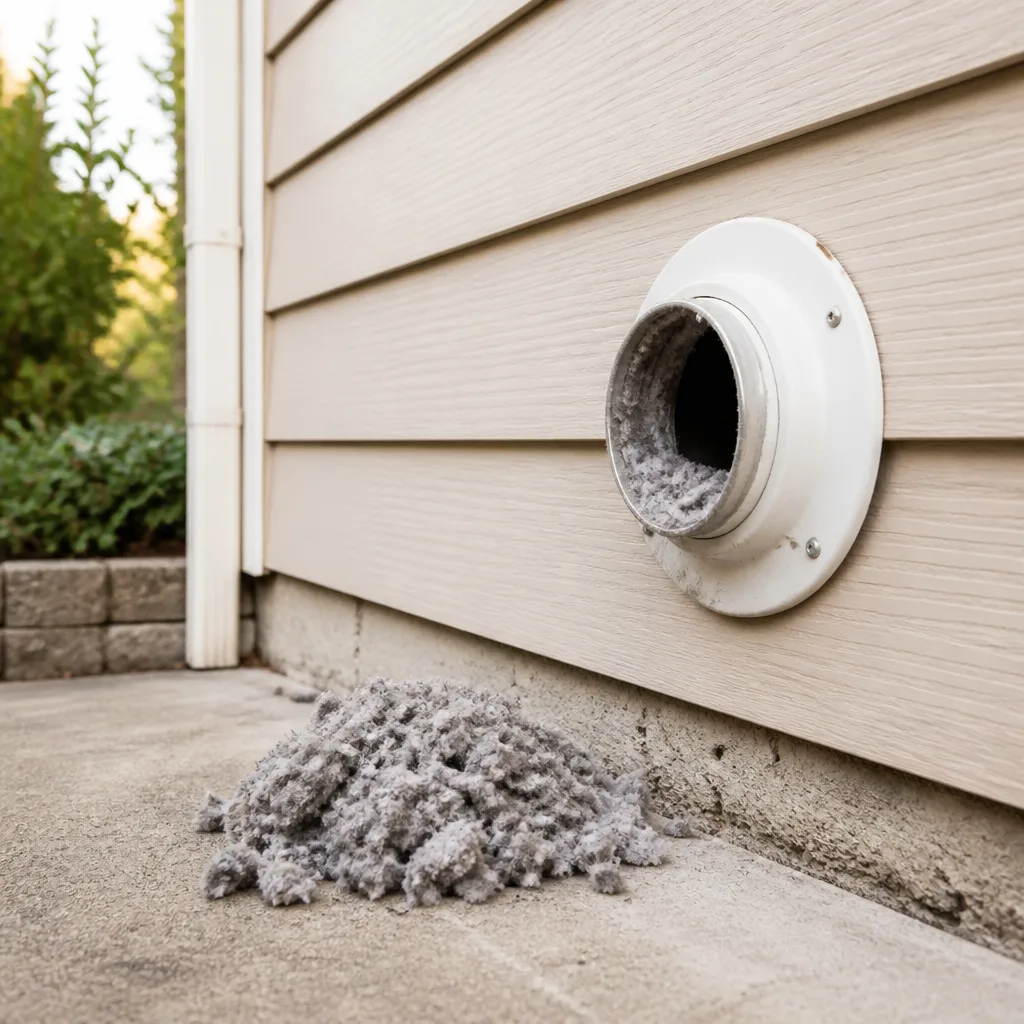 Dryer vent cleaning
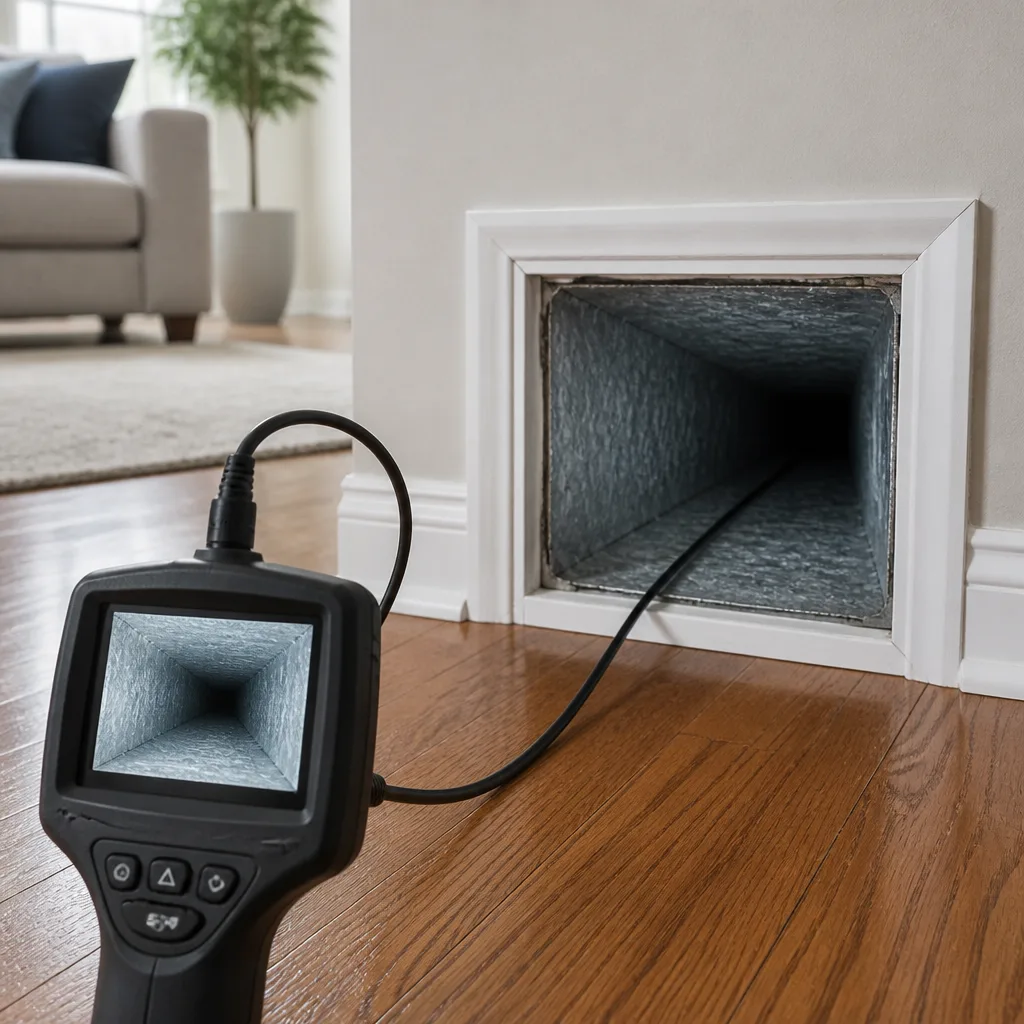 Camera inspection
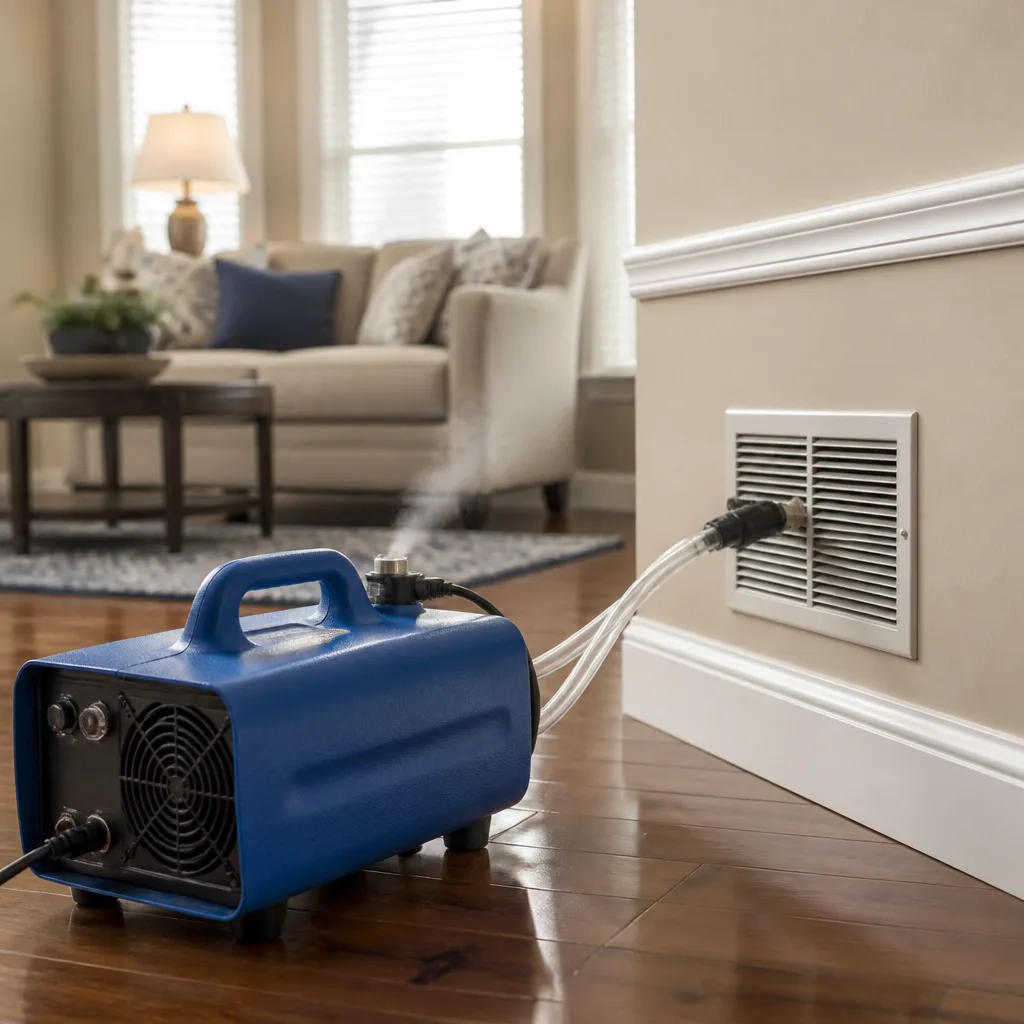 Sanitizing & deodorizing
Whole-system duct and dryer vent check with before-and-after photos - you see exactly what came out of your vents
That "$99 whole-house special" is a bait ad - the real number appears once they are in your hallway, or the "clean" is a shop-vac at the register. We photograph the inside of your ducts before and after instead.
Air Duct Cleaning Warning Signs: A Saddle Rock Homeowner’s Reference Guide
Dust on your supply registers is not a reliable indicator that your ducts are dirty. In most homes it means the opposite: turbulence at the grille is shedding fine particles that were already in the room, not debris climbing out of the duct interior. Meanwhile the signals that actually point to a dirty duct system, a leaking duct system, or a moisture problem are quieter and easier to misread. That’s the trouble with most warning-sign lists: they tell you to look for dust and call somebody. This guide gives Saddle Rock homeowners a symptom-to-cause framework instead, so you can tell a cleaning problem from a sealing problem, a mold problem, or a mechanical problem before anyone knocks on your door.
Quick Answer
The most reliable signs you need duct cleaning in Saddle Rock are a musty or stale odor at the vents, visible debris or staining inside accessible duct runs, unexplained airflow loss in specific rooms, and a recent renovation that left drywall dust in the system. Surface dust on the grille itself is usually a filtration or airflow issue, not proof of dirty ducts, and it should be read alongside the other signals before you book anything.
Styles & brands we work with
- Whole-home duct cleaning
- Dryer vent cleaning
- Camera inspection
- Sanitizing & deodorizing
Table of Contents
- Why Register Dust Is a Bad Warning Sign
- Three Symptoms, Three Different Causes
- How to Inspect Accessible Duct Runs Yourself
- Post-Renovation Drywall Dust vs. Household Debris
- Uneven Room Temperatures: Cleaning, Sealing, or Balancing?
- HVAC Performance Signals That Point at Blower and Coil
- When the Real Problem Is Leakage, Not Dirt
- What a Proper Saddle Rock Cleaning Visit Involves
Why Register Dust Is a Bad Warning Sign
A dusty return grille tells you air is moving, and it tells you the filter is passing fine particles. That’s a filtration conversation, not a duct-cleaning one. The grille sits in the room, and warm air rising off the floor or a nearby lamp lifts household dust upward until it meets the moving air at the vent face. The particles stick because the grille bars are electrostatically charged after a few weeks of airflow. Nothing came up the duct. When we pull a register off and look inside a supply run, we often find the duct interior cleaner than the grille that was covering it.
What register dust actually reveals depends on which register. A return grille that blackens in weeks points at a filter that’s undersized or bypassing at the edges. A supply diffuser that darkens in one or two rooms points at airflow imbalance or a leak pulling attic or crawlspace air into the run. Both matter, and neither is solved by a vacuum truck in the driveway.
Saddle Rock homes sit in a semi-arid Front Range climate where indoor humidity swings hard between summer cooling season and winter heating season. That swing matters here because it changes what grows in a duct. Low winter moisture suppresses most biological growth, while a damp cooling season, a marginal evaporator drain, or a humidifier running too high can create the moisture film that feeds it. You’ll hear warnings online about swampy climates and duct mold. Our conditions are different: the trigger is the equipment and drainage, not the outdoor air.
So treat register dust as a clue, not a verdict. It’s one signal in a stack. The next four sections show you the others, and how to tell them apart.
Three Symptoms, Three Different Causes
Almost every warning sign Saddle Rock homeowners describe comes down to one of three physical causes. Sort the symptom into the right bucket and you’ll know which kind of call to make.
Musty or stale odor at the vents
A musty smell that arrives a minute or two after the blower starts is a biological or moisture problem, not a dust problem. The most common sources are the evaporator coil pan and the wet coil face itself. Water sits, dust settles into the film, and the first air across it picks up the smell. Sometimes the source is a duct run in a damp crawlspace or a boot where condensation collects. Cleaning the duct without fixing the moisture source only delays a repeat. If the odor is strongest when cooling starts and fades when the system runs a while, the pan and coil are the place to look first.
Black streaks around the grilles
Streaking on the wall or ceiling around a diffuser is a sign of bypass filtration. Air is sneaking past the filter frame at the air handler, or the duct has a small gap near the trunk, and the unfiltered stream holds fine soot and carbon from the furnace or the roadway. The black ring is deposited over a season. A telltale detail: streaks that radiate in a pattern from the grille screws rather than a uniform halo across the ceiling usually come from the leak at the boot, not from the room.
Visible debris inside accessible runs
Pull a supply register and shine a light into the run. If you see a fuzzy lining of lint and dust on the duct wall, that’s debris in the duct. If you see a strange powdery white coating with tiny black specks, treat that as a possible biological concern and stop probing. Leave it. Somebody with the right containment equipment needs to look at it too.
- Odor: moisture or biological growth, likely coil pan, coil face, or damp run.
- Streaks: bypass filtration or a leak near the boot.
- Lining inside the run: debris, low risk, likely cleanable.
- Powdery white plus black specks: possible growth, needs a professional assessment.
Sorting the symptom is how you avoid paying to clean ducts that were never the problem in the first place.
How to Inspect Accessible Duct Runs Yourself
You can tell a lot from the two or three duct runs you can actually reach, and a phone camera is the right tool. This is a reading exercise, not a repair session. Don’t open equipment panels, don’t reach into a moving system, and turn the system off at the thermostat before you do anything.
- Turn off the blower at the thermostat so you’re not fighting airflow and you’re not stirring settled particles into the room.
- Remove two or three supply registers in different rooms: one near the air handler, one at the far end of the house. They usually lift out or have two screws.
- Shine a flashlight into the run at a shallow angle. Light rakes across the surface and reveals texture that a straight-on flashlight hides.
- Photograph with your phone using the flash, and hold the phone close to the opening so the flash fills the run. A photo with a coin or a tape measure laid beside the surface gives a sense of scale.
- Repeat at the return grille and photograph the inside face of the filter and the filter frame.
- Write down room, run length, and what you saw for each location so you can compare when you talk to a technician.
What to look for: dust that hangs in a loose, fibrous mat is typical household lint. Powdery, evenly deposited residue that wipes away to a clean surface is drywall dust from a renovation. A dark, sticky or damp film near a boot or a run passing through an unconditioned space is a moisture indicator. And any growth that looks fuzzy, spreading, or speckled is where you stop and call.
A good photograph is a diagnostic document. When you call, describing what you saw room by room tells a technician more than “the vents look dirty.”
Post-Renovation Drywall Dust vs. Household Debris
Drywall dust is a different animal from ordinary household dust, and it needs a different response. Household debris in Saddle Rock ductwork is a mix of lint, skin cells, pet hair, and cooked-aerosol residue. It builds up slowly over years and mostly sits on the lower wall of the run. Drywall dust is fine, powdery, alkaline, and it travels on air the moment construction starts. During a remodel, the work is happening with the HVAC system on, and every sanded seam sends powder into the returns. It settles not just in the duct but in the blower cage and across the coil face.
Texture and color
Drywall dust reads as a uniform pale powder, almost like flour, coating every surface of the run evenly regardless of orientation. Household lint clumps and gathers nonuniformly, and it’s often gray-brown and fibrous. If the interior of a run looks frosted, that’s drywall.
What happens if you vacuum duct on top of it
Mechanical cleaning on a lightly dirty system is straightforward. Cleaning a system saturated with drywall dust after a remodel requires more care because the powder is loose and the wrong vacuum setup pushes it into the living space. That’s a containment question. Professional setups run HEPA filtration with negative air containment equipment, like Abatement Technologies machines, precisely so dislodged powder is captured rather than blown back through the grilles. Shop-vac setups on a remodel can turn your dining room into a fine white cloud.
The timing question
Wait until the drywall sanding, taping, and painting are done and the contractor has cleaned up the work area. Cleaning ducts mid-renovation simply refills them. After that, address filtration too. A whole-home upgrade to a tighter media cabinet, such as a Honeywell or Aprilaire filter housing, keeps a renovated house cleaner going forward. The same visit can cover cleaning and the filtration changeover.
Uneven Room Temperatures: Cleaning, Sealing, or Balancing?
One room runs hot in summer and cold in winter while the rest of the house is fine. That’s a common complaint in Saddle Rock, and it appears on nearly every warning-sign list as “dirty ducts.” In practice, three separate causes produce the same symptom, and the diagnostic questions are what separate them.
Question one: is the room furthest from the air handler, or a room with a short run? Long ducts accumulate more friction and lose more static pressure. A room at the end of a long branch often needs a balancing damper adjustment, not a cleaning.
Question two: does the room get decent airflow from the register even when the temperature is off? If airflow feels strong but the room won’t reach temperature, the duct on that branch may be leaking into the attic or wall cavity before it arrives. That’s a sealing problem. When we hear a whine or feel warm air coming around the baseboard near that room in summer, leakage is a strong suspect. Duct repair and sealing addresses it directly.
Question three: does the light test show debris on the interior of that specific run? If the run is packed with lint down at the far end, cleaning will restore some flow. If the run is clean but the register only trickles air, cleaning won’t help and the problem is pressure or design.
- Strong airflow, wrong temperature: likely leakage or balancing, not dirt.
- Weak airflow, clean run: balancing damper or undersized branch.
- Weak airflow, dirty run interior: cleaning warranted.
- Weak airflow, room feels damp: investigate the boot and moisture first.
The point of separating these is to fix the actual fault. Cleaning a leaky branch just makes clean air leak slower.
HVAC Performance Signals That Point at Blower and Coil
A dirty blower wheel and a dirty coil strain the system every bit as much as dirty ducts, and they generate signals that show up on your energy bill and in how the system behaves. Cleaning only the ducts and leaving a matted blower cage in place cuts short the benefit. This is part of HVAC cleaning, which covers the moving and heat-transfer surfaces inside the cabinet.
Rising energy bills without a rate change
A blower wheel with a heavy dust coat is unbalanced. Its airflow drops, so the blower runs longer to move the same air. A coil caked with lint transfers heat poorly, so the compressor runs longer to reach setpoint. Both show up on the bill before they show up anywhere else.
Short cycling
Short cycling (the system switching on and off in short bursts) is most often a control or charge issue, but restricted airflow from a clogged blower cabinet or evaporator coil is one of the routine suspects. A dirty evaporator coil can ice over, and the ice chokes airflow until the system shuts down on a safety limit. When cooling season in Saddle Rock arrives after a year of accumulated lint, that pattern recurs.
Reduced airflow at the registers
Walk the house and hold your hand at each supply for ten seconds. A uniform drop in force across every register points to the air handler and the coil. A drop at one or two registers points to those specific branches. The first is a system-level cleaning issue; the second is likely a branch problem.
Before you clean ducts, check those surfaces. Any duct cleaning worth the name should look at the coil and blower as part of the assessment, and a system that’s been running for years is a reasonable candidate for both.
When the Real Problem Is Leakage, Not Dirt
Some warning signs that homeowners read as “dirty ducts” are leakage signals. Every joint, boot, and takeoff is a possible leak. In a typical duct system a meaningful share of the conditioned air can be lost before it reaches the grille, and that loss carries a second problem: an unsealed return near an attic or garage can pull unfiltered air, dust, and odors into the system.
The leakage signals you can observe:
- Whistling or a hiss at a register or along a visible trunk in the basement or attic.
- Different air smell coming from one register in particular: attic dust or garage air is a strong clue.
- Dust streaks around the boot where the duct meets the wall or ceiling.
- Disconnected or taped runs that have pulled apart at the joint, common where flex duct sags.
Cleaning a leaky system without sealing it means the newly cleaned interior is re-contaminated from the leak site within a heating season. That’s why we treat duct repair and sealing as a core service rather than an upsell. When a system has both dirty ducts and loose joints, the order matters: assess, seal the leaks, then clean. Getting that order right is the difference between a clean system and a clean-looking one.
If you can see the trunk and boots from your basement or attic hatch, take photos of the joints the way you photographed the duct interiors. Technicians spot the pattern from a picture faster than from a description.
What a Proper Saddle Rock Cleaning Visit Involves
A proper cleaning visit is a full-system process, not a single pass with a vacuum hose. The right sequence protects your home during the work and confirms the result afterward. Here’s how our visits run.
- Inspection first. We open accessible registers and returns, examine the coil, blower, and drain pan, and photograph the findings so you can see what we saw before we start.
- Containment. We set up HEPA negative-air equipment (Abatement Technologies machines) and cover furnishings and openings so dislodged debris is captured.
- Mechanical agitation and extraction. We use Rotobrush and Nikro systems to loosen debris along the duct walls and extract it in the same pass, run by run.
- Repair and sealing where needed. Loose joints, boot gaps, and disconnected runs are sealed so the cleaned system stays clean.
- Sanitizing finish. A Guardsman antimicrobial treatment neutralizes growth on surfaces inside the system, documented as part of the visit.
- Air quality upgrade, if desired. We can supply and install Honeywell or Aprilaire whole-home filtration or humidity control in the same visit.
- Before-and-after documentation. You get the photos, so what was done is on the record.
Our technicians have up to 9 years of experience reading exactly these signals in Front Range homes, and we know to check the dryer vent cleaning side of the job too. Lint in a dryer vent is a fire-prevention concern separate from air quality, and it’s part of what a serious indoor-air visit should include. The process above is the same for a low-rise apartment building common area or an office suite, which is why commercial work is a core part of what we do. A property manager with multiple units should ask for the same documentation: inspection photos, containment setup, and a written scope of what’s included.
Common Mistakes to Avoid
- Booking a cleaning on the strength of register dust alone. Read all the signals in this guide first. A dusty grille usually reflects filtration and room turbulence, not dirty ducts, and paying to clean a clean system fixes nothing.
- Cleaning ducts before cleaning the coil and blower. Lint on the coil and blower re-contaminates the newly cleaned duct on the first cycle. Address the whole system or none of it.
- Assuming one room’s uneven temperature means dirty ducts. In Saddle Rock, uneven temperatures are more often a leak or a balancing issue. Spend a few minutes on the three diagnostic questions before you spend money on a cleaning.
- Ignoring black streaks around grilles. Streaks are a bypass filtration or leak signal. Cleaning the ducts without resolving the bypass doesn’t stop them, and they usually return the next heating season.
- Choosing a quote that prices per grille or per vent. Per-vent pricing almost always grows on the day of the job once the technician is on site. Ask for a flat price per system in writing, with before-and-after photos of your own ducts.
- Letting a rancher or remodel proceed with the HVAC running. Drywall dust travels straight into the returns during the remodel. Cover returns during sanding, and plan a post-renovation clean and seal.
- Cleaning a leaky system and stopping there. Sealing the leaks first keeps dust out, not just out of view. When you interview a provider, ask whether they inspect and seal.
See the difference
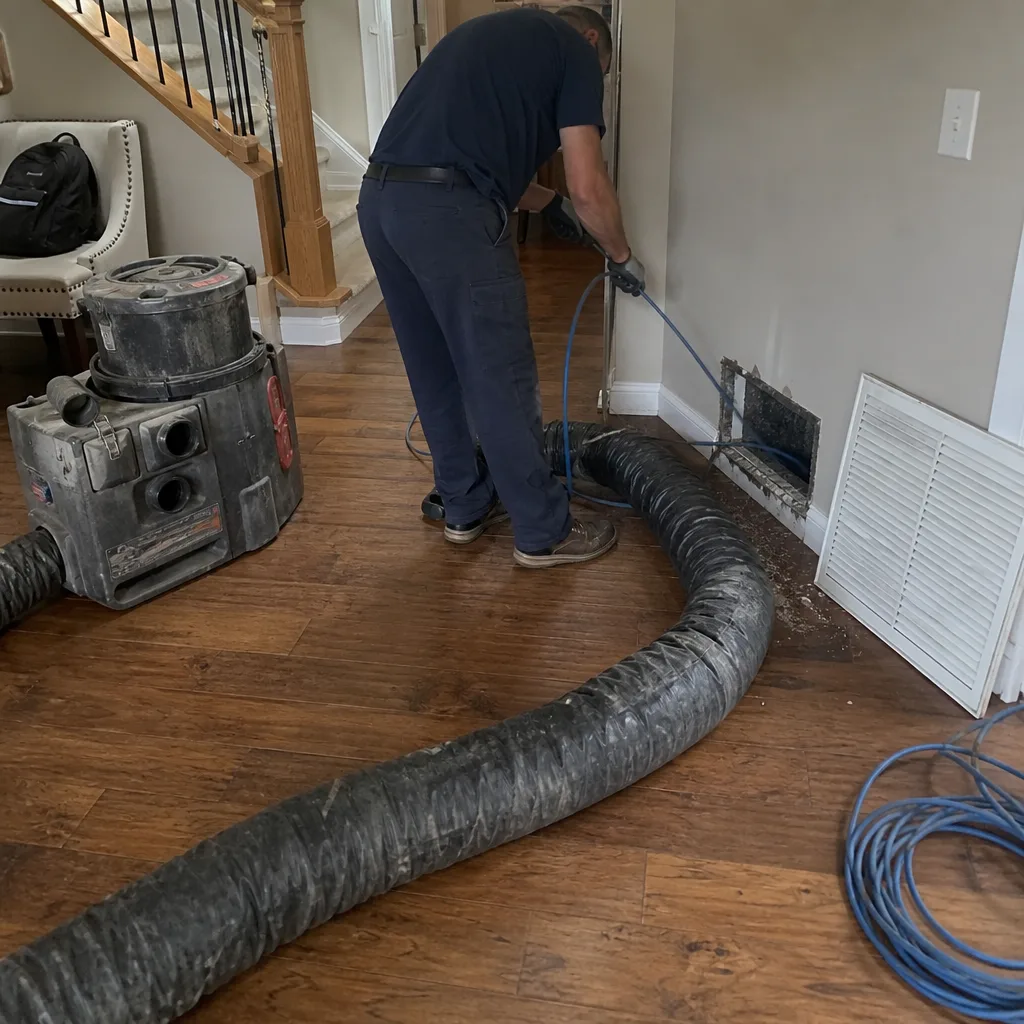 Before
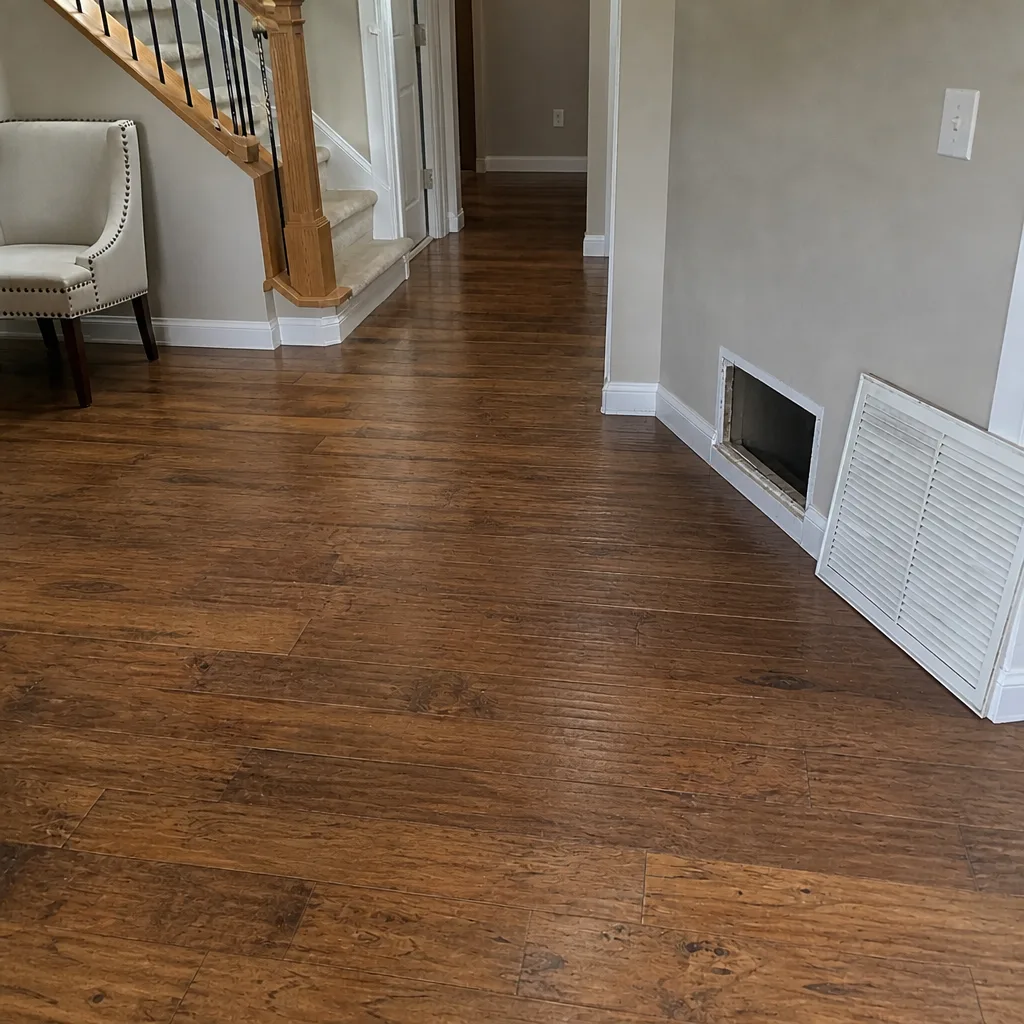 After
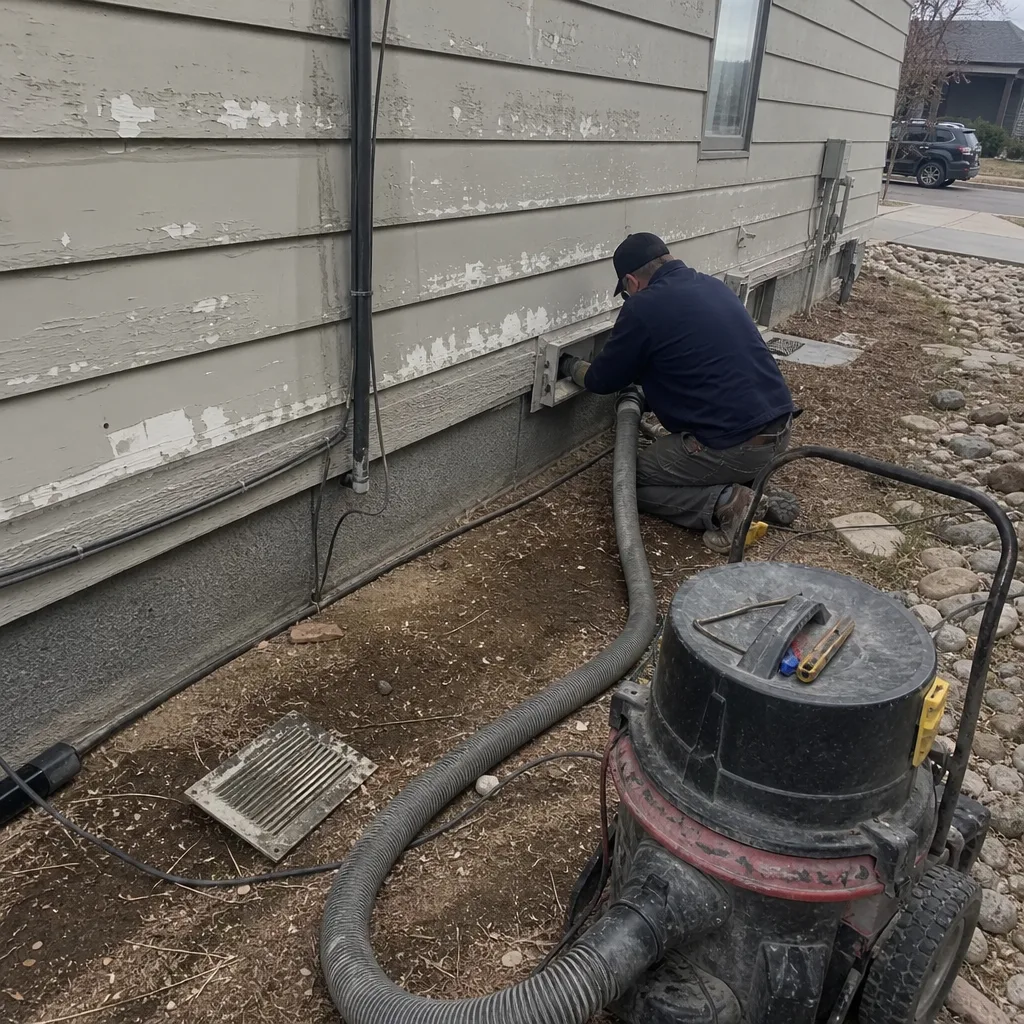 Before
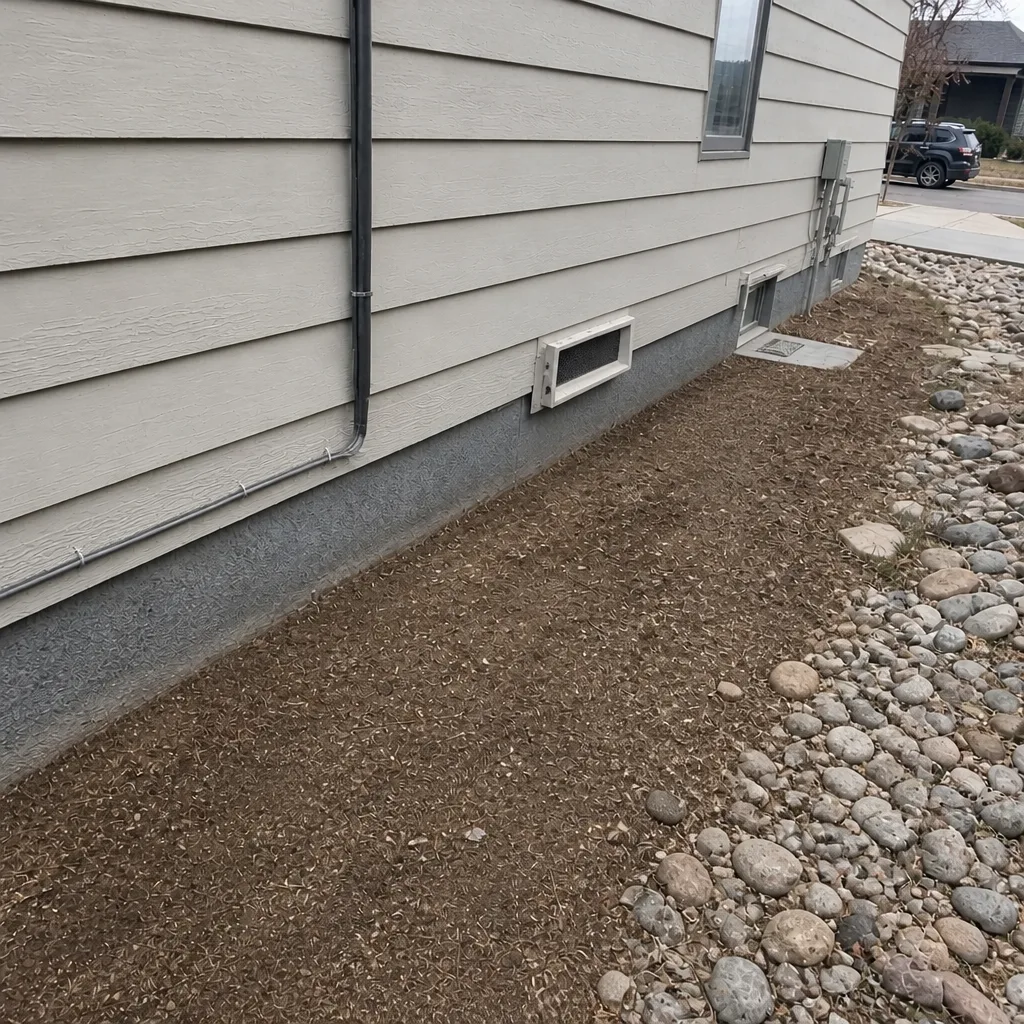 After
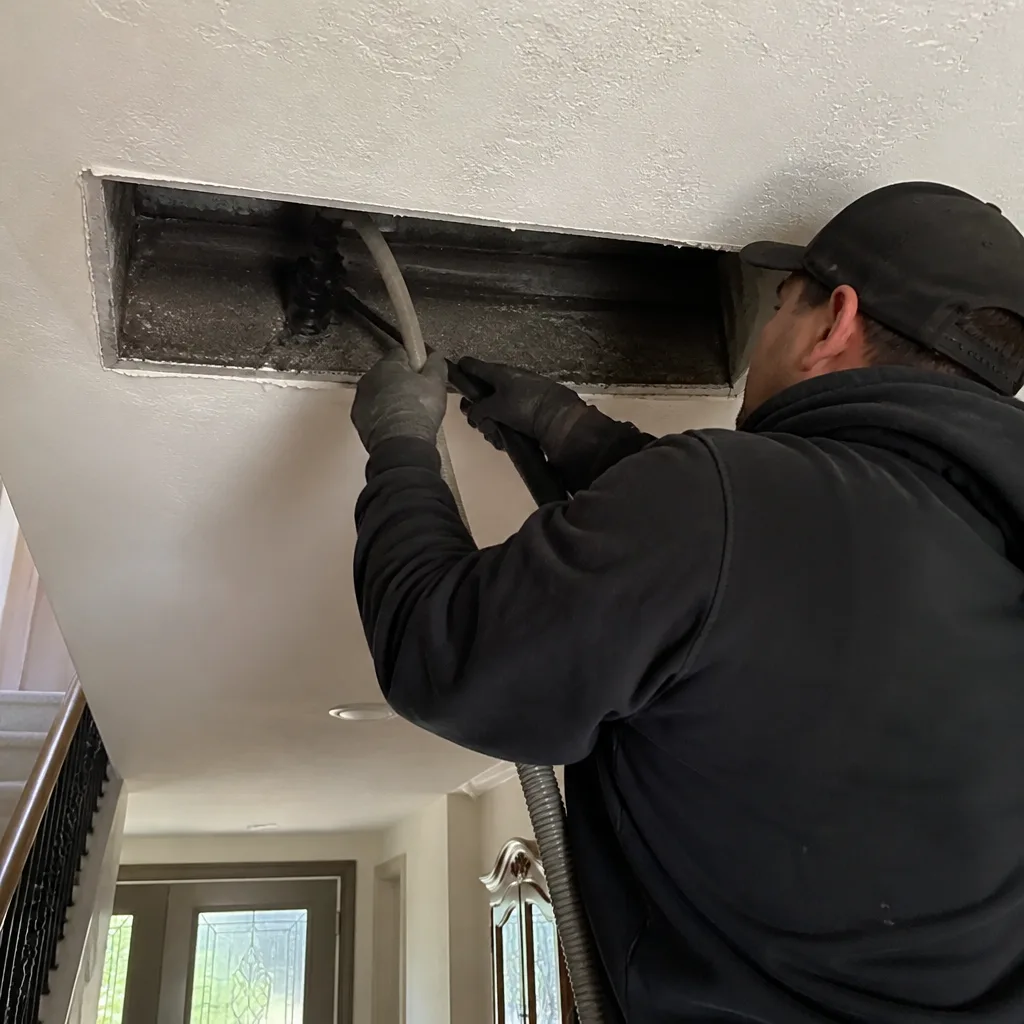 Before
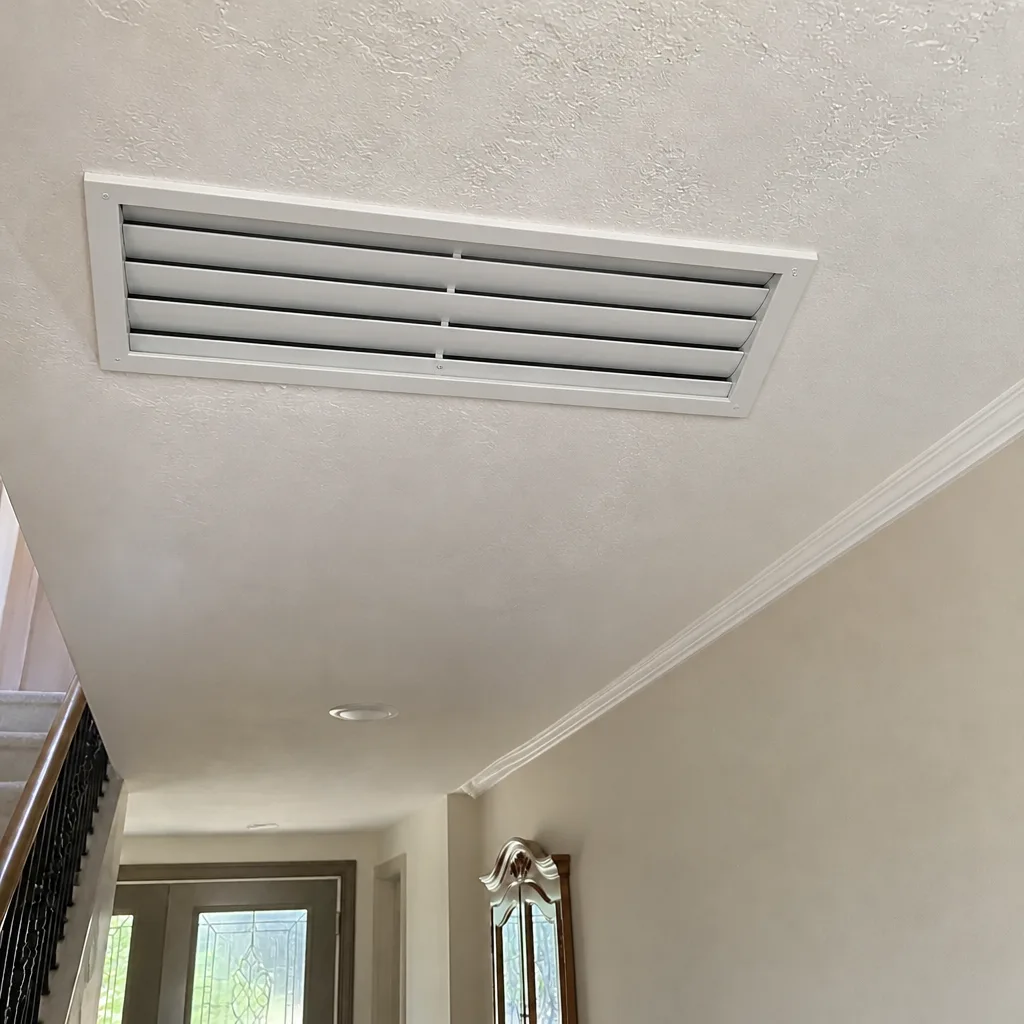 After
When to Call a Professional
Call a professional when you find any of the following: a musty odor at the vents that comes and goes with the blower, a powdery or speckled coating inside an accessible run, black streaks that keep returning around the same diffuser after cleaning, or airflow that’s dropped at every register in the house. Call when a renovation just wrapped and the returns were open during sanding. Call when your energy bill has climbed for no obvious reason and the blower is short-cycling. And call when you’ve read the signals in this guide and still can’t tell a cleaning problem from a sealing problem, because that’s exactly the assessment that saves you money. Air Duct Cleaning Saddle Rock offers free estimates in Saddle Rock. Call (877) 770-0819. Our technicians have up to 9 years of experience and can explain what they see before any work begins.
Frequently Asked Questions
Look for musty odor at the vents, visible debris inside accessible runs, or a recent renovation with open returns, and treat surface dust on the grille as a filtration clue rather than proof. The single most reliable sign is what you see when you photograph inside a run and smell at the grille; when the two agree, cleaning is usually warranted. Call (877) 770-0819 with what you found and an estimate can be booked.
No, dust on the vent face is usually a sign of airflow and filtration, not duct debris. Turbulence at the grille and household dust in the room settle onto the bars, and the duct behind the grille often looks cleaner than the grille itself. If it blackens quickly, check the filter seating and the boot seal. Call (877) 770-0819 if you want an inspection to confirm.
A proper whole-home cleaning is priced per system by a written estimate, not per vent, and the written estimate is the final price. When you get quotes, ask for the flat price per system so you can compare like for like. A low per-vent teaser commonly grows once the technician arrives. Call (877) 770-0819 for a free estimate.
A leak shows up as whistling at a register, dust streaks around the boot, or a different smell coming from one vent while the others are fine. Dirty ducts show up as visible debris inside the run itself. If airflow is strong but the temperature in one room is wrong, suspect a leak or a balancing issue before dirt. Call (877) 770-0819 and we’ll assess both.
Yes, after any remodel that involved drywall sanding with the HVAC running. Drywall dust is a fine, alkaline powder that settles into the duct interior, the blower cage, and the coil face, and it doesn’t clear with normal operation. Wait until sanding and painting are done, then book a clean with real HEPA containment so powder isn’t blown back into the living space. Call (877) 770-0819 for an estimate.
A full-system visit starts with inspection and photo documentation, then sets up HEPA containment, cleans every run with Rotobrush and Nikro equipment, seals any loose joints, and finishes with a Guardsman antimicrobial sanitizing treatment. We can also install a Honeywell or Aprilaire filtration or humidity solution in the same visit. See the full scope on the air duct cleaning page, or call (877) 770-0819 for a free estimate.
The Bottom Line
Dust on the grille is a starting clue, not a diagnosis. Read the whole picture: odor at the vents, streaks around the boot, powdery deposits inside the run, airflow and temperature in each room, and how the blower and coil are behaving. Sorting the symptom into a cleaning problem, a sealing problem, a moisture problem, or a mechanical problem is the single step that most homeowners skip, and it’s the step that saves the most money. If you read the signals and can’t tell which bucket your home falls into, that’s exactly the call we take. Air Duct Cleaning Saddle Rock offers full-system cleaning, sealing, and sanitizing with professional-grade equipment, and we’ll show you what’s actually inside your ductwork before we touch it. Call (877) 770-0819 for a free estimate. We answer 24/7. Fast dispatch from 7am to 7pm, Sunday through Friday.
Written by the team at Air Duct Cleaning Saddle Rock.