
Last updated November 25, 2026
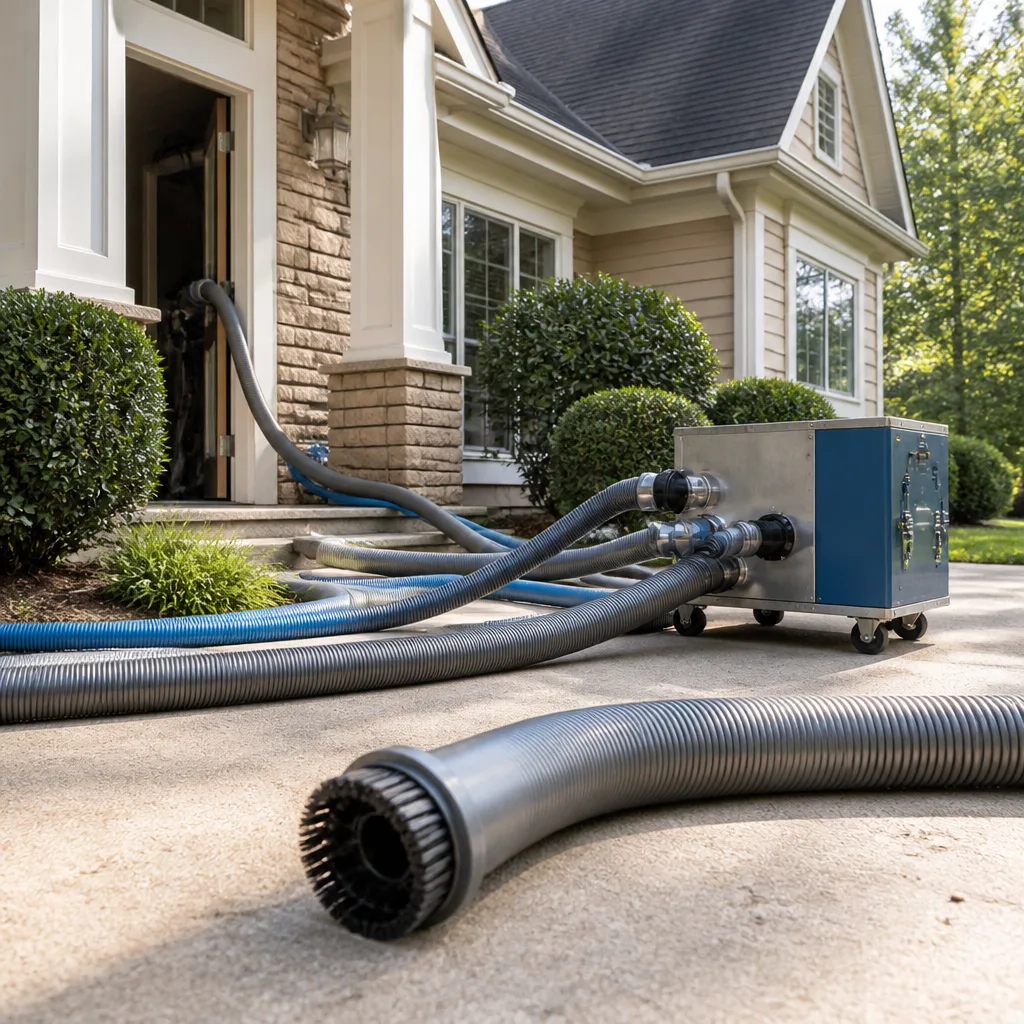 Whole-home duct cleaning
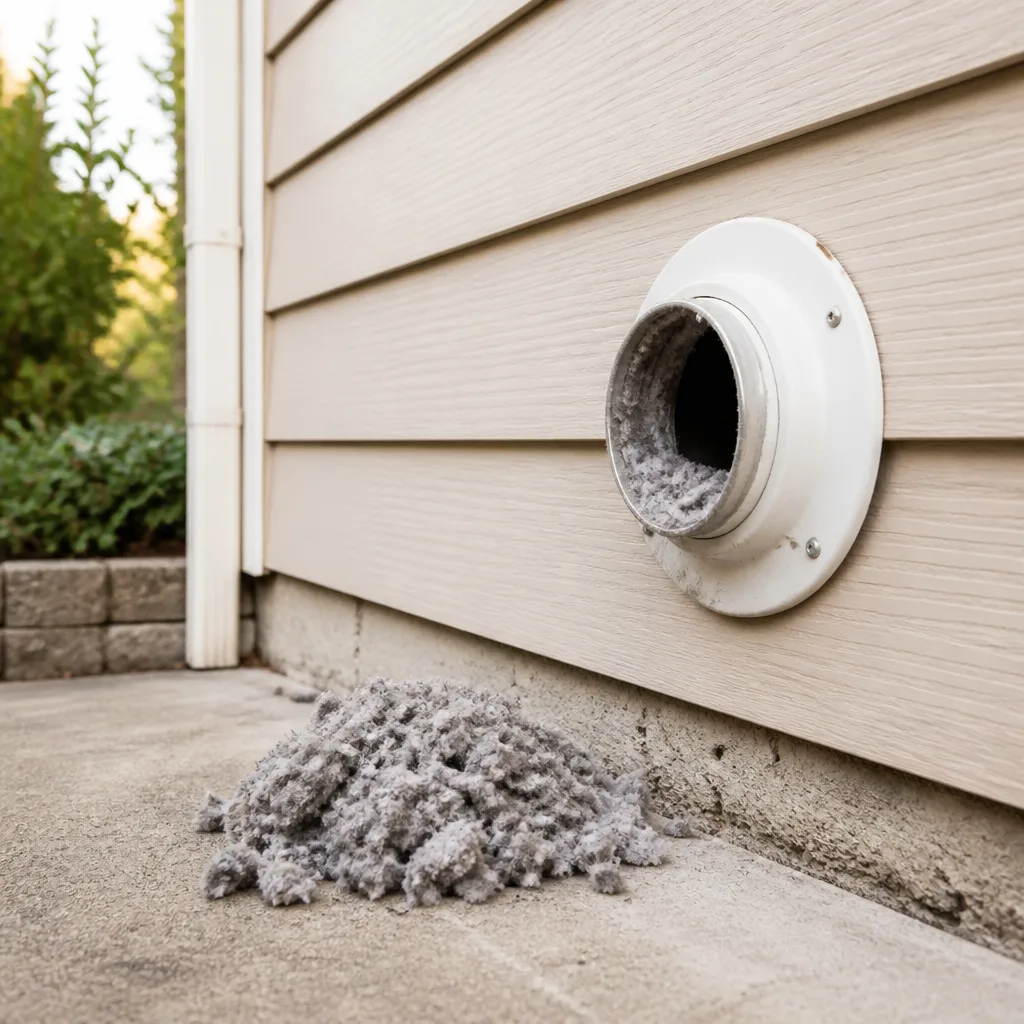 Dryer vent cleaning
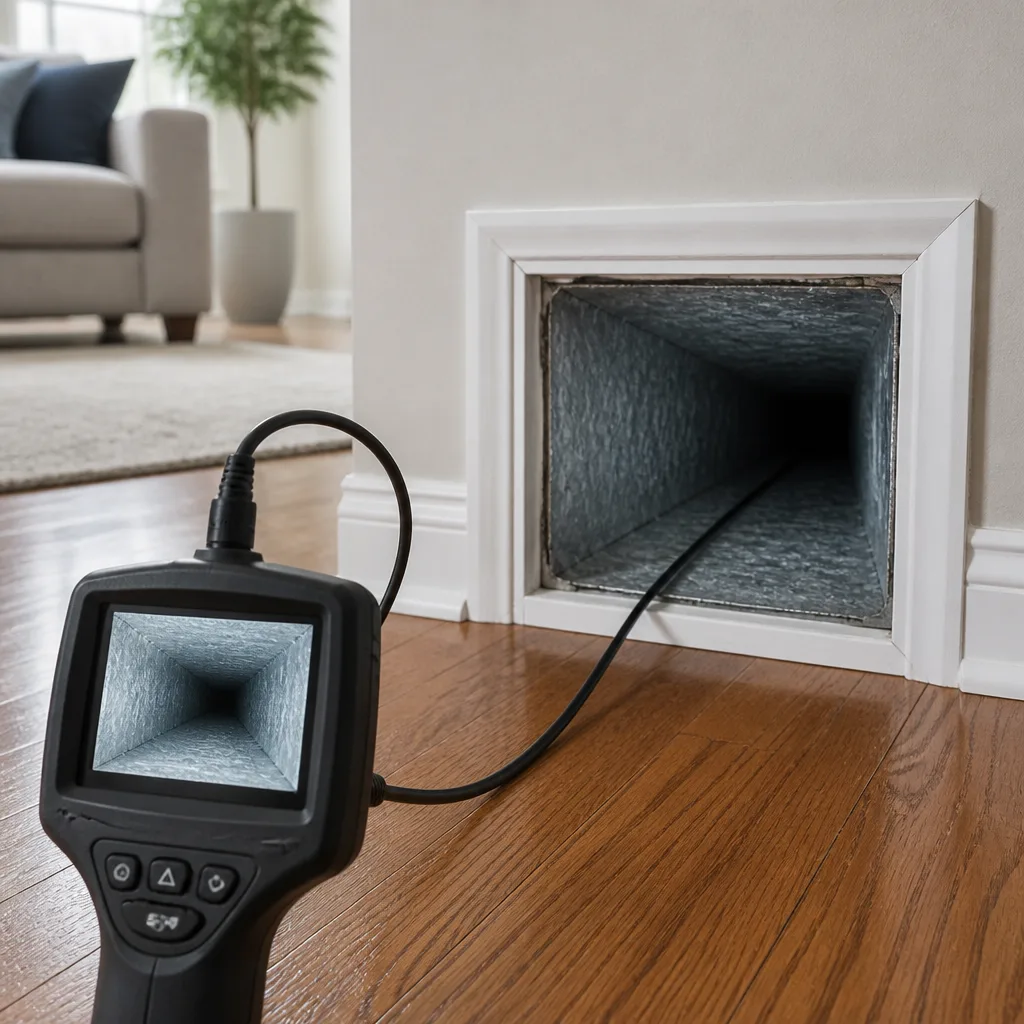 Camera inspection
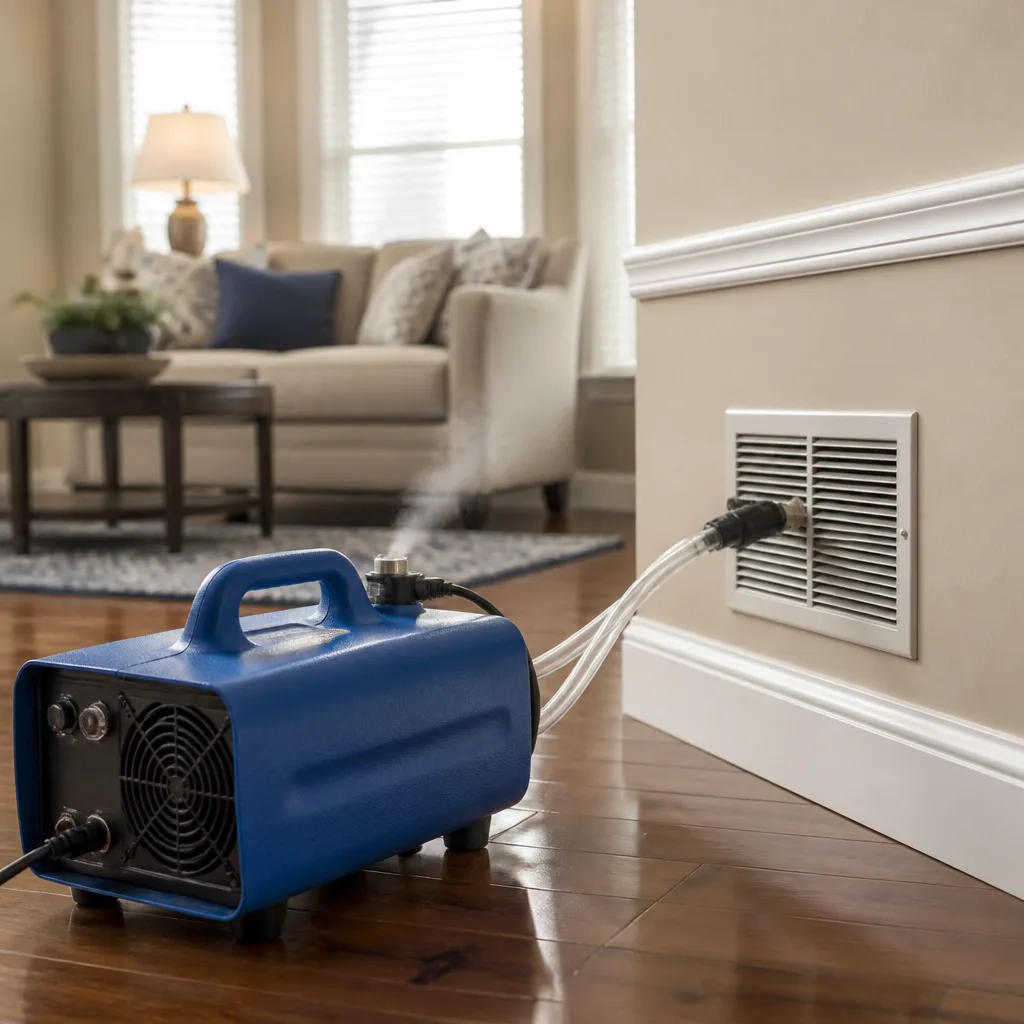 Sanitizing & deodorizing
Whole-system duct and dryer vent check with before-and-after photos - you see exactly what came out of your vents
That "$99 whole-house special" is a bait ad - the real number appears once they are in your hallway, or the "clean" is a shop-vac at the register. We photograph the inside of your ducts before and after instead.
Air Duct Cleaning Permits, Codes & Inspections in Saddle Rock, CO: What You Need to Know
Here’s the part most homeowners miss: telling a contractor to “just patch that collapsed flex duct while they’re in there” can move the job from maintenance into mechanical work that needs a permit under Colorado’s residential building codes. Plenty of Saddle Rock homeowners only learn this during a home sale inspection, when a buyer’s inspector asks for the permit record and there isn’t one. The line between a cleaning and a regulated repair is real, and it’s narrower than people assume. This guide maps exactly where the regulatory lines fall for duct work in Saddle Rock, so you know what needs a permit, what doesn’t, and what to ask for before anyone touches your system.
Quick Answer
Air duct cleaning itself typically doesn’t require a permit in Saddle Rock or anywhere in Douglas County. Cleaning is maintenance. But duct repair, reconfiguration, new duct runs, and dryer vent replacement usually do cross into mechanical code territory that can require a permit and an inspection. The dividing line is whether the work changes the mechanical system (permit likely) or simply clears and maintains it (permit unlikely).
Styles & brands we work with
- Whole-home duct cleaning
- Dryer vent cleaning
- Camera inspection
- Sanitizing & deodorizing
Table of Contents
- Maintenance vs. Alteration: Where Colorado Draws the Line
- How Douglas County Amendments Affect Duct Work in Saddle Rock
- When Duct Sealing Is a Permit-Free Repair and When It Isn’t
- What Documentation to Request From Any Contractor
- The Dryer Vent Exception: Why Replacement Usually Needs a Permit
- What an HVAC Inspection Actually Checks
- Permits, Insurance, and Resale: Why the Paper Trail Matters
- A Step-by-Step Process for Code-Clean Duct Work
Maintenance vs. Alteration: Where Colorado Draws the Line
Colorado’s residential codes, following the International Mechanical Code as adopted and amended at the state and local level, separate routine maintenance from alteration and repair. Cleaning the inside of a duct system to remove dust, debris, and buildup is maintenance. Replacing a section of duct, adding a branch run, resizing a trunk, or changing how air moves through the system is alteration or repair, and that’s the side of the fence where permits and inspections usually live.
In our experience explaining this to homeowners, the confusion comes from the word “repair.” People hear “repair” and think of it as maintenance. Under the code lexicon, “repair” often means restoring a component to its intended function, which frequently triggers the same requirements as an alteration because the mechanical system is being changed, not just cleaned.
Examples that usually stay on the permit-free side:
- Cleaning dust and debris from accessible duct interiors
- Vacuuming and brushing the plenum and supply trunks
- Sanitizing duct interiors with an antimicrobial treatment after cleaning
- Replacing a filter or cleaning a return grille without changing duct routing
- Inspecting joints and taping a small gap with approved sealant where the duct itself is unchanged
Examples that usually require a permit or licensed mechanical contractor in Saddle Rock and most of Colorado:
- Replacing a collapsed or crushed flex duct run
- Adding a new supply or return duct
- Rerouting a duct to serve a new or relocated vent
- Changing the size of a trunk or branch
- Installing or replacing an exhaust fan connected to ductwork
- Replacing a dryer exhaust duct (more on this below)
If you’re simply booking air duct cleaning, the work is maintenance and permits aren’t part of the conversation. The moment a tech starts talking about replacing flex, adding a run, or rerouting, the conversation changes.
How Douglas County Amendments Affect Duct Work in Saddle Rock
Douglas County adopts the International Mechanical Code with local amendments, and it administers permitting and inspections for residential HVAC work within unincorporated areas. Saddle Rock sits at the edge of Aurora and the county line, so the first question to settle is simple: which authority has jurisdiction over the specific address? A property inside Aurora city limits gets inspected under Aurora’s adopted code and process. A property in the unincorporated county falls under Douglas County’s. The answer determines who you call, what the application looks like, and who shows up for the inspection.
Douglas County’s amendments, like most Front Range amendments, tighten the energy and mechanical provisions rather than loosen them. That means duct alterations in Saddle Rock homes are held to insulation, sealing, and sizing standards that reflect Colorado’s climate zone. Flex duct is permitted, but it has to be installed correctly: supported, sealed at the boots, kept short and straight where possible, and not crushed behind drywall or cabinetry. A duct replacement done without a permit typically fails on one of those details when a buyer’s inspector looks.
The practical takeaway for Saddle Rock homeowners:
- Confirm which jurisdiction covers the address before any permit is pulled.
- Ask the contractor which code edition they’re working to, and ask for the permit number before work starts on any alteration.
- Keep the permit and inspection record with your HVAC documentation.
- If the work is cleaning-only, no permit applies, and a contractor shouldn’t charge for one.
Local climate matters too. Douglas County sits in a climate zone where heated air spends months moving through ducts, and poorly sealed or uninsulated duct assemblies in an unconditioned attic lose heat before it reaches the room. That’s the reason sealing and insulation standards exist. When we perform HVAC cleaning in a Saddle Rock home with attic ductwork, we regularly see sections that would fail those standards if they had been inspected, not because of the age of the install, but because sealing was skipped.
When Duct Sealing Is a Permit-Free Repair and When It Isn’t
Sealing is the gray zone that trips up the most homeowners. Applying mastic or approved foil tape to a joint, seam, or small gap on ductwork that stays where it is, in the same configuration, is commonly treated as a maintenance-level repair and typically doesn’t require a permit. Reseating a boot at the wall, sealing a collar around a takeoff, and closing a leak at the plenum are usually in that category. These are fixes that keep conditioned air inside the duct rather than blowing into a wall cavity, and they don’t change the system’s design.
Reconfiguration is different. If the ductwork needs to be cut, sized, extended, or rerouted to seal it properly, or if a leak can’t be closed without replacing the damaged section, the work has moved into alteration territory. That’s when a licensed mechanical contractor and, usually, an inspection enter the picture. The distinction isn’t academic; it’s the difference between a repair with records and an unpermitted modification a home inspector will flag at resale.
Where sealing touches the code more visibly:
- Sealing a boot that has pulled loose from the subfloor or drywall – usually maintenance
- Taping joints on a duct that stays in place – usually maintenance
- Replacing a crushed section of flex with a new, correctly sized run – usually a permit
- Adding a new sealed branch to extend a run – usually a permit
- Resizing a trunk to correct static pressure – usually a permit
- Sealing an inaccessible duct in a wall – think carefully; the code may require access
Duct repair and sealing is a core service for a reason. When a system is leaking, a straight cleaning only removes the dust that’s about to be re-deposited by the same leak. Sealing fixes the source. But we recommend every homeowner ask explicitly whether the repair crosses into a code-regulated alteration, and get the answer in writing before work begins. If sealing is all that’s needed, it’s a same-visit job and no permit is involved.
What Documentation to Request From Any Contractor
Any contractor performing duct work beyond cleaning should be able to hand you a small paper trail. This matters for your homeowner’s insurance, for resale, and for resolving any dispute later. If a contractor can’t produce it, the work is being done on a handshake, and that’s not a position you want to be in three years from now.
The documents to ask for before any duct work beyond cleaning:
- Copy of the contractor’s state-issued mechanical license (if the work requires one)
- Certificate of general liability insurance naming your address as the project location
- Copy of the pull permit, if one is required for the scope
- Written scope of work specifying exactly what’s being cleaned, repaired, or sealed
- Written estimate per system (not per vent, not per hour)
- Photos of the before-and-after condition of the duct system
- A written receipt listing the work performed for your records
For cleaning-only work where no permit applies, the documents are different but no less important: written scope, per-system pricing, before-and-after photos, and the technician’s name on the receipt. Your insurer treats those photos as evidence the work was actually performed to the standard described, and a buyer’s home inspector treats them as evidence the ducts were maintained.
One more point. When a contractor uses professional-grade equipment – Rotobrush and Nikro systems for agitation and extraction, and HEPA containment from a maker like Abatement Technologies – the documentation tells you which process was actually run, not just that someone showed up with a vacuum. That matters if the ducts were housing dust after remodeling or a renovation. Photographic evidence is the difference between “they cleaned the ducts” and “here’s what came out.”
The Dryer Vent Exception: Why Replacement Usually Needs a Permit
Dryer vent duct replacement almost always requires a permit and inspection in Colorado residential properties. This is the most common surprise for Saddle Rock homeowners. Cleaning the dryer vent is routine maintenance and permit-free. Replacing the duct, rerouting it, extending it, or installing a new vent cap is a code-regulated alteration, because the dryer exhaust system is part of the mechanical code, not a household appliance.
Why the code treats it seriously: dryer vents are a fire and carbon-monoxide risk. Every year, dryer fires trace back to lint buildup in a vent that was too long, too many elbows, not the right material, or crushed under a floor. The code provisions exist to make those failure modes less likely. When the work is permitted, an inspector checks the length, the material, the slope, the termination, and the access for periodic cleaning. Without a permit, none of those checks happen.
What you should know about dryer vent cleaning versus replacement in Saddle Rock:
- Cleaning the vent from the outside and the dryer connection – maintenance, no permit
- Replacing a crushed or kinked section of vent – usually requires a permit
- Rerouting the vent to a different wall – usually requires a permit
- Installing a new dryer vent run in a new buildout – requires a permit
- Replacing the exterior vent cap or flap – check with your jurisdiction; usually part of an inspection
Cleaning the vent is still the more urgent concern for most households. A clogged dryer vent is a fire risk long before it’s a code issue, and cleaning it doesn’t need a permit. If the vent is crushed or the run is failing, that’s when the code conversation starts.
What an HVAC Inspection Actually Checks
An HVAC inspection on duct work is not a cleaning verification. The inspector is checking that the mechanical system, as installed or altered, meets the adopted code. That means the inspector looks at sizing, materials, sealing, support, and termination. Cleaning quality is not part of the inspection, which is one more reason to keep the cleaning and the code work as separate conversations.
The typical checklist for a duct alteration inspection in Saddle Rock and the surrounding county:
- Duct material and installation method match the approved plan
- Duct sizing supports the system’s designed airflow
- Joint and seam sealing meets the adopted energy and mechanical provisions
- Duct support spacing is within code
- Flex duct runs are straight, supported, and not crushed at boots
- Terminations and exterior caps are present and correctly configured
- Insulation on ducts in unconditioned spaces meets the climate-zone requirement
- Any exhaust or dryer vent run has correct length, slope, material, and termination
The inspection is usually scheduled after rough-in and before drywall goes back up if the work is inside a wall. For attic duct work, it happens after the alteration is complete and the system is buttoned up. If the work was done without a permit, the remedy is usually to apply for a permit retroactively and have the work inspected, which can mean opening walls the alteration otherwise would have stayed behind.
The reason this matters in Saddle Rock specifically: many homes have attic duct runs where alterations are common, since that’s the easiest place to add a run. A permit and inspection on that work is cheap insurance. The avoided cost of retrofitting a failed unpermitted install at resale is much larger.
Permits, Insurance, and Resale: Why the Paper Trail Matters
An unpermitted duct alteration follows the house, not the contractor. When you sell, the buyer’s inspector will look at the mechanical system and may ask for permit history. If the duct work has been altered and there’s no permit record, the sale can stall, the buyer can ask for a price reduction, or the seller can end up paying to have the work reopened and inspected before closing. A permit that costs a modest amount up front can become a five-figure negotiating point if it’s missing.
Insurance is the second front. If a fire, water event, or HVAC failure traces back to an unpermitted duct alteration, your insurer can question coverage. The question isn’t whether the work was done well, it’s whether the work was done legally and inspected. Permits are how the insurer answers that question.
What to keep in your home’s HVAC file after any duct work:
- Copy of the permit application and approved permit
- Copy of the inspection report showing pass
- Written scope of work from the contractor
- Before-and-after photos of the duct condition
- Contractor’s license and insurance documents
- Receipt showing the work performed and the date
Even for cleaning-only work, before-and-after photos and a written scope belong in that file. They prove the ducts were maintained, not left alone, and a buyer’s inspector who sees a photo-documented cleaning history is a happier inspector. Our cleaning records include the photos because we want you to be able to show them years later.
A Step-by-Step Process for Code-Clean Duct Work
Here’s the sequence that keeps a Saddle Rock duct project on the right side of the code, from the first call through the final inspection.
- Define the scope in plain language. Is the work cleaning only, repair only, or repair plus alteration? The answer determines whether a permit applies.
- Confirm jurisdiction. Saddle Rock addresses fall under either Aurora or unincorporated Douglas County. Ask the contractor which authority will inspect the work.
- Get a written scope and a per-system estimate. Every system gets a flat price agreed before work begins. Not per vent, not per hour, not a coupon.
- Pull the permit before work starts, if one is required. A contractor who wants to “start now and pull the permit later” is telling you something. Listen to it.
- Do the cleaning first, then the repair. Cleaning a duct system before repairing it means you aren’t cleaning around debris that the repair will dislodge. It also means the repair can be inspected on a clean system.
- Capture before-and-after photos. Photos are documentation for the inspection, for your insurer, and for resale.
- Schedule the inspection. The contractor is responsible for it on permit work. If they don’t offer, ask who is calling the inspector.
- File everything. Permit, inspection, scope, photos, receipt. Binder, folder, shared drive, any of the above, but keep it with your home records.
The one place homeowners most often skip a step is the first one. Defining the scope before the tech arrives is the cheapest part of the process. It also prevents the awkward moment where a “quick patch” turns into an unpermitted alteration. Our technicians have up to 9 years of experience and can usually tell you from a walkthrough whether a proposed repair crosses the code line, so ask before the work begins.
Common Mistakes to Avoid
- Assuming a cleaning quote covers a repair. A cleaning estimate for a Saddle Rock home is for cleaning. If the tech finds a crushed flex run or a boot that has pulled loose, that’s a separate scope and possibly a separate permit. Ask before they start.
- Skipping the permit on a “small” duct repair. Replacing one section of flex seems minor, but it’s a mechanical alteration under the code. The size of the work doesn’t change the requirement.
- Not knowing which jurisdiction covers the address. Aurora and Douglas County have their own processes. If a contractor pulls the wrong permit, the inspection can be dismissed and you may have to start over.
- Treating dryer vent replacement as preventive maintenance. In Colorado it usually requires a permit and inspection. Cleaning the vent doesn’t, but replacing it almost always does.
- Paying per vent or per hour. Flat per-system pricing is the standard for honest work. Per-vent pricing is how a base price ends up quadrupled once the crew is on site.
- No photos. Without before-and-after images, you can’t prove the work was done when a buyer’s inspector asks, or when your insurer asks, or when the county comes back for an inspection.
- Not keeping the paper trail. Permit, inspection, scope, photos, receipt. All of it belongs in your home file. In Saddle Rock, where resale values make any mechanical deficiency worth money, a missing permit record is a negotiating liability.
See the difference
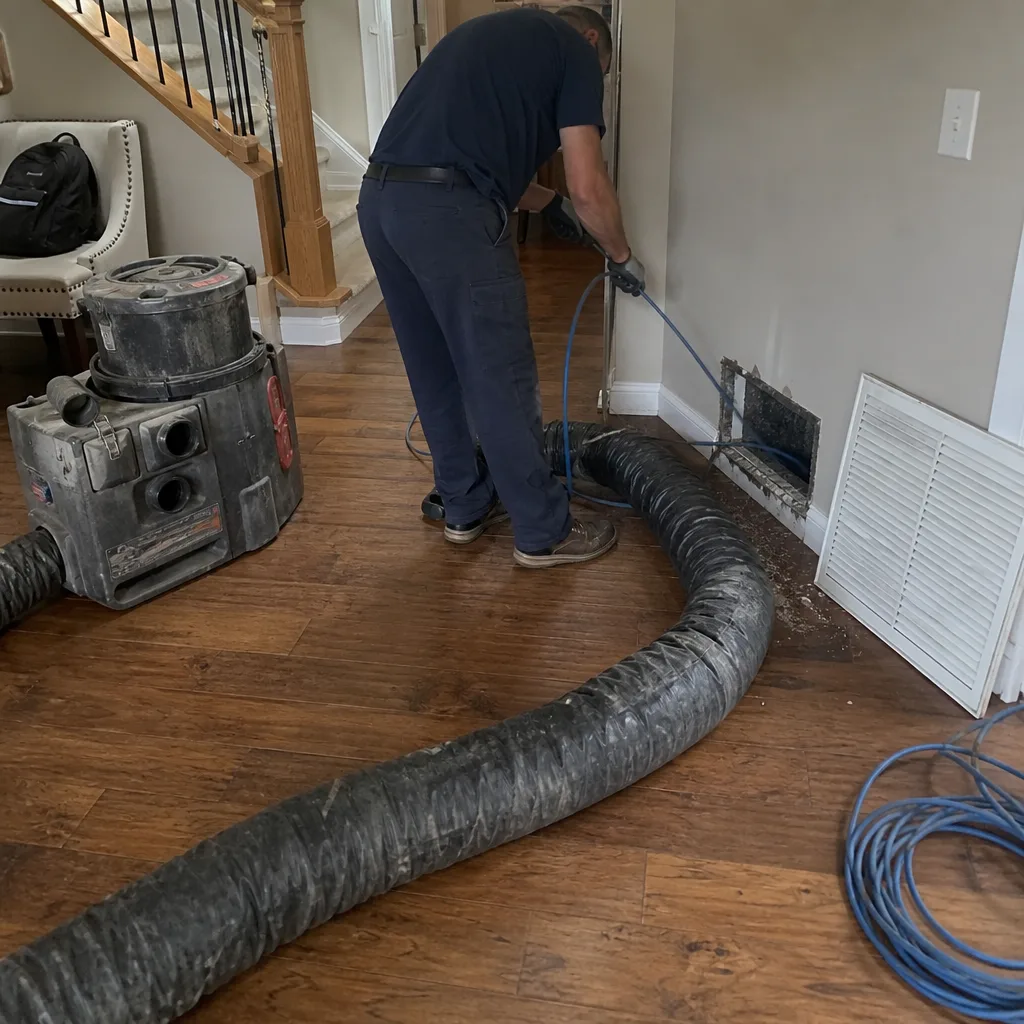 Before
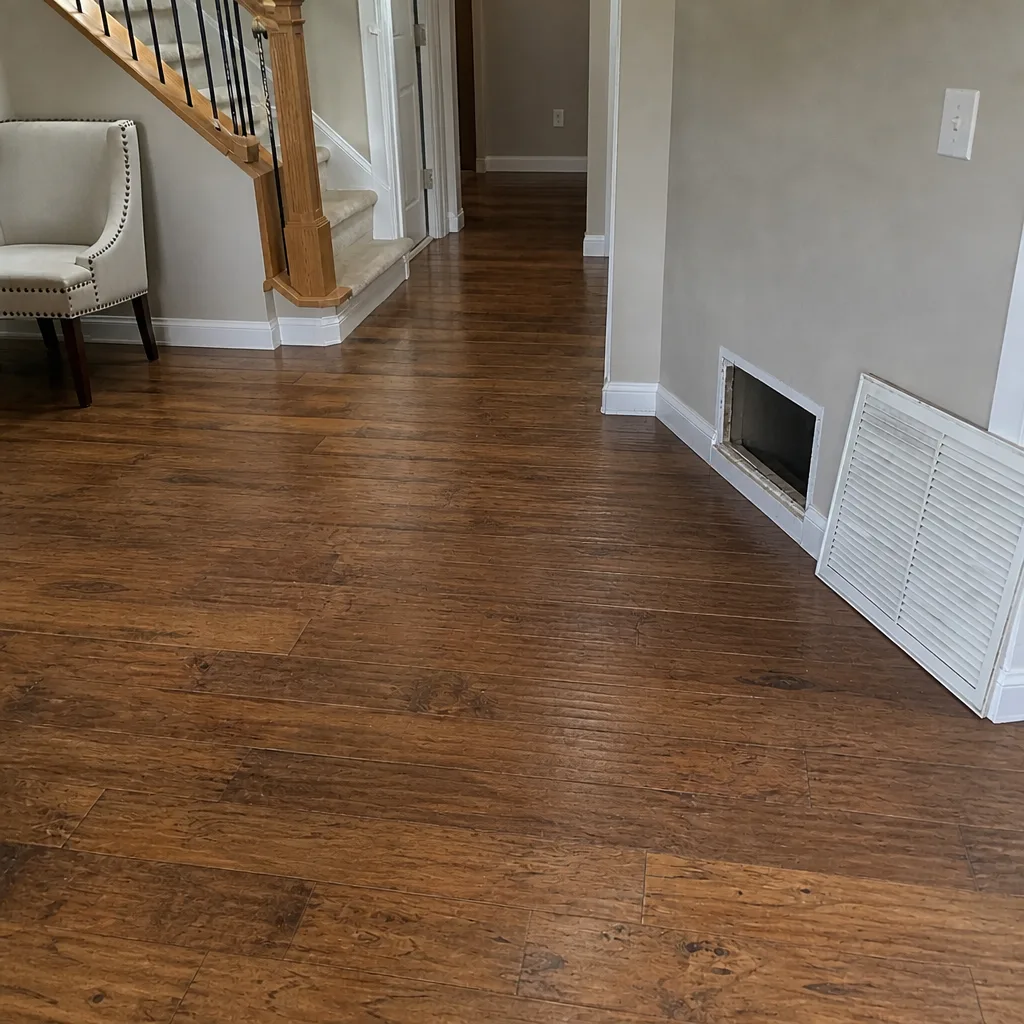 After
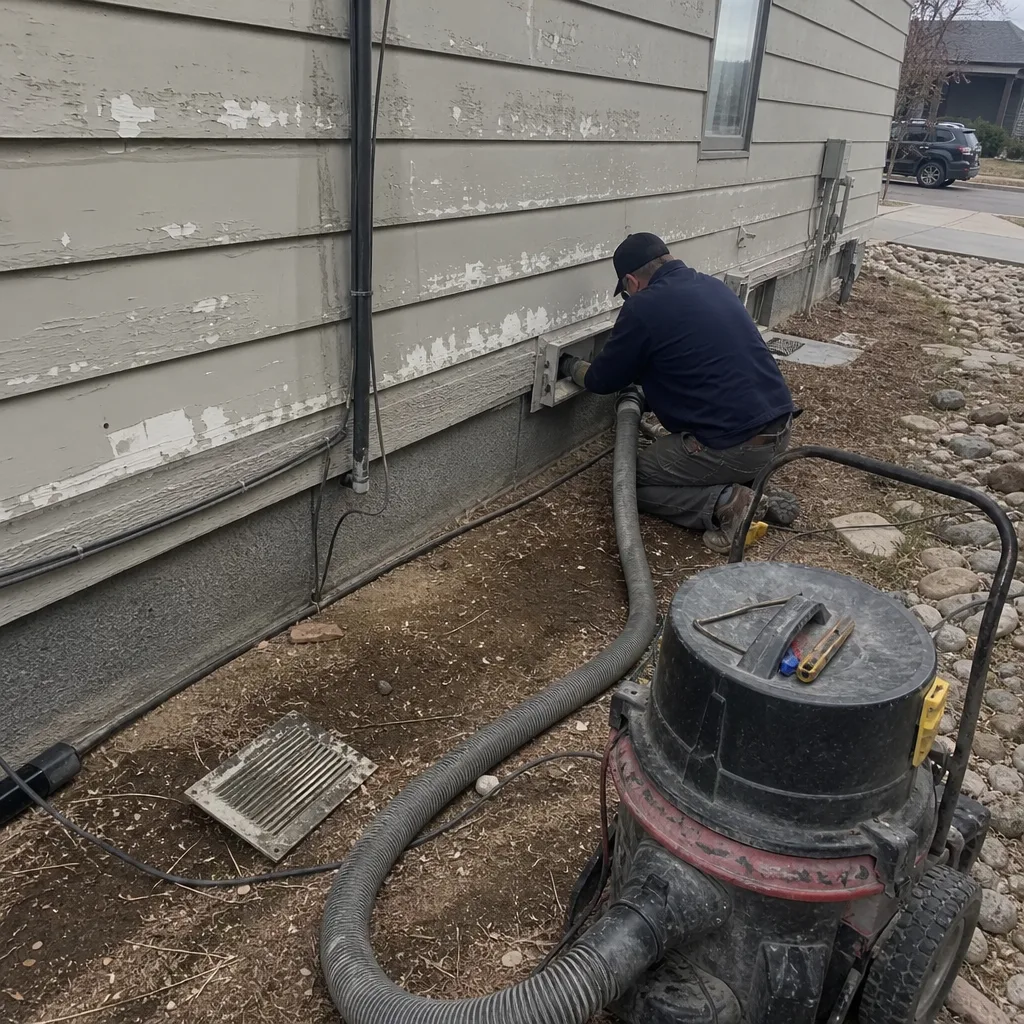 Before
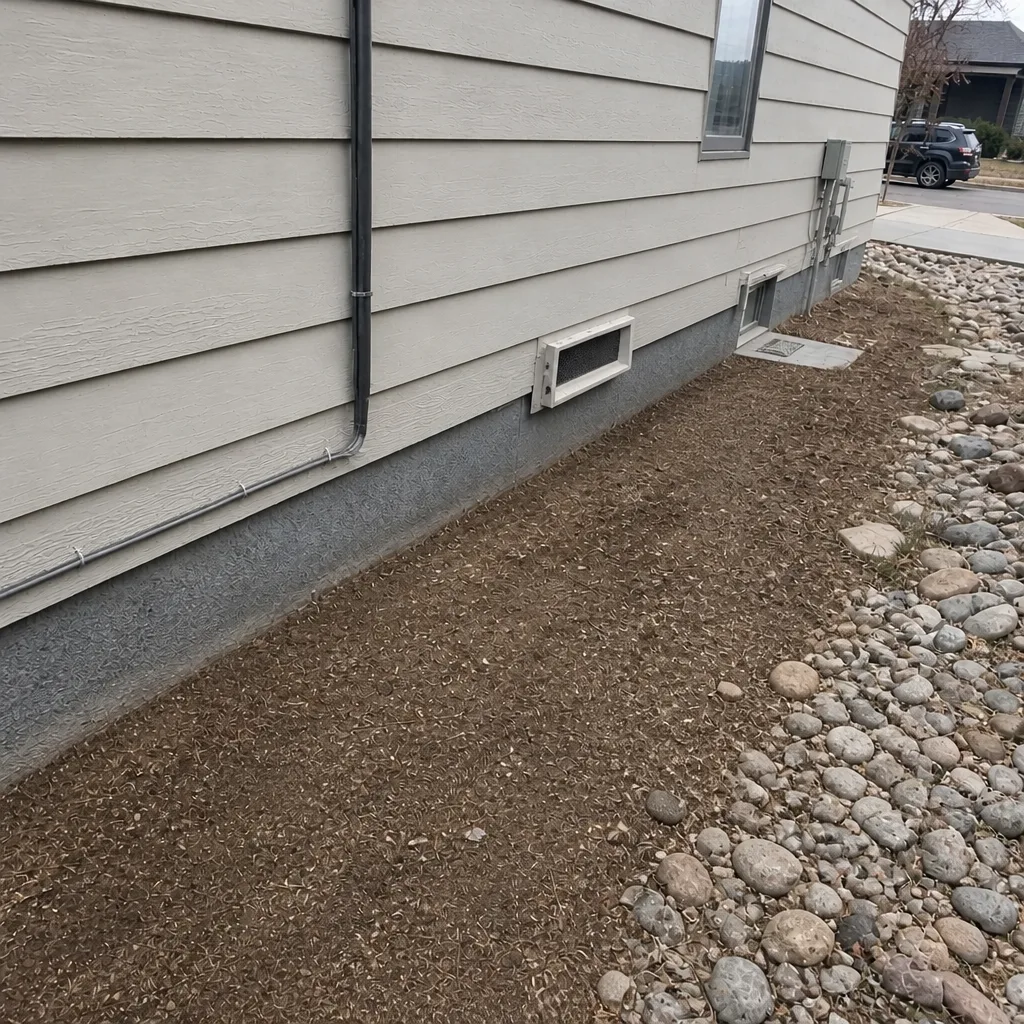 After
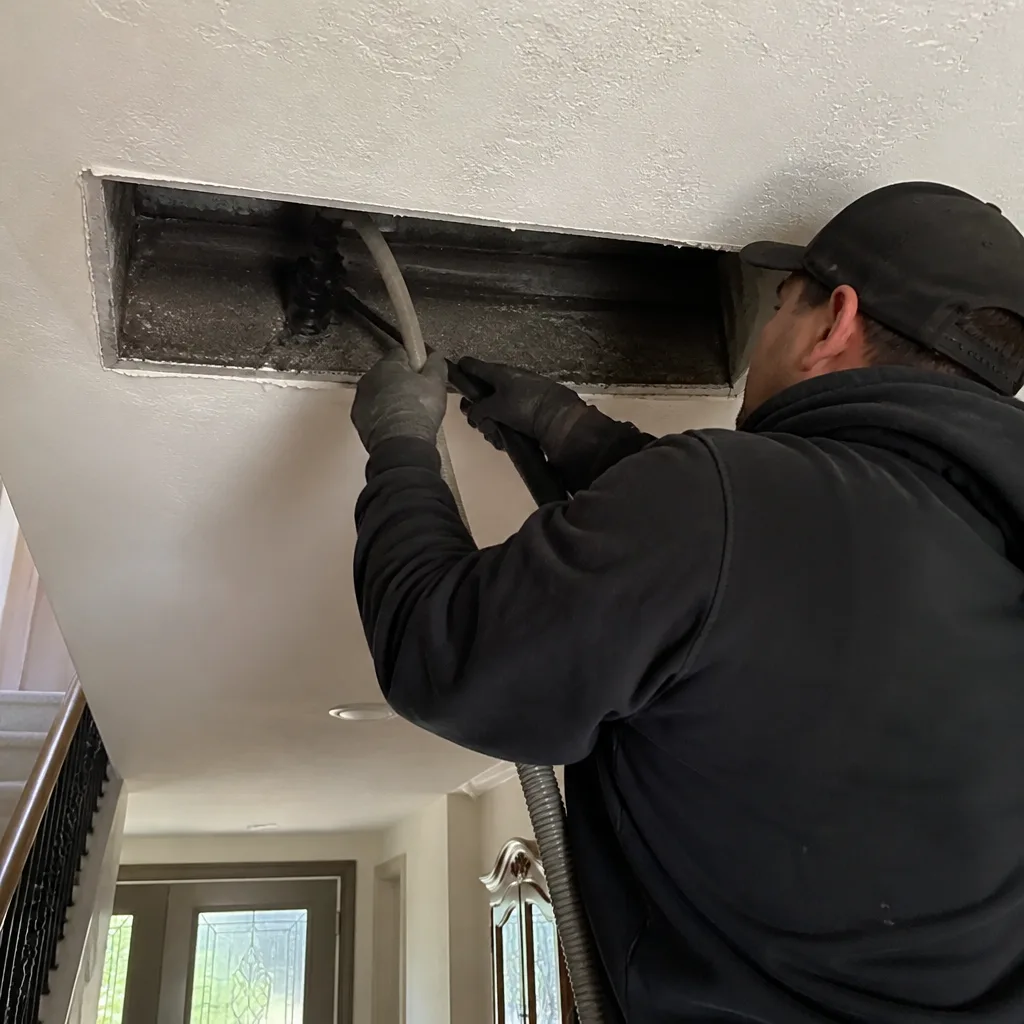 Before
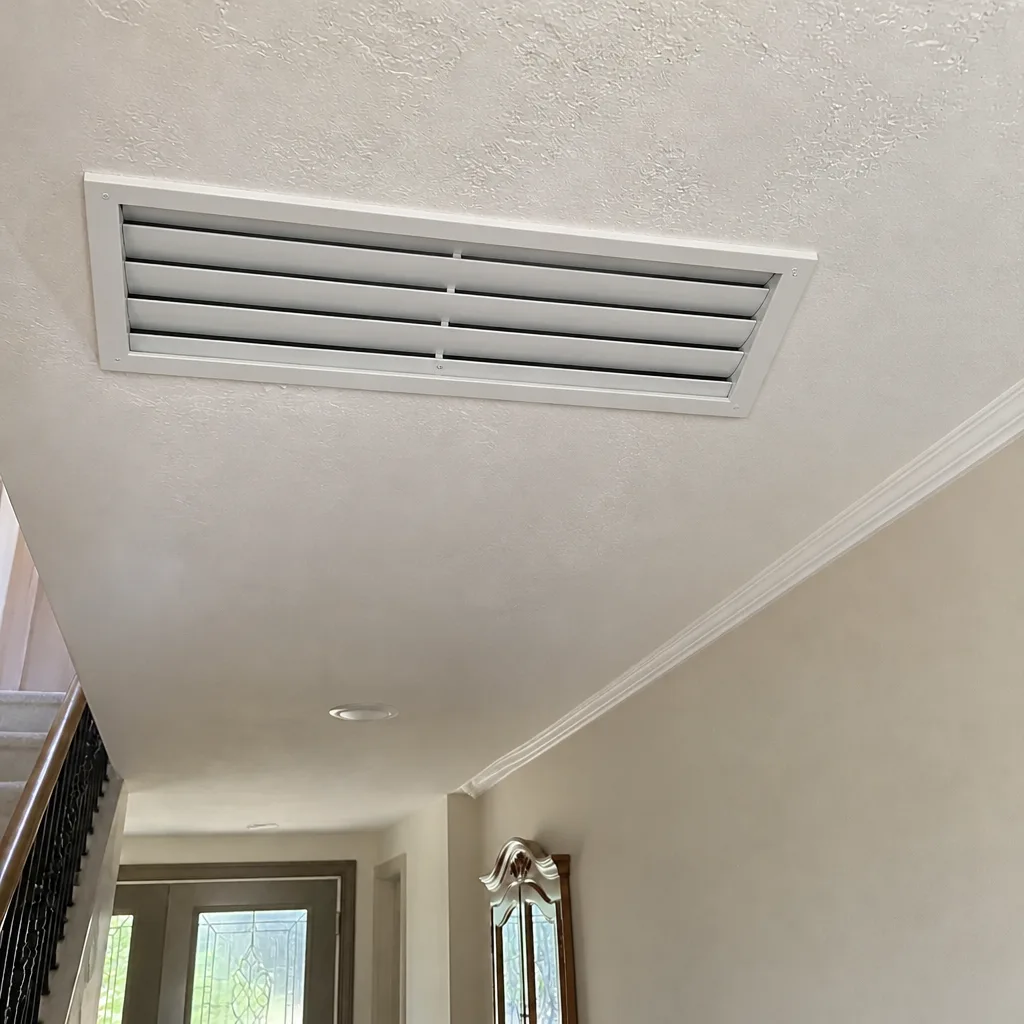 After
When to Call a Professional
Call a professional when a duct issue becomes a repair, an alteration, or a safety question. Crushed or detached flex, a boot pulled away from the floor or wall, a duct run that needs to be added or rerouted, a dryer vent that’s failing, or an HVAC system where dust comes back within days of cleaning all point to work that goes beyond maintenance. So does a home sale inspection that flags unpermitted duct work, or an insurer asking for records you don’t have. For pure cleaning, a documented walkthrough of the system is what you want: see what’s actually inside your ductwork before anyone recommends work. Air Duct Cleaning Saddle Rock offers free estimates in Saddle Rock. Call (877) 770-0819.
Frequently Asked Questions
No. Air duct cleaning is maintenance and doesn’t require a permit in Saddle Rock or anywhere in Douglas County. Cleaning removes debris from inside the existing duct system without changing it, and the code applies to alterations and repairs, not maintenance. Call (877) 770-0819 for a free estimate; we’ll confirm whether your project is cleaning-only or crosses the code line.
Duct repair usually requires a permit when the work changes the mechanical system rather than restoring it: replacing a section of flex, adding a new run, rerouting a duct, resizing a trunk, or installing a new exhaust connection. Sealing a joint, taping a leak, or reseating a boot on unchanged ductwork usually does not. Call (877) 770-0819 for a free estimate; we can tell you from a walkthrough which category your repair falls into.
Dryer vent replacement usually requires a permit and inspection in Colorado residential properties. The dryer exhaust is part of the mechanical code, so replacing, rerouting, or reconfiguring it is an alteration, not maintenance. Cleaning the vent does not need a permit. Call (877) 770-0819 for a free estimate on the cleaning side, and ask your jurisdiction about the permit before any replacement.
It depends on the address. Saddle Rock properties fall under either Aurora or unincorporated Douglas County depending on the parcel, and the permit and inspection authority follows the jurisdiction. Ask your contractor which one covers your property before any permit is pulled. Call (877) 770-0819 for a free estimate; we’ll help you sort out which authority applies.
Some quotes are cheap because they price per vent and pick up the difference once the crew is on site, or because they skip the equipment that captures dust instead of just moving it. A whole-system, per-system price quoted in advance is the honest baseline. Rotobrush and Nikro cleaning systems with HEPA containment from a maker like Abatement Technologies are what the work actually requires. Call (877) 770-0819 for an exact quote, and estimates are free.
Ask for before-and-after photos of your own ducts, a written scope of work, and a receipt listing what was performed. If the work involved a permit, ask for the inspection report. Keep all of it with your home records. Call (877) 770-0819 for a free estimate, and we’ll walk you through what documentation comes with our work.
The Bottom Line
Cleaning your ducts is maintenance and doesn’t need a permit. Duct repair, alteration, and dryer vent replacement usually do, and the line between them is where Saddle Rock homeowners get caught. Confirm which jurisdiction covers your address, ask for the permit before work begins on any alteration, and keep the paper trail: permit, inspection, scope, photos, receipt. A small permit up front is worth far more than a stalled sale later. See what’s actually inside your ductwork with Air Duct Cleaning Saddle Rock, and start with a documented walkthrough before anyone recommends a repair.
Whether you’re booking a cleaning, sorting out code questions, or scheduling a documented inspection, we’re here to help. Call (877) 770-0819 for a free estimate. We answer 24/7. Fast dispatch from 7am to 7pm, Sunday through Friday.
Written by the team at Air Duct Cleaning Saddle Rock.