
Last updated November 25, 2026
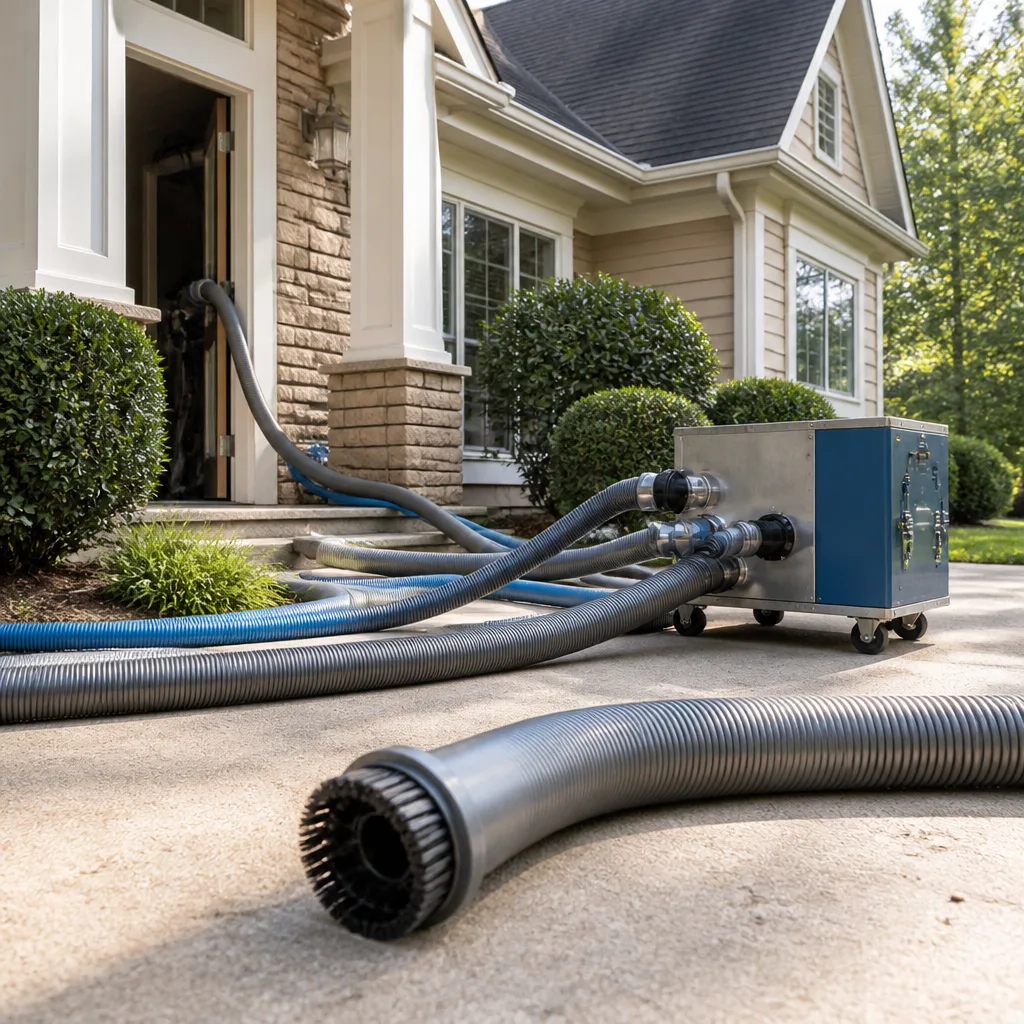 Whole-home duct cleaning
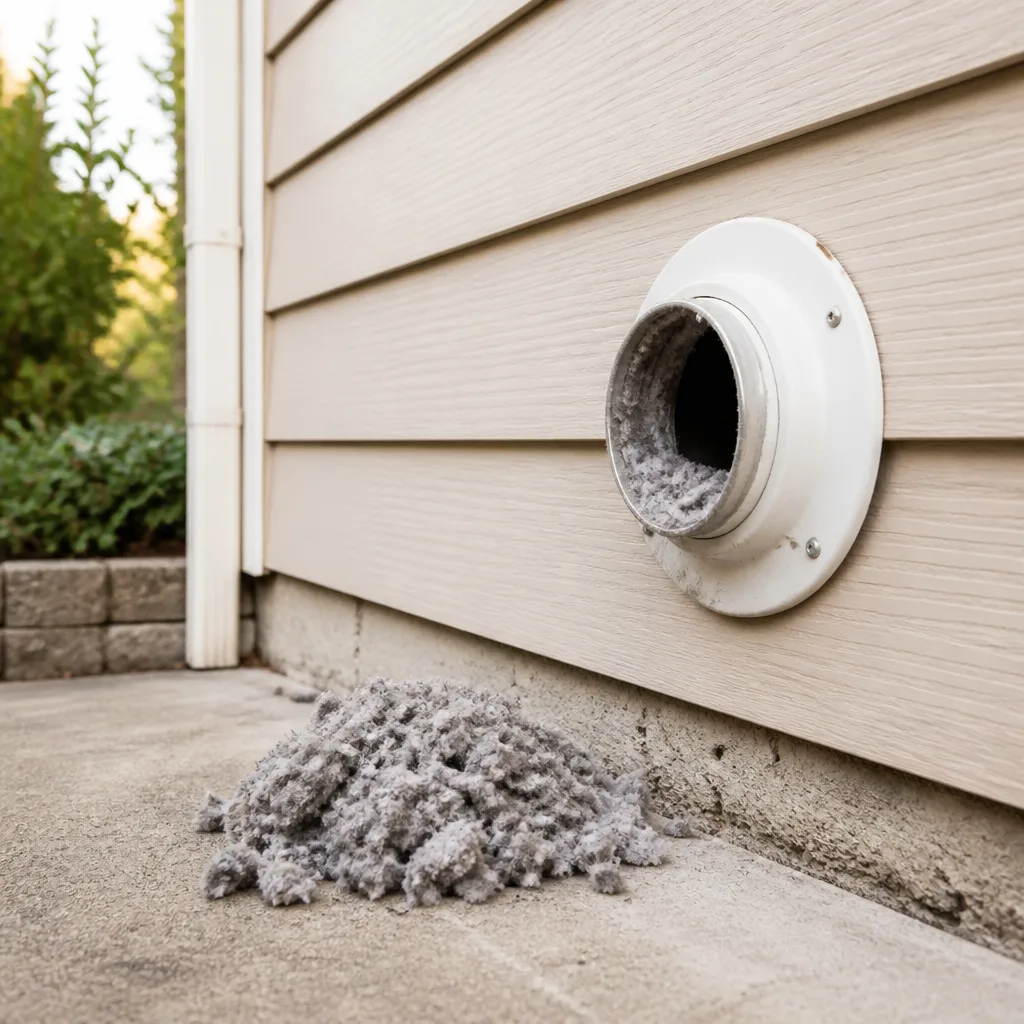 Dryer vent cleaning
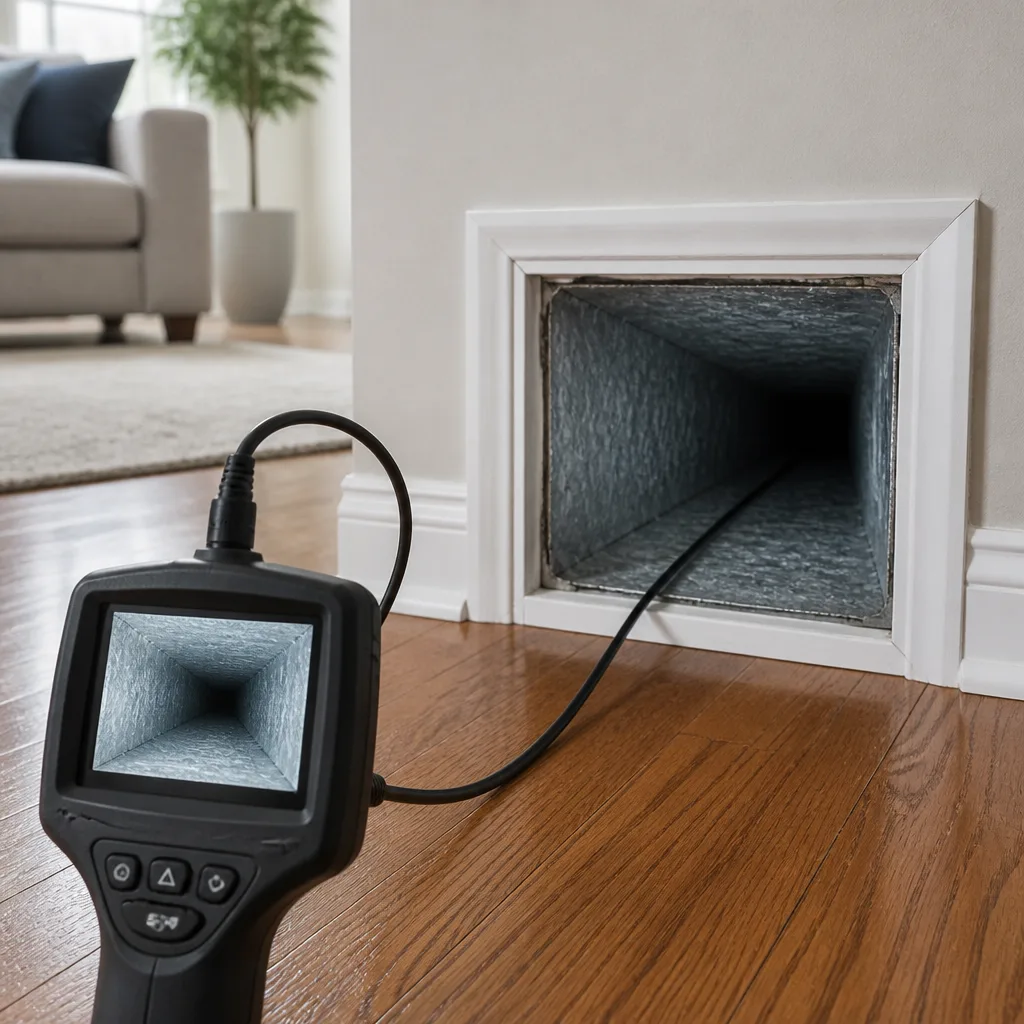 Camera inspection
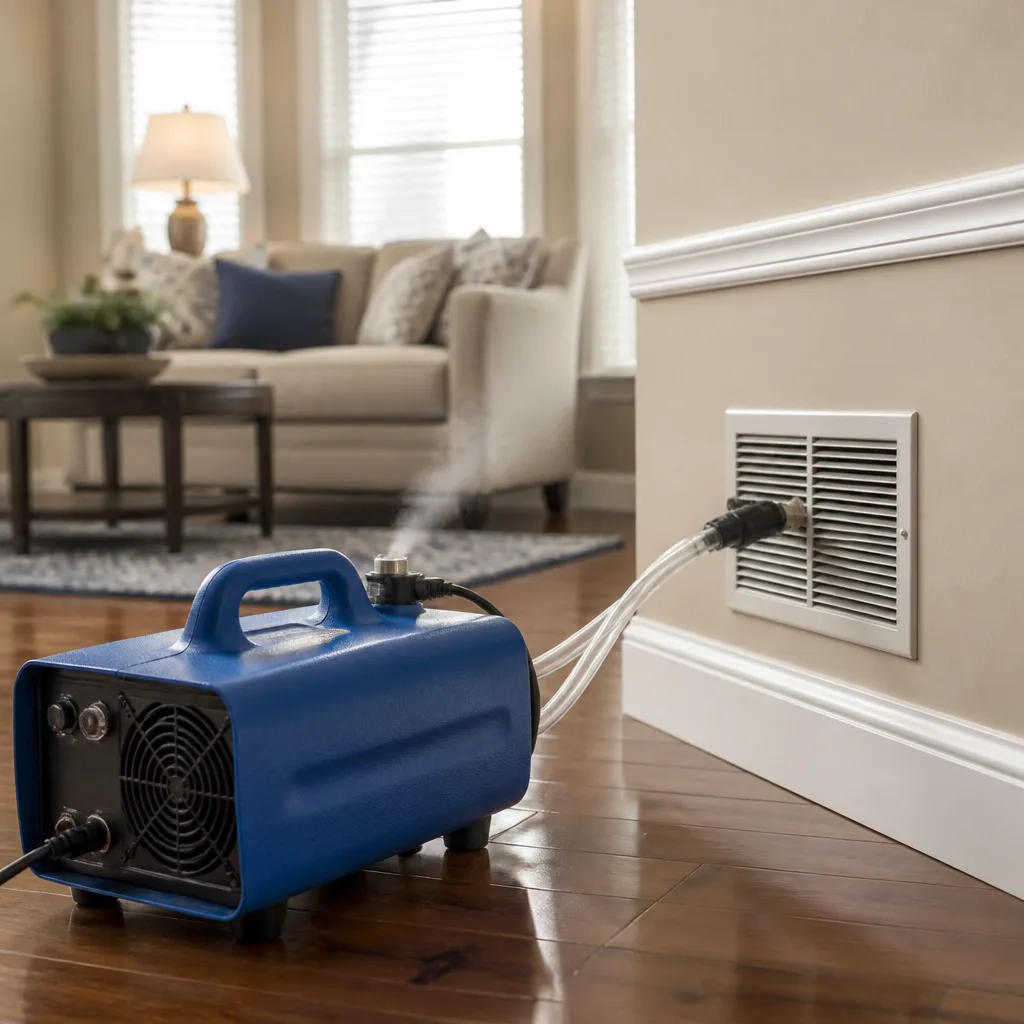 Sanitizing & deodorizing
Whole-system duct and dryer vent check with before-and-after photos - you see exactly what came out of your vents
That "$99 whole-house special" is a bait ad - the real number appears once they are in your hallway, or the "clean" is a shop-vac at the register. We photograph the inside of your ducts before and after instead.
Air Duct Cleaning Maintenance Checklist for Saddle Rock Homeowners
The filter you change every month is not protecting your ducts. It’s protecting your blower. That single distinction changes how you should think about every other maintenance task on this list, because it means the filter catches what’s already airborne while everything downstream of it – the plenum, the trunk lines, the branch runs, the coil, the boot connections – keeps collecting whatever slips past. Most homeowners in Saddle Rock are running a filter schedule and calling it duct maintenance. It isn’t. What follows is a framework for building your own inspection and cleaning schedule around your home’s specific variables rather than following a generic “every three to five years” rule that ignores construction date, pets, occupancy, and renovation history. Read it once, log your system, and you’ll stop guessing.
Quick Answer
There’s no universal duct cleaning interval. A calibrated Saddle Rock maintenance schedule starts with a baseline inspection, then shifts based on your home’s construction date, number of occupants and pets, renovation history, allergy sensitivity, and local environmental triggers like wildfire smoke events and spring Front Range wind. Most homes need professional inspection every two to three years and full cleaning when inspection shows measurable buildup – not on a fixed calendar. Between visits, quarterly register checks and filter changes on a schedule matched to your filter’s MERV rating keep the system from degrading between service calls.
Styles & brands we work with
- Whole-home duct cleaning
- Dryer vent cleaning
- Camera inspection
- Sanitizing & deodorizing
Table of Contents
- Why a Checklist Beats a Fixed Calendar
- The Variable-Input Matrix: What Shifts Your Interval
- Five Components Homeowners Never Include (But Technicians Check First)
- Reading Your Register Grilles Between Professional Visits
- How to Log Your System’s Maintenance History
- Saddle Rock-Specific Triggers: Smoke, Construction, Spring Wind
- A Season-by-Season Walkthrough
- What You Can Check Yourself and What Needs a Pro
Why a Checklist Beats a Fixed Calendar
The “every three to five years” number gets repeated everywhere because it’s easy, not because it’s accurate. Two homes on the same street in Saddle Rock can have completely different duct loads. One is a household of two with no pets and a filter changed on schedule. The other has four occupants, two dogs, a kitchen renovation two winters back, and a return duct that runs through an unconditioned section of the crawlspace. Those two systems don’t need the same service interval, and treating them identically means one gets cleaned too often and the other gets neglected.
A checklist approach works because it forces you to account for inputs. Instead of asking “when was the last time we had the ducts cleaned,” you ask “what’s changed since the last inspection.” That’s the question that actually drives the right decision. If nothing has changed – same occupants, same pets, no remodeling, no smoke events, filters changed on schedule – then the system is on a stable trajectory and inspection every two to three years is reasonable. If any of those inputs shifted, the interval compresses.
This is where duct maintenance connects to the rest of the HVAC system. Your air handler, coil, and ductwork are one assembly. When the ducts carry more debris than the system was designed to handle, the blower motor works harder, the evaporator coil fouls, and static pressure climbs. Over time that shows up as uneven room temperatures, weak airflow at the far registers, and a system that runs longer to hit the thermostat setpoint. Duct maintenance isn’t a separate chore from HVAC health – it’s the unglamorous half of it that nobody advertises.
The checklist we use in Saddle Rock homes isn’t a schedule you follow once. It’s a living document. You update it when something changes, and it tells you what to do next. Build it once, review it yearly, and it does the thinking for you.
The Variable-Input Matrix: What Shifts Your Interval
This is the core of the guide. Each variable below is an input that moves your inspection interval in one direction or the other. You don’t need to score them. You just need to know which ones apply to your Saddle Rock home and let them adjust the baseline.
Pets
Pets are the single most underestimated input on this list. Fur and dander don’t stay on the floor – they get pulled into the return and lodge in the duct walls where airflow is lowest. Homes with one or more shedding pets should plan on inspection every eighteen to twenty-four months, and cleaning when the inspection shows accumulated material. Cat and dog dander is also a known allergen trigger, so for households with allergic occupants, the pet variable stacks with the allergy variable below.
Allergies and Respiratory Sensitivity
If anyone in the home has diagnosed allergies, asthma, or a respiratory condition, the interval tightens regardless of what the other inputs say. That’s because the tolerance for airborne particulates is lower, not because the ducts are dirtier. A home with no allergy concerns can tolerate a moderate debris load without symptoms; a home with a sensitive occupant can’t. Inspection every twelve to eighteen months makes sense here, with cleaning timed to what the inspection finds rather than a fixed calendar.
Recent Remodels
Drywall dust is the worst thing you can put into a residential duct system. It’s fine, it travels, and it coats every interior surface it touches. Any renovation that involved drywall, sanding, demolition, or flooring replacement sends a plume of material into the return air path unless the system was sealed off during work – and it rarely is. Plan a full inspection within ninety days of completing a remodel, and clean if there’s visible accumulation at the registers or a dusty film on the supply grilles. This is one of the most common reasons we get called to Saddle Rock homes mid-project.
Wildfire Smoke Events
Front Range smoke events push fine particulate into the return air stream over days, not hours. The filter catches a lot of it, but the loading it produces is real, and homes that ran their systems through a heavy smoke period often find fine grey residue in the ductwork months later. Log every significant smoke event in your maintenance history and treat it as a trigger for inspection, especially if the home is in an area of Saddle Rock that saw sustained smoke.
Occupancy and Construction Date
More people in the home means more dust, more humidity, more particulate. Four occupants generate meaningfully more load than two. Construction date matters too: homes built in different eras used different duct materials, insulation, and sealing standards, and older systems are more likely to have unsealed joints that pull unconditioned air – and everything in it – into the supply stream. If your home is older and you’ve never had a full inspection, start with one rather than working from a calendar.
The Matrix, Condensed
- No pets, no allergies, no recent remodel, two occupants: inspect every 24 to 36 months
- One or more shedding pets: inspect every 18 to 24 months
- Allergic or respiratory-sensitive occupant: inspect every 12 to 18 months
- Remodel completed within the last year: inspect within 90 days, then resume baseline
- Significant wildfire smoke exposure: add a one-time inspection, then resume baseline
- Older home, never inspected: full inspection first, then set the interval from findings
These aren’t hard rules. They’re starting points that you adjust based on what inspection actually shows. The point is to stop treating the interval as fixed and start treating it as a function of the inputs your Saddle Rock home actually has.
Five Components Homeowners Never Include (But Technicians Check First)
When a homeowner says “duct maintenance,” they usually mean cleaning the ductwork. When a technician opens up a Saddle Rock system, the first things they look at are the components outside the duct runs themselves. These five are where most of the real problems live.
1. Flex Duct Sag
Flexible duct is common in attic and crawlspace runs, and it’s supposed to be supported at regular intervals so it stays round and straight. When it sags, the interior profile changes from round to oval, which restricts airflow and creates a low point where debris settles. Sagging flex also kinks at fittings, and each kink is a pressure loss. Inspect the runs in the attic or crawlspace visually – if you see dips in the flex where it hangs between supports, that’s a signal to have the routing checked. Duct repair and sealing is what addresses this, because sagging runs are usually a symptom of poor original installation or a support that’s come loose.
2. Plenum Seals
The plenum is the box that connects your air handler to the trunk lines. Its seams are usually sealed with mastic or foil tape, and both fail over time. A leaking plenum pulls in air from whatever space it sits in – often a garage, attic, or crawlspace – and that air comes with everything in it. This is one of the highest-value inspection points on any system and one of the most commonly ignored. If the plenum is in an unconditioned space and the seal is compromised, you’re drawing unfiltered air directly into the supply stream.
3. Coil Drain Pan
The condensate drain pan sits under the evaporator coil and catches water pulled out of the air during cooling season. If the pan has standing water, biological growth, or a blocked drain line, that’s a moisture source sitting inside the air path. In a Saddle Rock home that runs the AC hard through summer, a pan that stays wet is a growth environment. Technicians check the pan on every inspection because it’s a fast indicator of a bigger problem – and because a pan issue doesn’t show up in duct cleaning alone.
4. Blower Wheel Buildup
The blower wheel is the fan inside the air handler, and its blades accumulate dust the way a box fan does. When the blades get coated, the wheel’s balance changes and its ability to move air drops. You’ll notice it as reduced airflow across the whole house, not just one room. Blower wheel buildup is part of full HVAC cleaning, which is why whole-system cleaning is different from duct-only cleaning – the air mover is upstream of everything else, and cleaning the ducts while leaving a fouled wheel in place gets you half the result.
5. Return-Air Pathway Obstructions
Return air has to get back to the air handler, and the path can be obstructed by furniture, closed doors with no return, or stored items in a closet that holds the return chase. An obstructed return raises static pressure and starves the supply side. Check that every return grille is unobstructed and that any return chase in a closet isn’t being used for storage. This is a free check and one of the most frequently missed.
Why These Come First
These five components determine whether a cleaning will actually stick. Clean ducts in a system with a leaking plenum and an obstructed return will re-contaminate faster than the cleaning removed material. That’s why any full-system provider should be equipped to clean, repair, seal, and sanitize rather than only vacuum. See what’s actually inside your ductwork before deciding what the system needs – the answer changes the service.
Reading Your Register Grilles Between Professional Visits
You don’t need to open ductwork to spot changes. The register grilles are your observation window, and what you see there between professional visits tells you something about what’s happening inside.
What Each Visual Cue Indicates
- A thin uniform grey film on the grille face: normal dust loading, most of it filtered. Wipe it off and keep tracking. No action beyond your normal filter schedule.
- Dark streaks or soot-like deposits around the edges: fine particulate bypassing the filter or pulling in through a compromised seal near the register boot. Worth an inspection.
- Fuzzy or fibrous buildup on the grille: pet hair and lint accumulating. This usually means the interior duct walls are carrying the same material. Shorten your interval.
- Water staining or a musty smell near a register: moisture intrusion, likely from the coil pan or a condensate line issue upstream. Needs attention sooner rather than later.
- Visible debris at the boot connection where the grille meets the wall or ceiling: a gap in the connection that’s letting material settle there. Duct repair and sealing addresses the root cause.
- Uneven airflow – weak at some registers, strong at others: pressure imbalance, often caused by sagging flex or an obstructed return. Not a cleaning problem on its own.
Wipe each grille with a damp cloth at the start of every season and note what came off. What you’re looking for is a trend, not a single observation. A grille that’s been lightly dusty for two years is fine. A grille that suddenly carries fibrous buildup after you got a dog is telling you the interval changed.
What Registers Can’t Tell You
Registers show you the surface nearest the room, not the interior of the run. They can look clean while the trunk lines behind them aren’t, and they can look dirty from surface dust that isn’t related to the duct interior at all. Use them as a tracking tool, not a diagnostic. The actual answer comes from an inspection with professional equipment that can see down the run.
How to Log Your System’s Maintenance History
Most homeowners have no idea when their ducts were last cleaned, what was done, or what condition the system was in. That lack of history makes every future visit slower and more expensive, because the technician starts from zero. A simple log fixes it.
What to Record
- Date of every service – full cleaning, inspection, repair, sanitizing, filter replacement
- What was done – which components were cleaned, what was sealed, what was replaced
- What was found – the technician’s observations on coil condition, blower wheel, plenum seals, flex duct routing
- Filter type and change dates – including MERV rating, which matters for how often it needs changing
- Home changes – new pets, completed remodels, added occupants, new HVAC equipment
- Environmental events – significant wildfire smoke periods, prolonged wind events, water intrusion
Where to Keep It
A folder with a printed log works, and so does a shared note on your phone. The important thing is that it’s accessible when a technician is on site and that it survives you selling the home. A maintenance log is a legitimate selling point to a buyer who’s worried about the HVAC system, because it shows the ducts have been maintained rather than neglected.
How to Use It
Before calling for service, review the log and answer three questions: when was the last inspection, what changed since then, and what did the last technician observe. Those three answers let the provider quote accurately and arrive prepared. When you call Air Duct Cleaning Saddle Rock, mention any prior observations – the log makes it a ten-second conversation instead of a twenty-minute one.
Saddle Rock-Specific Triggers: Smoke, Construction, Spring Wind
Saddle Rock sits on the Front Range with its own set of environmental inputs that shift the maintenance interval in ways a generic national checklist won’t capture. These three are the ones that come up most in our experience with Saddle Rock homes.
Post-Wildfire Smoke Events
Front Range smoke periods drive fine particulate into residential ductwork over days. The filter catches much of what’s airborne during the event, but the residue that settles inside the system isn’t touched by the filter. Log every significant smoke event and add an inspection afterward if the home experienced sustained exposure. Homes with allergies or respiratory sensitivity should treat a smoke event as an immediate trigger rather than waiting for the next scheduled interval.
Post-Construction Neighboring Lots
Saddle Rock has seen ongoing construction activity on neighboring lots, and construction dust carries – through open windows, through the return air intake, through any infiltration path. If a lot adjacent to your home has been under active construction, expect more airborne particulate for the duration of the project and for some time after site stabilization. Log it and inspect within ninety days of project completion. New homes in the area should establish a baseline inspection soon after construction dust has settled rather than assuming the system is clean because the house is new.
Spring Front Range Wind Season
Spring in Saddle Rock is windy, and wind drives outdoor particulate into every air path the house has. Furnace filters load faster during these months, and homes with anything less than a well-sealed return are pulling outdoor air into the system before it gets filtered. Plan filter changes more frequently in spring, and use the season transition as your yearly register check.
Putting the Triggers Together
These three aren’t separate events to react to individually. They’re seasonal and episodic inputs that stack on top of the baseline variables from earlier in this guide. A Saddle Rock home with pets, one allergic occupant, and a neighboring construction project is running on a significantly compressed interval compared to a home with none of those inputs. The log is what keeps the difference visible.
A Season-by-Season Walkthrough
Here’s how a calibrated checklist runs through the year for a typical Saddle Rock home. Adjust the timing to your system and your household.
- Early spring (before cooling season): replace the furnace filter, inspect return grilles and supply grilles, wipe each grille and note any change, check the return chase for obstructions, and log a spring smoke and wind note. If the system was run hard through winter, this is a good time to schedule an inspection.
- Late spring: visual check of the condensate pan and drain line if accessible, and confirm the outdoor unit has clearance and no debris around it. Book a full inspection if the log shows a remodel, a neighboring construction project, or a smoke event since the last visit.
- Summer: change the filter mid-season, watch for musty smells near registers (early indicator of a pan issue), and note any rooms that cool less effectively than others. Uneven cooling often traces back to a pressure or routing problem, not a cleaning problem.
- Early fall (before heating season): replace the filter, do a second register check, and schedule the full inspection if you’re past your interval or the log shows shifted inputs.
- Winter: keep filters on schedule, log any smoke events, and review the year’s log to decide whether the interval needs to shift for next year.
This is a framework, not a rule. If you have a household with pets, an allergic occupant, or a first-year home near active construction, expect to shorten the intervals. If you’ve had no changes and the log shows clean inspections, you can stretch them.
What You Can Check Yourself and What Needs a Pro
Some of this checklist is genuinely homeowner territory. Some of it is not, and it’s worth being clear about the line.
Homeowner Tasks
- Filter replacement on a schedule matched to your filter’s rating
- Grille wiping and visual checks each season
- Return air pathway and chase obstruction checks
- Log keeping and review
- Visual check of flex duct routing in attic or crawlspace from a safe vantage point
Professional Tasks
- Interior duct inspection with camera and agitation equipment
- Full-system cleaning with professional-grade Rotobrush and Nikro systems
- HEPA containment equipment during cleaning, using Abatement Technologies gear to capture dislodged particulate rather than displace it
- Duct repair and sealing of plenum, joints, and boots
- Coil and blower wheel cleaning
- Sanitizing treatment with Guardsman as a finishing step after cleaning
- Air quality upgrades – supplying and installing Honeywell or Aprilaire filtration and humidity solutions
Notice that a lot of the “professional” list overlaps with HVAC work rather than duct cleaning alone. That’s the full-system view. Cleaning the ducts in a home with a fouled blower wheel and a leaking plenum gets you a temporary result, because the sources of the load are still in place. Duct repair and sealing is the step that fixes the root cause, and it’s usually what turns a maintenance visit into a meaningful improvement.
The dryer vent is the one system-adjacent task that often gets left out of duct maintenance entirely. It’s not connected to your HVAC, but it handles lint the same way your ducts handle dust, and an obstructed dryer vent is a genuine fire risk. dryer vent cleaning belongs on any maintenance checklist for a Saddle Rock home, and it’s worth scheduling alongside your duct inspection to consolidate visits.
Common Mistakes to Avoid
- Treating the filter as duct maintenance. The filter protects the blower, not the ducts. Everything downstream of the filter still collects material, and a clean filter at the return says nothing about the interior of the trunk line. The two tasks are separate and both belong on the checklist.
- Following the “three to five years” rule without checking your inputs. Two Saddle Rock homes on the same street can need very different intervals. The rule is a starting point, not a schedule. Adjust it based on pets, occupancy, remodels, allergies, and local events.
- Skipping the inspection after a remodel. Drywall dust travels, and the system almost never gets sealed off during interior work. A post-remodel inspection is one of the highest-value calls in the whole checklist.
- Cleaning without sealing. A leaky plenum or boot connection re-contaminates clean ducts faster than the cleaning removed material. Cleaning without addressing the source is a repeat bill.
- Ignoring the return side. Most homeowners focus on supply registers and never check the return path. An obstructed return raises static pressure and undermines the whole system.
- No maintenance log. Without a log, every technician visit starts from zero and every decision becomes guesswork. The log is the cheapest part of maintenance and one of the most useful.
- Assuming Saddle Rock weather doesn’t matter. Spring wind, wildfire smoke events, and neighboring construction all shift the interval. Ignoring them because they’re not on a national checklist means your maintenance is calibrated to a house that isn’t yours.
See the difference
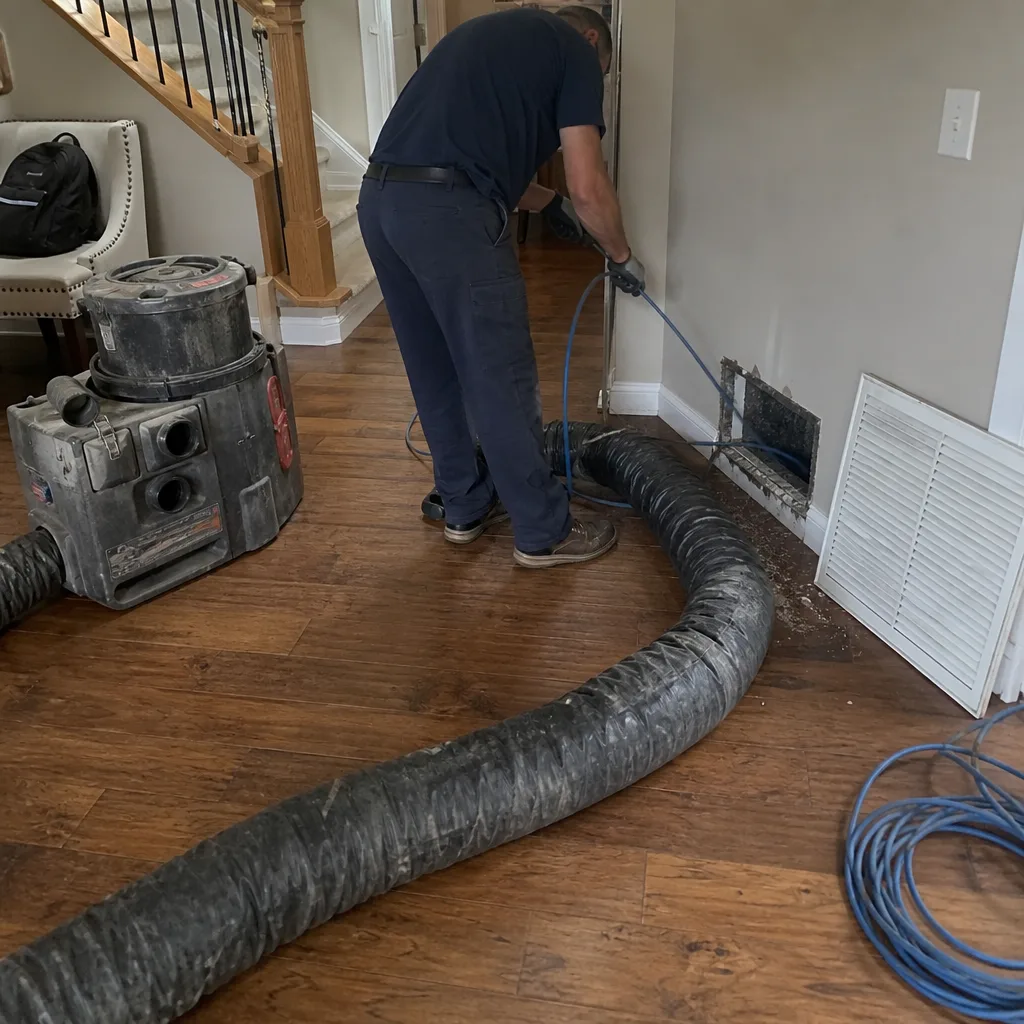 Before
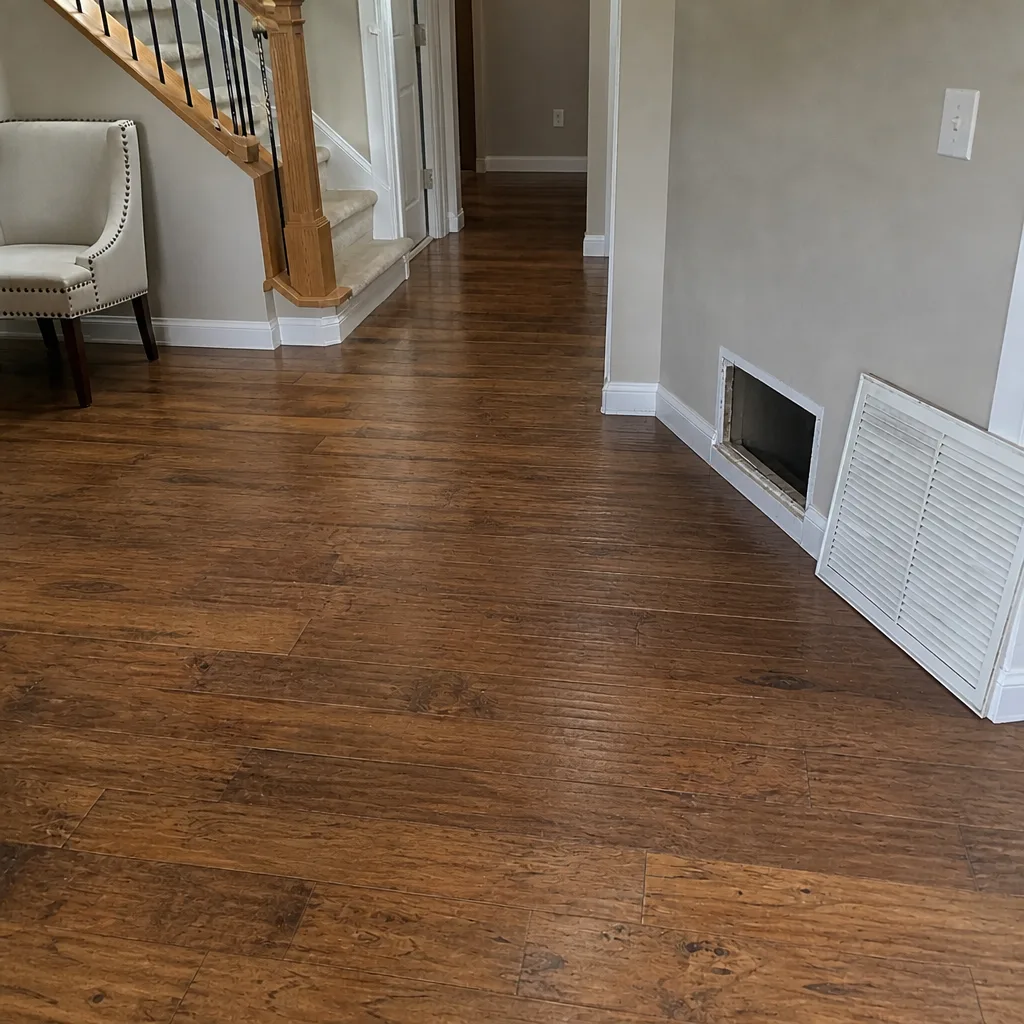 After
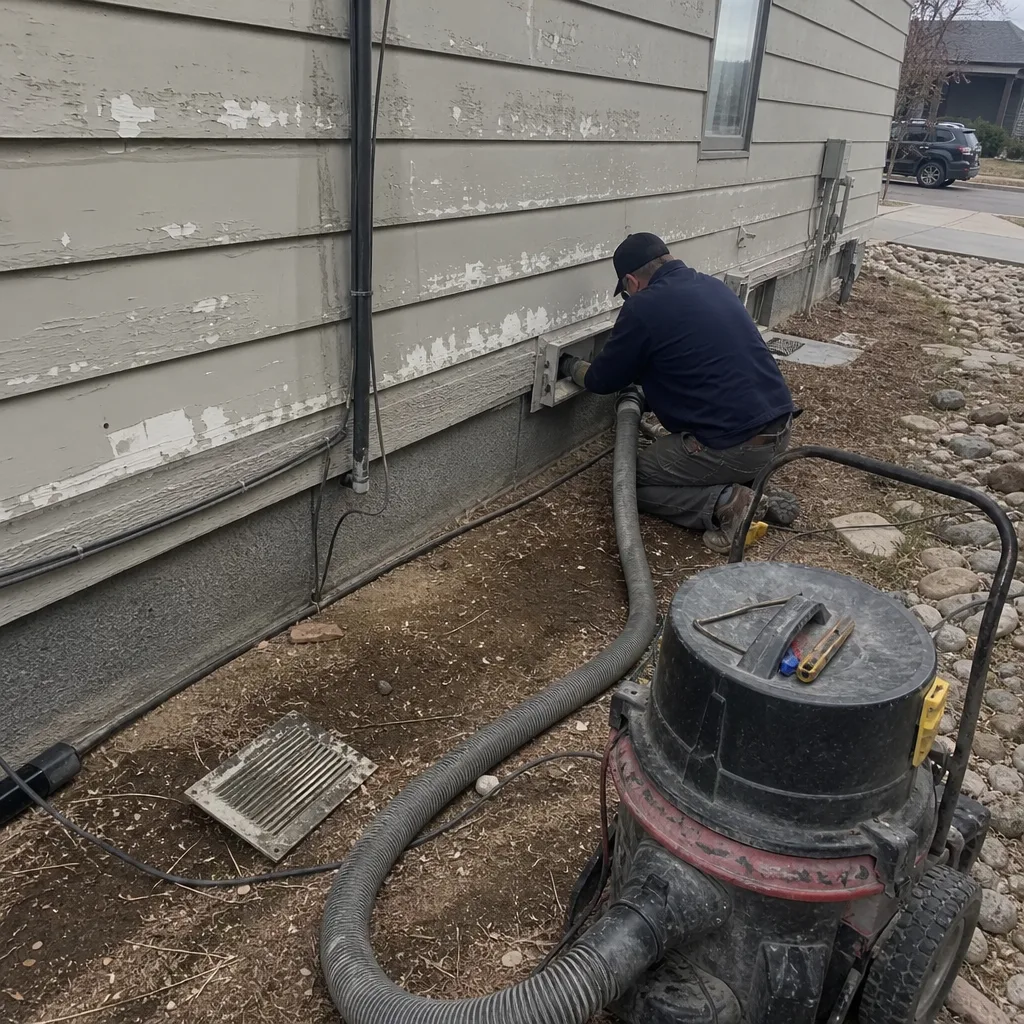 Before
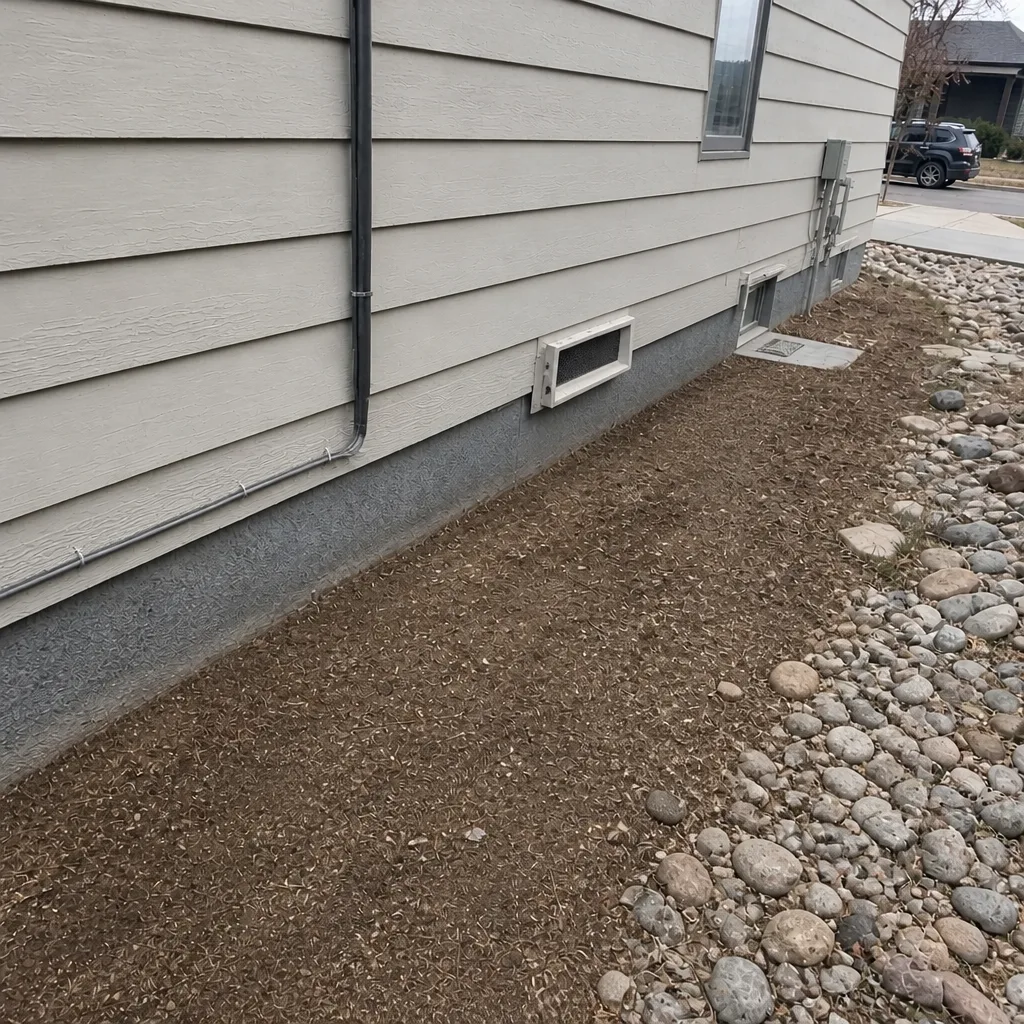 After
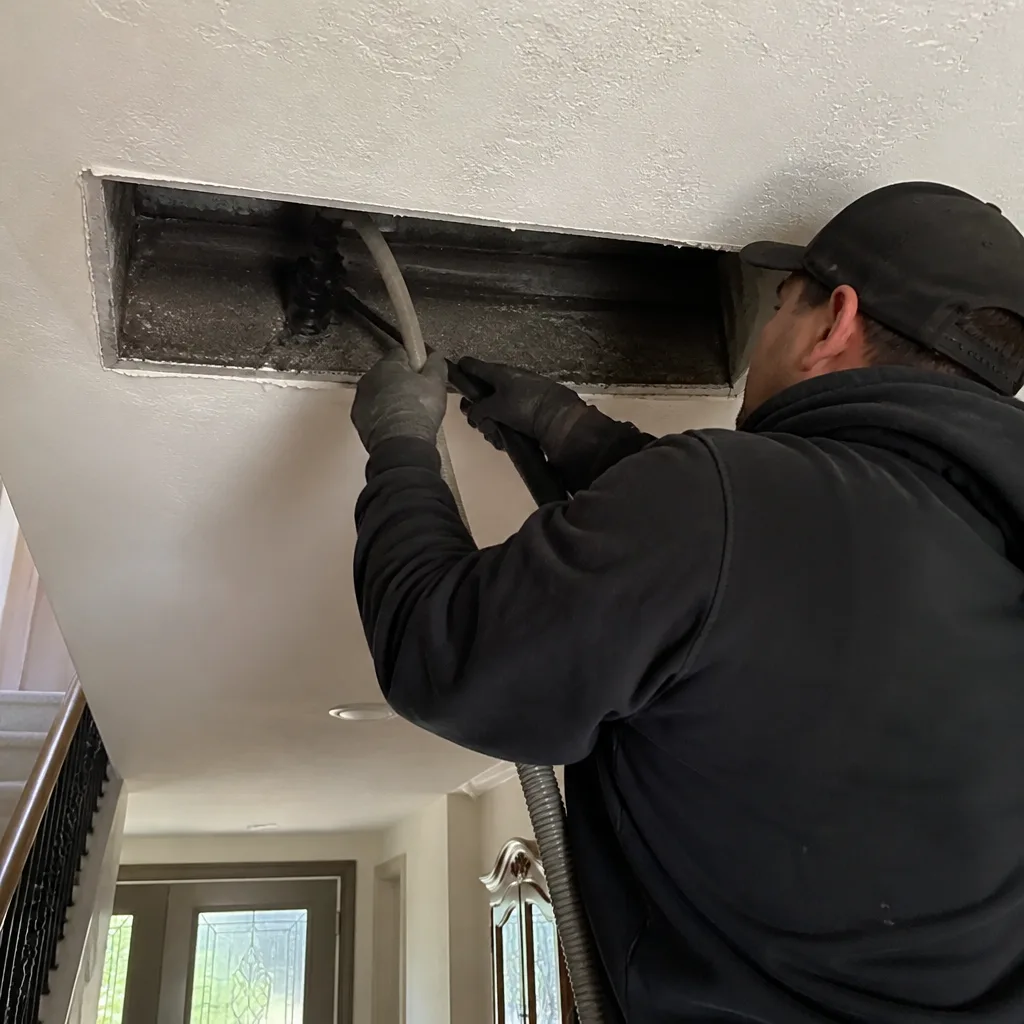 Before
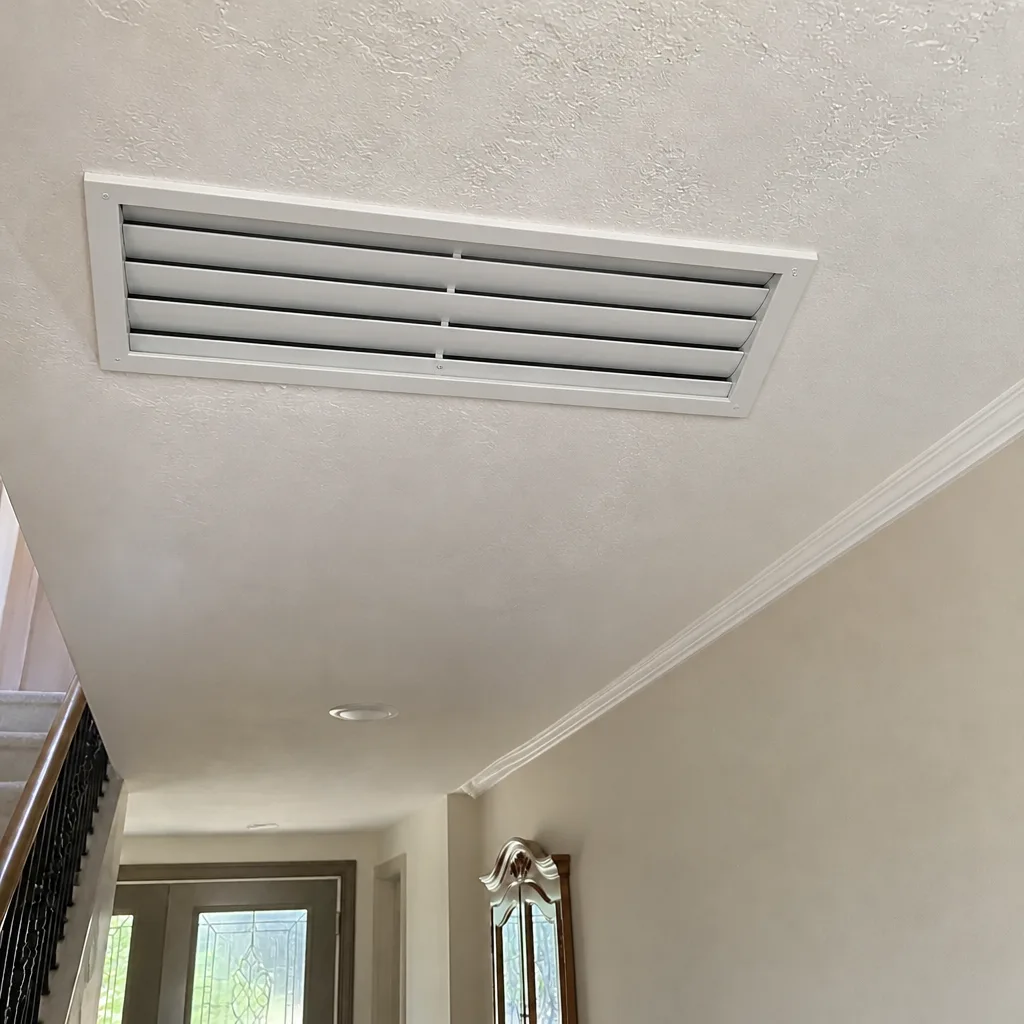 After
When to Call a Professional
Call when you don’t have a baseline inspection, when the log shows a major input change (pets, remodel, smoke event, construction next door), when registers show fibrous buildup or water staining, or when airflow is uneven across the house. Call if it’s been more than three years since any service and you’ve never seen the interior of your ducts. Call if there’s a musty smell near registers or a condensate pan you’re not sure about. Those signals point to something that needs eyes on the actual duct interior, not another surface wipe. Air Duct Cleaning Saddle Rock offers free estimates in Saddle Rock – call (877) 770-0819. We answer 24/7. Fast dispatch from 7am to 7pm, Sunday through Friday. Our technicians have up to 9 years of experience, and the local pro we connect you with is licensed and insured as their state requires.
Frequently Asked Questions
Start with an inspection every two to three years, then clean when the inspection shows measurable buildup. In Saddle Rock, homes with pets, allergies, recent remodels, wildfire smoke exposure, or neighboring construction should shorten that interval. There’s no single correct number – the interval is a function of your home’s inputs, which is the whole point of keeping a maintenance log.
Cost depends on the number of vents, system size, and whether repair, sealing, or sanitizing is included. We don’t quote per-vent prices because that’s how bait-and-switch quotes happen – a teaser rate that grows into a much larger invoice once the technician is on site. We set one flat price per system, agreed before work starts, and you get before-and-after photos of your own ducts. Call (877) 770-0819 for a free estimate.
Cheap quotes usually come from setups that vacuum surface dust without agitating the duct walls or containing the dislodged particulate. That’s shop-vac-style equipment doing a surface pass, not full-system cleaning. We use professional-grade Rotobrush and Nikro systems that agitate and extract at the same time, plus Abatement Technologies HEPA containment equipment so material is captured rather than displaced into the room. The quote difference usually reflects a difference in what’s actually happening. Call for an exact quote – estimates are free.
You can do the homeowner parts of this checklist – filters, grille checks, log keeping, return pathway checks. You can’t do the interior work safely or effectively without agitation and HEPA containment equipment, and you can’t inspect the interior of a run without a camera. Surface cleaning that doesn’t address the source is often worse than no cleaning, because it looks done without being done. Call for an inspection if you’re not sure what’s inside.
Before-and-after photos of your own ducts. We photograph the duct interior during the inspection and again after cleaning, so you can see the difference with your own eyes rather than taking anyone’s word for it. If a provider won’t show you the interior, that’s a sign. Call (877) 770-0819 to schedule an inspection with photos.
Every two to three years for inspection is a reasonable starting point, with cleaning when inspection shows buildup. A quiet household with no pets, no allergy concerns, and no recent remodel or smoke event can often stretch that. The only way to know is to inspect once, log the condition, and review the log yearly. Call for a baseline inspection – estimates are free.
Cleaning removes accumulated dust, pet dander, and particulate from the duct interior, which reduces what gets circulated when the system runs. It’s part of a broader air quality picture that includes filtration upgrades. For households with sensitivities, we can supply and install Honeywell or Aprilaire air quality products in the same visit as the cleaning, which addresses both the source and the ongoing load. Call (877) 770-0819 to talk through what your system needs.
The Bottom Line
Duct maintenance isn’t a calendar or a filter schedule – it’s a small set of inputs, a log, and a few minutes of register checking per season. Build your checklist around what’s actually in your Saddle Rock home: construction date, occupants, pets, allergy sensitivity, remodel history, smoke events, nearby construction, and spring wind. Inspect on a shortened interval when any of those shift, and clean only when the inspection shows it’s needed. Add plenum seals, flex duct routing, blower wheel, coil pan, and return obstruction to your check. Then log all of it so the next visit starts with information rather than guesswork. That’s the whole system view, and it’s what makes the difference long-term.
When you’re ready for a full-system inspection or to schedule air duct cleaning in Saddle Rock with professional-grade equipment and photographic proof, we’re the team to call. Air quality and sanitizing with Guardsman treatment, duct repair and sealing, and filtration upgrades with Honeywell and Aprilaire are all handled in one visit. Start at the Air Duct Cleaning Saddle Rock page for the full scope of what we do, and call (877) 770-0819 for a free estimate. We answer 24/7. Fast dispatch from 7am to 7pm, Sunday through Friday.
Written by the team at Air Duct Cleaning Saddle Rock.