
Last updated November 25, 2026
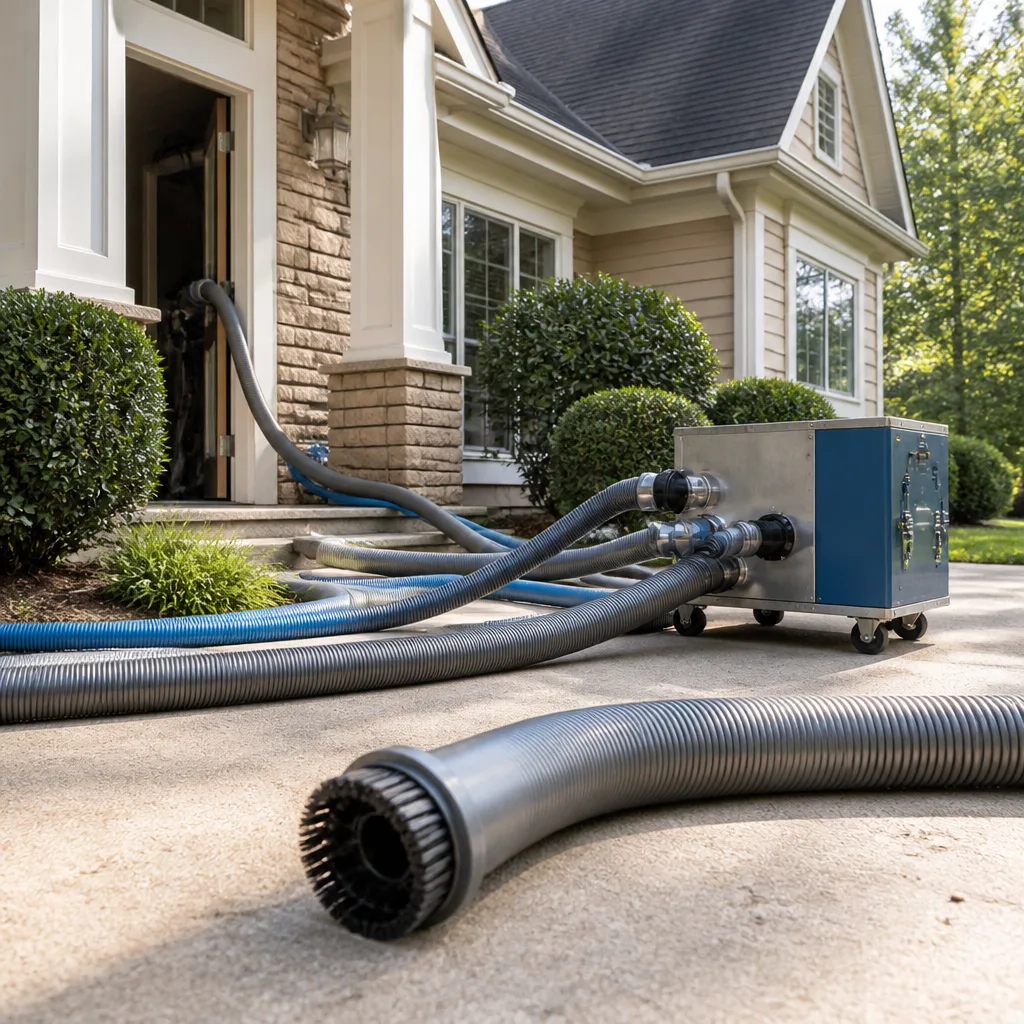 Whole-home duct cleaning
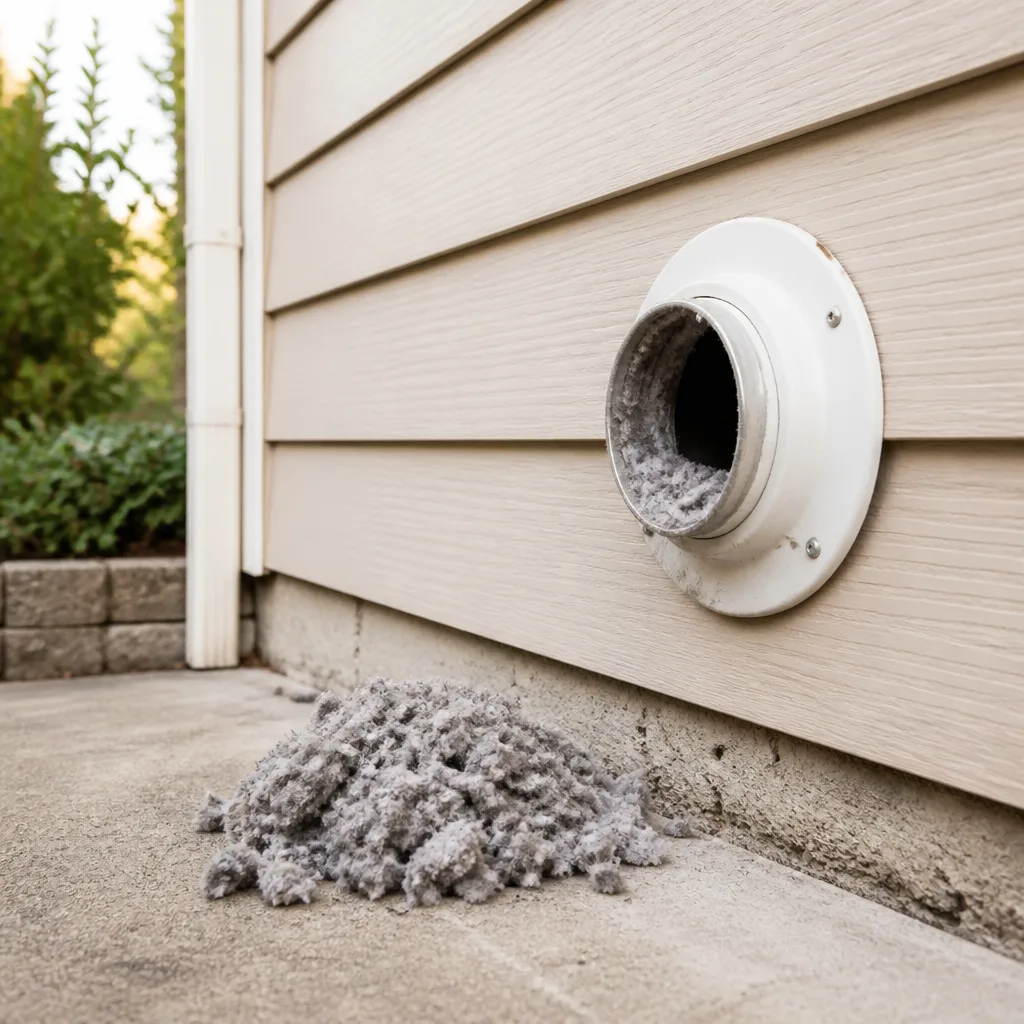 Dryer vent cleaning
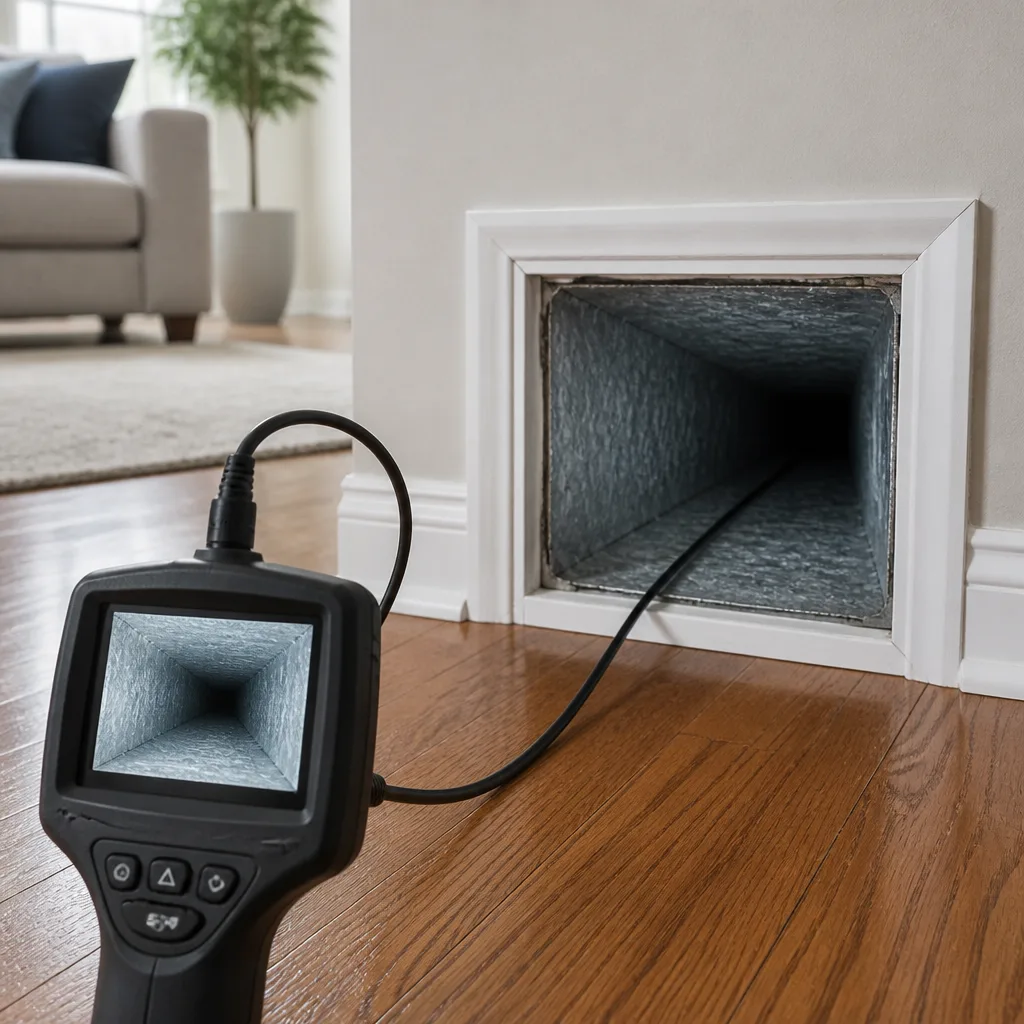 Camera inspection
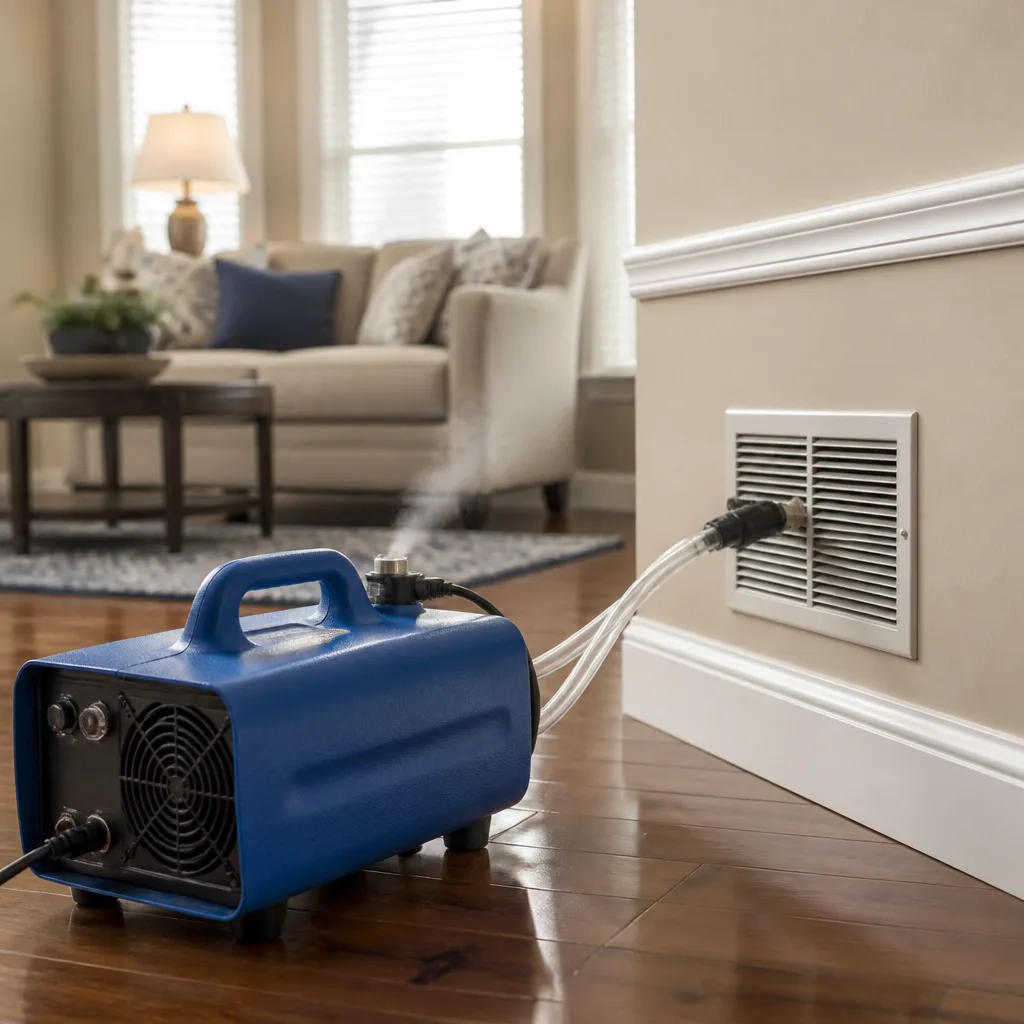 Sanitizing & deodorizing
Whole-system duct and dryer vent check with before-and-after photos - you see exactly what came out of your vents
That "$99 whole-house special" is a bait ad - the real number appears once they are in your hallway, or the "clean" is a shop-vac at the register. We photograph the inside of your ducts before and after instead.
Air Duct Cleaning Emergency Preparedness Guide for Saddle Rock Homes
After a wildfire smoke event, the instinct to run your HVAC on recirculate to filter the indoor air is exactly the wrong move. Recirculation pulls smoke particulate straight through the return system and deposits it on the evaporator coil and blower wheel, where no consumer-grade filter or vacuum can reach it. The same pattern plays out with construction dust, sewage odor, and pest debris: the first move most homeowners make is the one that spreads the problem deeper into the system. This guide walks through what actually works in the first hours of a duct emergency in Saddle Rock, how to document it for insurance, and when cleaning is no longer the answer.
Quick Answer
For most emergency duct events in Saddle Rock, the first 24 hours matter more than the cleaning itself. Shut the system down if smoke, water, sewage, or heavy construction dust is present, seal the returns you can reach, photograph the evidence before touching anything, and get a written assessment before anyone runs a vacuum. Cleaning, HEPA containment, sanitizing, and any duct repair or sealing should follow a documented sequence, not a same-hour coupon call.
Styles & brands we work with
- Whole-home duct cleaning
- Dryer vent cleaning
- Camera inspection
- Sanitizing & deodorizing
Table of Contents
- Why Emergency Duct Events Are Different in Saddle Rock
- Wildfire Smoke Protocol: The First 24 Hours
- Construction Contamination From a Neighbor’s Renovation
- Sewage and Flood Events: When Cleaning Isn’t Enough
- Pest Infiltration Found Mid-Service
- Documenting an Emergency Duct Event for Insurance
- The Remediation Sequence That Actually Works
- Common Mistakes to Avoid
- When to Call a Professional
Why Emergency Duct Events Are Different in Saddle Rock
Saddle Rock sits at the western edge of the Front Range, which means the wind that sweeps down from the foothills doesn’t just blow past the neighborhood – it pushes particulate into every gap it can find. Homeowners in Saddle Rock know the smoke smell that hangs around after a fire season week, and they know how quickly a spring windstorm can drive grit through a window seal that was fine the week before. That geography shapes what an emergency actually looks like here.
Routine duct cleaning removes accumulated dust from a system that’s working as designed. Emergency duct work handles a system that has been contaminated by an external event: smoke infiltration, a neighboring demolition, a sewage backup, a pest discovery. The two jobs use overlapping equipment, but they don’t use the same protocol. Routine cleaning is about maintenance. Emergency work is about containment – stopping the spread, capturing the contaminants before they redistribute, and documenting what happened so the homeowner, the insurer, and the remediator are all looking at the same facts.
That distinction is the reason a short call after an event is worth more than a fast one. A technician who shows up with a shop-vac-style setup and starts pulling air through a smoke-loaded return will make the situation measurably worse, because the machine doesn’t have the filtration to trap smoke particulate as it dislodges. Professional-grade equipment in the Rotobrush and Nikro class agitates the duct surface and extracts debris at the same time, and Abatement Technologies HEPA filtration holds negative pressure so dislodged particles get captured instead of blown back into the room. That’s the standard emergency work has to meet.
For a baseline on what routine service covers, the air duct cleaning page lays out the standard scope. Emergency work picks up where routine scope stops.
Wildfire Smoke Protocol: The First 24 Hours
The wrong move after a wildfire smoke event is the one that feels most productive: running the HVAC on recirculate to “filter” the indoor air. Recirculation draws return air through the system, and smoke particulate that passes the filter lands on the coil, the blower wheel, and the duct lining, where it stays. A filter catches a fraction of what recirculation pulls in, and the system keeps recirculating the rest. The right protocol for the first 24 hours in a Saddle Rock home looks like this:
- Turn the system off at the thermostat. Not to fan-only, not to recirculate. Off, so nothing moves air through the ducts while smoke is present outdoors.
- Leave a fresh filter in place, but don’t run the system to “use it.” A filter only filters when air flows through it, and the air you don’t want flowing is the air outside.
- Close windows and tape the return grilles you can reach safely. Painter’s tape on the return covers keeps smoke from being pulled into the duct system through the strongest leak point in most homes.
- Photograph the outdoor air quality reading on your phone or a weather app, and note the time. Adjusters want to see when the smoke event was active, not just that it happened.
- Wait for the smoke to clear before running the system again, then run it and note any odor, whistle, or change in airflow. Those are the signals that particulate has lodged somewhere in the air path.
If the system runs for a day after a smoke event and the odor doesn’t clear, or if a family member with asthma or allergies reacts when the air handler kicks on, that’s the point where the ducts likely need to come into the picture. Smoke odors in a duct system come from fine particulate that has bonded to the duct lining and coil surface. No filter upgrade removes that; only agitation and extraction does.
One more point Saddle Rock homeowners should know: wildfire smoke particles are small enough to pass through standard 1-inch filters. If your system uses Honeywell or Aprilaire media cabinets or a higher-MERV filter housing, the filtration will catch more of the load, but neither removes what’s already deposited inside the ductwork. Upgrading filtration after a smoke event cleans future air, not the contamination already present.
Construction Contamination From a Neighbor’s Renovation
Construction dust is the emergency duct event most Saddle Rock homeowners don’t see coming. A neighboring demolition or renovation doesn’t need to share a wall with your home to send dust into your system – drywall dust, insulation fibers, and fine concrete particulate travel on wind and settle through window gaps, garage penetrations, and roofline vents. Homes close to active construction in Saddle Rock often find the first evidence on the return grille closest to the exterior wall on the construction side, where a gray-white film builds up over a few days.
The response protocol for construction contamination runs differently from smoke because the material is heavier and often alkaline:
- Drywall and concrete dust are abrasive and mildly caustic. They pit blower wheel blades and can clog coil fins. Running the system with heavy drywall dust in the return accelerates blower motor wear.
- Insulation fibers are the harder problem. Fiberglass particles lodge in duct lining and don’t release under normal airflow. They release under vacuum agitation if the technician isn’t using HEPA containment.
- Shared-wall and shared-plenum buildings change the picture. In a duplex, townhome, or attached structure, contamination can migrate from a neighbor’s air system into yours through a shared chase or plenum. That’s a case for a written scope with photos before anyone starts work.
If construction dust has visibly loaded the return grilles in your Saddle Rock home, stop running the system until the ducts have been inspected. A blower motor is a far more expensive component than a cleaning visit, and drywall dust is one of the faster ways to shorten one’s life. The HVAC cleaning service exists for exactly this repair-adjacent scope, covering coil, blower, and cabinet in addition to the ducts.
After construction ends, the remediation sequence is: full-system cleaning with HEPA containment, coil and blower inspection, and then a filter upgrade (Aprilaire media cabinets hold more dust load than a 1-inch filter, which matters in a home near an active construction zone). Sealing any obvious return leaks is the last step, because a leaky return will just pull the next dust cloud in.
Sewage and Flood Events: When Cleaning Isn’t Enough
Water-damaged ductwork is a mold incubation timeline problem, not a cleaning problem, and the clock starts at the moment of intrusion, not the moment the homeowner notices the smell. Duct lining, insulation wrap, and any porous interior surface that gets wet becomes a substrate for mold growth within the first day or two, and no amount of surface cleaning reaches mold that has started inside the lining. That’s the hard line in emergency duct work: clean it if it’s wet but not contaminated, replace it if it’s been wet long enough that mold has established.
Sewage backup is the more urgent version. When sewage water reaches ductwork – through a slab penetration, a flooded crawlspace, or an overflow that ran under a floor before anyone noticed – the ducts carry both moisture and biological contamination. Three things happen in the first week:
- The odor migrates through the HVAC system. Sewage smell in a duct system is the signal that biological material is present, not just water.
- Mold establishes on porous surfaces. Duct board, internal insulation, and any fabric-lined flex duct wetted by sewage should be assumed contaminated.
- Porous duct sections usually require replacement. Sheet metal can often be cleaned and sanitized. Flex duct, duct board, and lined sections typically cannot be effectively remediated after sewage contact, and replacement is the credible answer.
In our experience, the honest call on a sewage-contacted flex duct system is to replace the affected runs rather than clean them. It’s a better outcome for the homeowner than a sanitation job on a material that will fail within a year. Rigid metal runs that sustained only splash contact are a different category and can usually be cleaned, treated with a Guardsman antimicrobial finish, and returned to service. The deciding factor is how much porous material got wet and how long it stayed wet – not how bad the smell is.
Whichever path the assessment points to, the sequence is: stop the source, dry the affected space, document the wet materials, remove or replace what can’t be cleaned, and then clean and sanitize what remains. Skipping the drying step or cleaning before the space is dry just resets the clock.
Pest Infiltration Found Mid-Service
Pest infiltration is the emergency duct event that gets discovered during routine service more often than during a standalone inspection. A technician opens a return plenum in a Saddle Rock home for a scheduled cleaning and finds the evidence: droppings, nesting material, carcasses, or the scratches and greasy rub marks that indicate an active rodent path through the duct. The protocol that follows depends entirely on whether the infestation is active or was a one-time event, and that distinction has to be made before any cleaning begins.
The two scenarios split cleanly:
- Dead-pest debris and old nesting material with no sign of current activity: this is a cleaning problem. Remove the debris, clean the duct surface, disinfect with a Guardsman treatment, and confirm that the entry point is sealed so it doesn’t recur.
- Active infestation (live activity, fresh droppings, ongoing scratching): this is a pest control problem first. Duct cleaning on an active infestation just disturbs material and spreads it, and the pest returns within days. The right sequence is: pest control to eliminate the infestation, then duct cleaning to remove the residue, then duct repair and sealing to close the entry point.
The reason this matters is that a duct cleaning company is not equipped to remove an active pest population, and a pest control company is not equipped to remove the droppings and nesting material from inside the duct system once the infestation is cleared. A homeowner needs both steps, in the right order. When a Saddle Rock home has had an active rodent or bird intrusion, ask the duct technician to confirm in writing that no active activity was observed before cleaning. That confirmation becomes part of the insurance file if a claim is later filed for remediation.
Hantavirus and other rodent-borne contamination in a duct system is a genuine health concern, which is why HEPA containment during cleanup is not a nice-to-have. A cleaning without containment on a pest-contaminated system risks blowing dried dropping material back into the living space. The right equipment holds the debris in the filter, not in the air.
Documenting an Emergency Duct Event for Insurance
Homeowner’s insurance claims on duct-related damage succeed or fail on the documentation, and the documentation has to be collected before the work starts. Adjusters can’t process a claim on a duct remediation job without evidence of what the condition was before cleaning, and a homeowner who waits until after the work is done to call the insurer usually finds out the claim is closed before it’s filed. The evidence set adjusters actually need:
- Dated photos of the pre-cleaning condition, including the return grilles, any visible staining or debris in the ductwork (if accessible), and the source of the event (smoke haze, construction activity, water line, pest entry point).
- Photos of the source, not just the symptom. A photo of smoke in the air outside the house on the day of the event carries more weight than a photo of a dirty filter taken a week later.
- Air quality readings. A phone app screenshot showing the outdoor AQI as of a specific date and time helps establish the event’s severity. Indoor readings from a consumer monitor add weight if they’re taken before and after cleaning.
- A written contractor report describing what was observed, what scope of work is recommended, and why the recommended scope is stricter than routine cleaning (contamination type, affected materials, mold assessment where relevant).
- Copies of any municipal reports – fire incident reports for wildfire smoke events, a copy of the neighbor’s permit for construction dust events, a plumbing incident report for sewage backup events.
- Receipts for any temporary measures (filters, air scrubbers, emergency containment tape) taken in the first 24 hours.
Two things to know about how insurers read duct claims: smoke claims often get processed under dwelling coverage with a sublimit for air quality remediation, and water damage claims hinge on whether the damage was sudden and accidental (usually covered) versus long-term (usually not). Getting a written contractor report on day one of the event is what separates a covered claim from a disputed one. We’ve watched enough of these from the Saddle Rock side to recommend: call the insurer before you call the cleaner.
The Remediation Sequence That Actually Works
Every emergency duct event in Saddle Rock follows the same underlying sequence, even when the specific contaminant varies. Skipping a step makes the next one harder to complete, and running them out of order can turn a cleanable system into one that needs replacement.
- Stop the source. System off, water shut off, pest entry sealed (temporarily), construction dust source contained at the neighbor’s site if possible.
- Document before touching anything. Photos, written notes on timing, AQI screenshots, any water or smoke readings.
- Assess the scope in person. A written scope, not a phone estimate, that identifies what materials are affected and whether replacement is required for any runs.
- Set up containment. HEPA filtration running during the work; negative pressure in the work area if the contamination is biological or smoke-based.
- Agitate and extract. Rotobrush and Nikro systems do both in the same pass; nothing shop-vac-style touches an emergency job.
- Clean mechanical components. Coil, blower, cabinet, and plenum surfaces are part of the job, not an upsell. Contamination on the coil recontaminates the ducts within weeks.
- Sanitize with a Guardsman antimicrobial treatment as a finishing step, on any system where biological contamination was possible (smoke, water, pest, sewage).
- Seal leaks and repair damaged sections. Duct repair and sealing is the step that stops the same event from recurring. It’s also the step most non-specialist cleaners skip entirely.
- Upgrade filtration if the home is in a recurring event zone (near the foothills for smoke and wind events, near active construction for dust). Honeywell and Aprilaire media filter cabinets are what we install for that purpose.
The final step is verification: a post-cleaning photo set showing the same grilles and plenum surfaces that were documented at step 2. Before-and-after photos of the homeowner’s own ducts are the answer to the legitimate question of whether the work was actually done. For the broader picture of how these services fit together on a routine basis, the Air Duct Cleaning Saddle Rock overview covers the full service range, including dryer vent cleaning, which is its own separate fire-prevention emergency category and worth a scheduled look after any renovation that disrupted the vent path.
Common Mistakes to Avoid
- Running the system on recirculate during a smoke event. This is the single most common response and the one that does the most damage. Smoke particulate deposits on the coil and blower where no consumer filter reaches, turning a 3-day cleanup into a 3-day cleanup plus coil work.
- Calling the cheapest cleaner first. Emergency duct work is where equipment grade matters most. A shop-vac-style setup running on a smoke-contaminated return is worse than no cleaning at all, because it redistributes what it dislodges. Ask what HEPA equipment the crew uses before they arrive.
- Cleaning wet ducts. Water-damaged ductwork in Saddle Rock needs to be verified dry before cleaning begins. Cleaning a still-wet system spreads moisture to surfaces that were previously dry and resets the mold clock.
- Treating active pest infestation as a dust problem. A duct cleaning crew can’t remove an active pest population. Cleaning before pest control has handled the source just resets the problem.
- Filing the insurance claim after the work is done. Adjusters want photos and a written scope taken before cleaning. A receipt for services after the fact is not the same evidence, and most insurers won’t backfill a claim on the assumption that the pre-condition was severe.
- Skipping the sealing step after cleanup. Cleaned ducts with leaky returns and disconnected joints pull the next smoke event or dust cloud back in within weeks. Sealing is the step that holds the result.
- Ignoring the coil and blower. A cleaned duct system with a dirty coil recontaminates quickly. Any emergency scope should include the mechanical components, not just the ductwork runs.
When to Call a Professional
Call a professional duct specialist after any event that introduced a contaminant into the air path: a wildfire smoke week that left persistent odor indoors, a neighbor’s demolition that visibly loaded the return grilles, a sewage or water backup that reached ductwork, or a pest discovery during a routine service. Call earlier rather than later in water and sewage events – same-day assessment on a wet system is worth more than waiting a week, because the mold window is short and the replacement decision depends on how quickly the space is dried. Call us before you run the system again if you’re unsure whether the ducts were affected. Air Duct Cleaning Saddle Rock offers free estimates in Saddle Rock – call (877) 770-0819. We answer 24/7. Fast dispatch from 7am to 7pm, Sunday through Friday.
See the difference
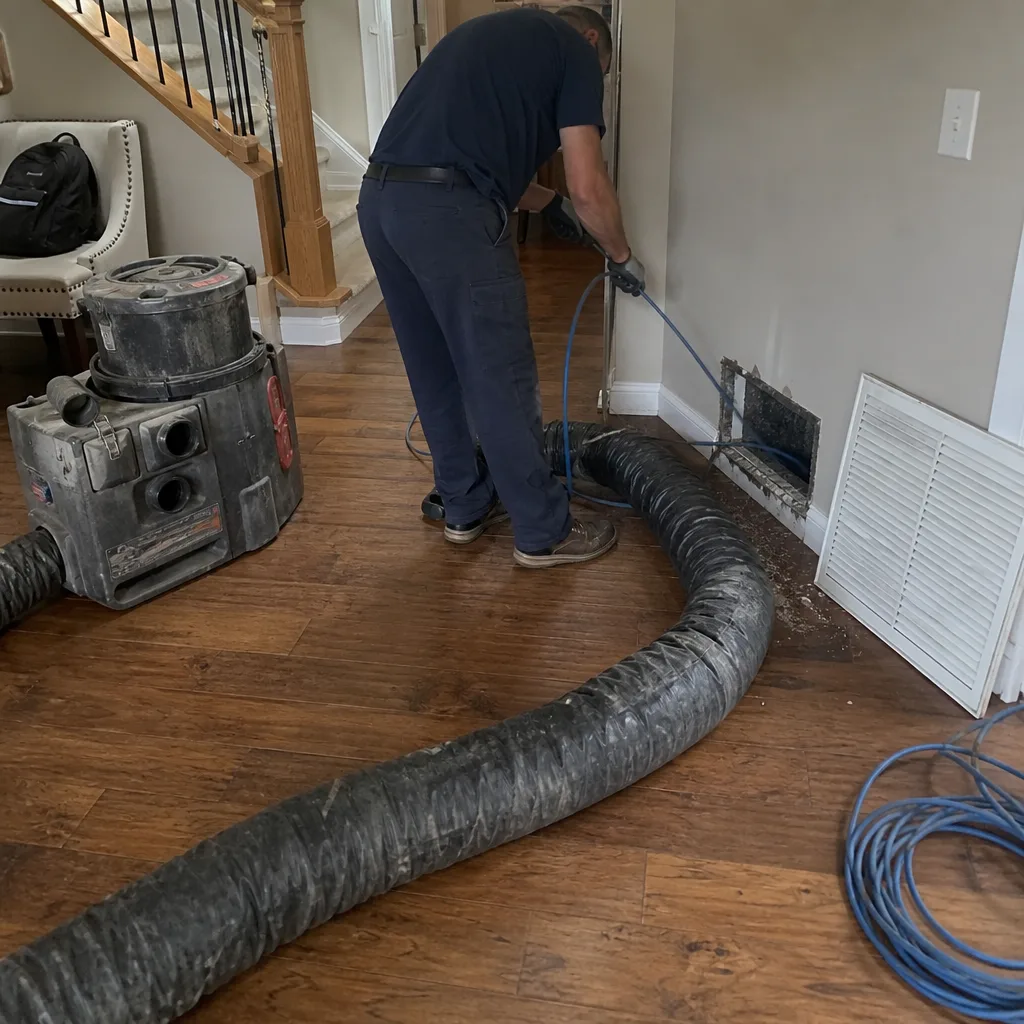 Before
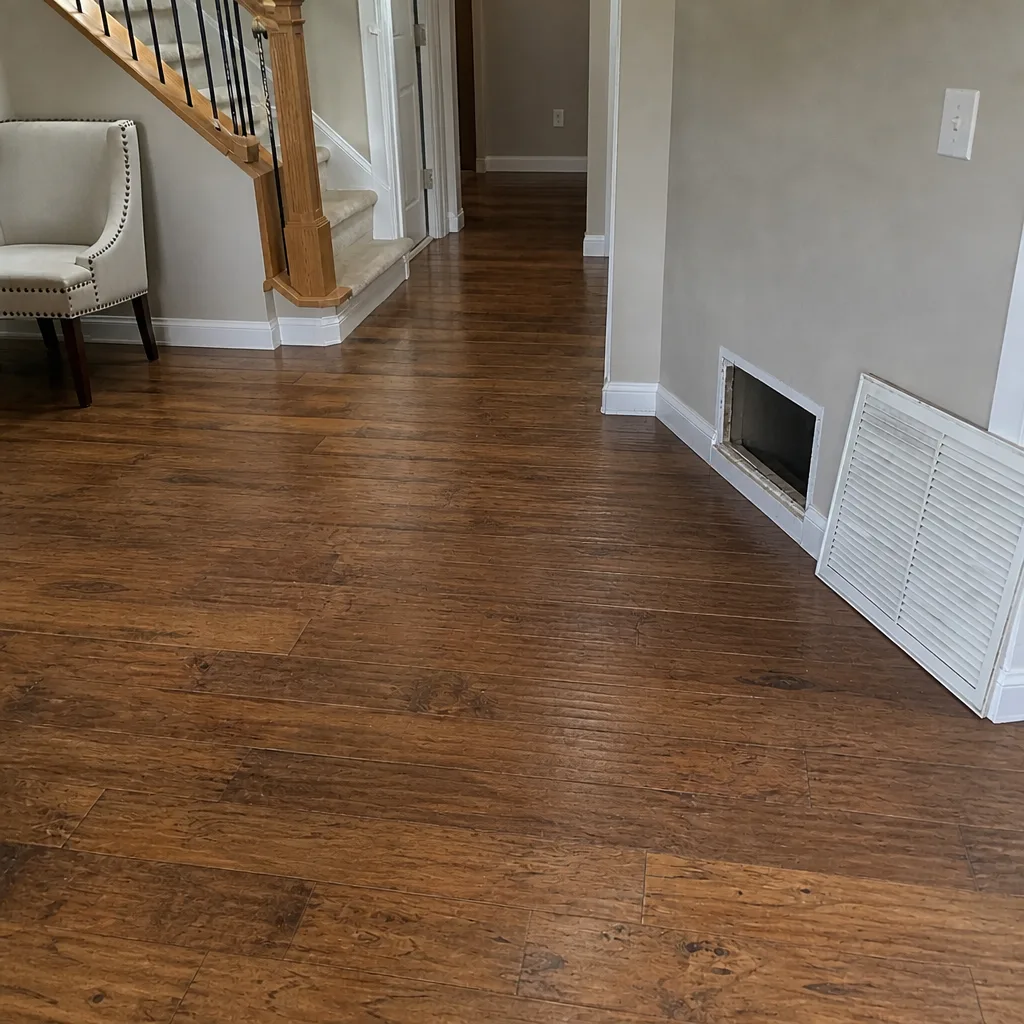 After
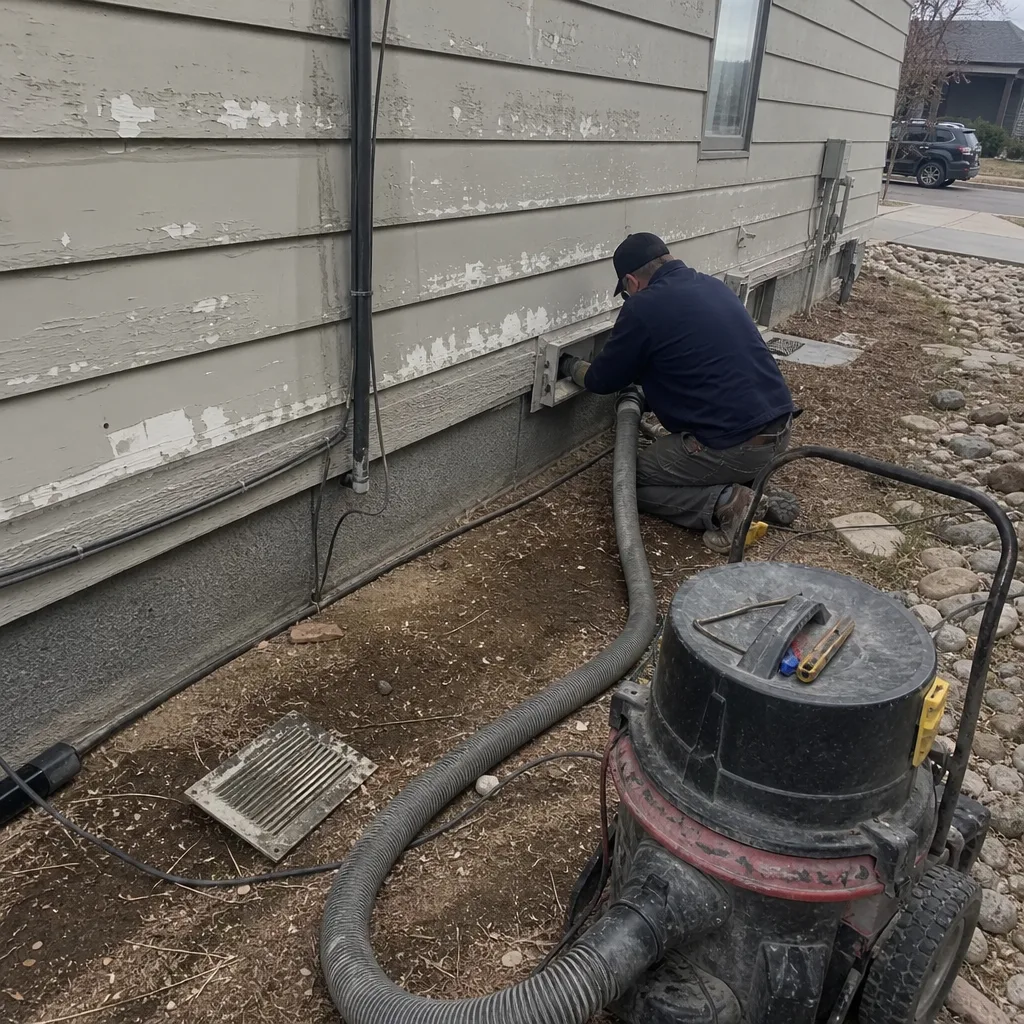 Before
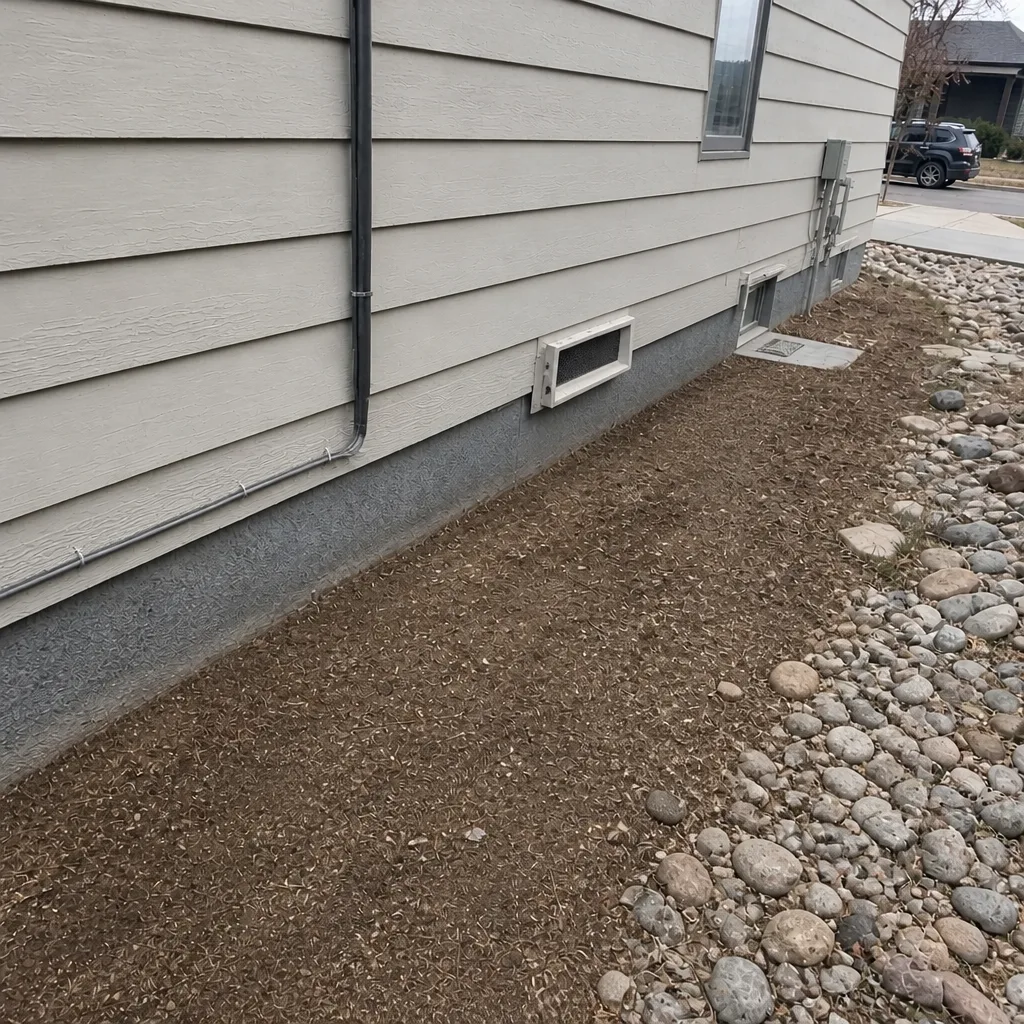 After
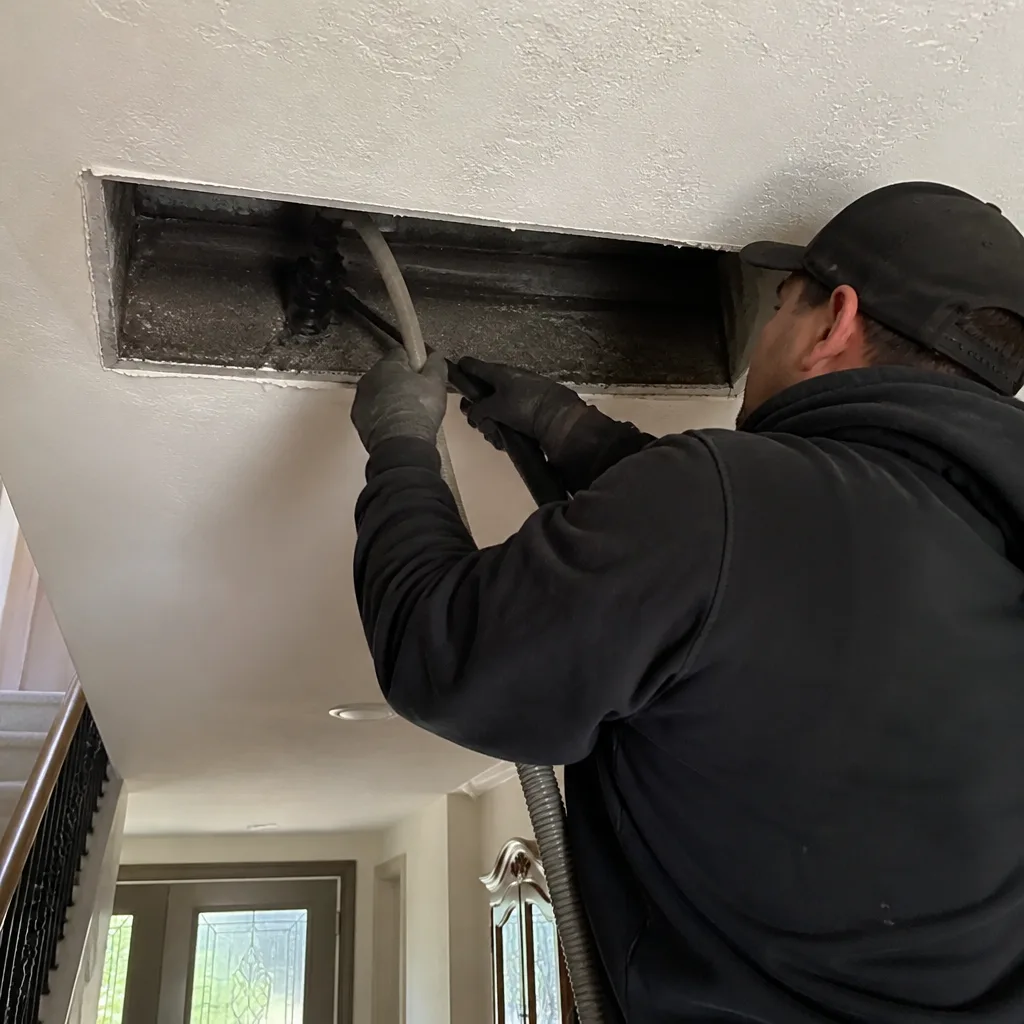 Before
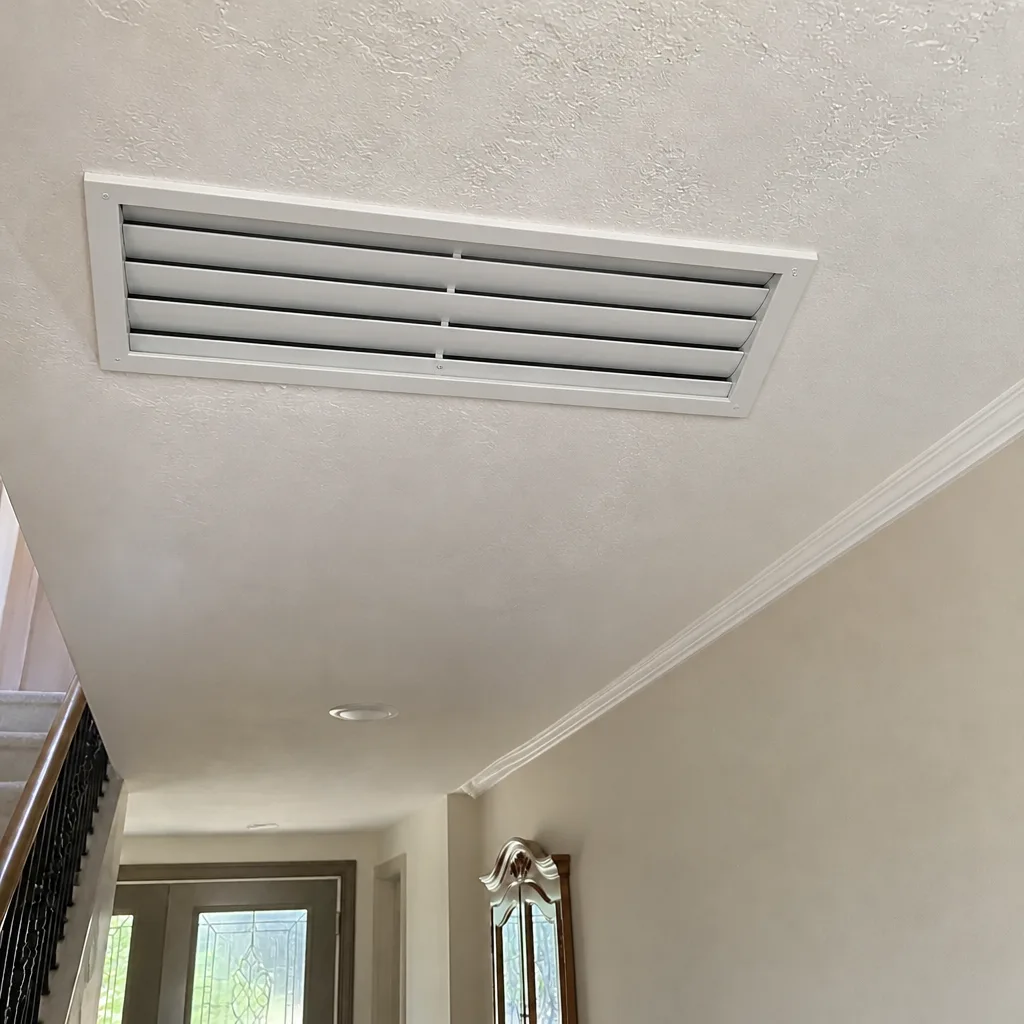 After
Frequently Asked Questions
Within the first 24 hours for the shutdown steps, but not within hours for the cleaning. Turn the system off, seal the returns you can reach, and photograph the day’s AQI reading. The cleaning itself is not an emergency-hour job – waiting two or three days for a proper assessment is better than a same-day visit that agitates the system without containment. Call (877) 770-0819 to get on the schedule with an honest scope.
Air duct cleaning in Saddle Rock typically runs on a per-system basis, with whole-home ranges in the low-to-mid hundreds for standard service and higher for post-event work that adds HEPA containment, sanitizing, and any duct repair or sealing. Emergency work costs more than routine because the scope is broader, not because of an event premium. The written estimate sets the final price, and the estimate itself is free – call (877) 770-0819 for an exact quote.
Cheap quotes usually skip the equipment that makes emergency work safe. A shop-vac-style setup costs a few hundred dollars and doesn’t hold HEPA-level filtration, so it dislodges particulate and redistributes it into the room. Professional-grade equipment, HEPA containment, and a documented post-cleaning photo set are what the price difference actually pays for. One flat price per system, agreed before work starts, is what you should ask for regardless of the total.
No, not on recirculate. Recirculation pulls smoke through the return and deposits particulate on the coil and blower. If the system has a dedicated fresh-air intake and a high-MERV filter cabinet (Aprilaire or Honeywell), the system can be run on that configuration with the outdoor damper partially open, but that’s a setup to confirm with an HVAC technician before relying on it during an event. The safe default is off. Call (877) 770-0819 with questions before you restart the system.
Ask for before-and-after photos of your own ductwork – the same grilles, the same plenum surfaces, taken from the same angle. Any legitimate duct cleaning service should be able to produce these, and if it can’t, the work either wasn’t done or wasn’t documented. Combined with the written scope and the contractor report, that’s the file you want in hand if the insurer asks for proof later. Call (877) 770-0819 if you need a second assessment on work already performed.
Yes, in two specific situations: sewage or contaminated water that has reached porous duct materials (flex duct, duct board, lined interiors), and mold that has established inside the lining. Cleaning porous duct material that has been wet with contaminated water produces a short-term improvement and a recurring problem. Replacement of the affected runs, followed by cleaning and sealing of the remaining rigid metal, is the more durable answer. Call (877) 770-0819 to get an in-person assessment that tells you which category your system is in.
The Bottom Line
Emergency duct events in Saddle Rock aren’t a cleaning problem you solve with a call – they’re a sequence you run: stop the source, document first, assess in person, contain with HEPA, extract with professional-grade equipment, sanitize where needed, and seal what leaks. The homeowners who come out of these events with the least damage are the ones who waited a day for the right scope instead of an hour for a fast one. Every event category in this guide – smoke, construction, water, sewage, pest – starts with the same first move: turn the system off and take photos. See what’s actually inside your ductwork before you approve any cleaning on a contaminated system.
Call (877) 770-0819 for a free estimate. We answer 24/7. Fast dispatch from 7am to 7pm, Sunday through Friday, closed Saturday.
Written by the team at Air Duct Cleaning Saddle Rock.